
Tag: litter caterpillars

  • Chicago Trash Pickup Schedule: Your Guide to a Cleaner Alley

    Chicago Trash Pickup Schedule: Your Guide to a Cleaner Alley

    I once missed trash day by ten minutes, then spent the whole week staring at one swollen black bin and a raccoon-torn bag by the alley gate. By Friday, it felt less like garbage and more like a running commentary on my life.

    Your Trash Tells a Story What's Yours

    I know how dramatic that sounds. But if you've ever stood in your kitchen holding an old jar of blueberry jam you should've thrown out years ago, you know what I mean.

    I used to look at ordinary trash and feel stuck. The jam jar wasn't just a jam jar. It was a memory from a trip. A bag of stale nuts wasn't just stale nuts. It was evidence of one more health kick I didn't keep. Each item weighed almost nothing in my hand, but in my mind it felt like a brick.

    That feeling spilled outward. My room got cluttered. Then my routines got loose. Then even simple chores started to feel like moral exams I was failing. Taking out the trash wasn't about taking out the trash anymore. It was about whether I could face one small mess without flinching.

    Trash is strange like that. It sits quietly until it starts talking back.

    Then I started noticing the same thing outside. A broken bag in the alley. A mattress leaning by a fence. Loose cups skittering down the curb after a windy night. A messy block can make you feel helpless fast. You tell yourself someone should do something, then you walk inside and carry that low-grade irritation with you.

    The Smallest Move Counts

    What changed for me wasn't a grand life reset. It was smaller and less glamorous.

    I learned that order starts with one unheroic act. Tie the bag. Roll the cart out. Put the lid down. Learn your pickup day. Do it again next week.

    The funny part is that a city chore can act like a handrail. When life feels slippery, a handrail matters. You grab it, and for a second you stop sliding.

    So if your alley feels chaotic, or your building always has one corner that looks defeated, you're not weird for feeling bothered by it. You're reading a story written in wrappers, bins, and missed routines. The good news is that stories can change. Sometimes the first edit is as plain as figuring out the Chicago trash pickup schedule and trusting yourself to follow it.

    How to Find Your Official Pickup Day

    The week I finally stopped missing trash day, nothing dramatic happened. No marching band. No perfect sunrise over the alley. I just stood in my kitchen, coffee in one hand, phone in the other, and looked up my address instead of trusting my tired brain. By that night, the cart was out on time, the back steps were clear, and one small corner of life felt steadier.

    That kind of steadiness matters on a Chicago block. One missed pickup can turn into split bags, extra clutter by the fence, and the quiet neighborhood shrug of "someone else will deal with it." Learning your day is a small act of self-respect. It is also a small act of respect for everybody sharing the alley with you.

    A person holding a smartphone displaying a Chicago trash pickup schedule map with a green trash bin nearby.

    Chicago's recycling rate is still low, and confusion about pickup timing does not help. The city offers online schedule tools, and WTTW reported that only 35% of residents use the digital reminder system in its coverage of Chicago's online garbage and recycling schedules: https://news.wttw.com/2018/01/04/chicago-recycling-garbage-pickup-schedules-now-available-online.

    Start with the address lookup

    Use the city's schedule lookup tool tied to the collection system described by Chicago trash schedule guidance. Enter your full street address carefully. The result shows your collection day for trash, recycling, and organics where that service applies, plus upcoming pickup dates.

    I always save a screenshot right away.

    Your future self will appreciate that move when it is cold, late, and you cannot remember whether pickup is Thursday or Friday.

    A few habits make the lookup more useful:

    1. Enter the complete address so the route matches the right building.
    2. Check trash and recycling separately because the schedule may differ.
    3. Save the result somewhere visible like your phone, fridge, or calendar.

    The city schedule information also notes that you can add service dates to your calendar with an .ics file download, and residents who need to start service can call 312-744-4420 between 8:30 AM and 4:30 PM, Monday through Friday, according to the 2026 Citywide Collection notice. For missed pickups or general city service help, call 311.

    Keep a backup when life gets loud

    Phones die. Weeks blur together. Rain hits sideways. The alley light flickers and suddenly a simple chore feels harder than it should.

    So give yourself a backup. Put the day on the fridge. Set a recurring reminder. Text it to the group chat for your building if that helps. Pride in a block rarely starts with grand speeches. It starts with ordinary people remembering the ordinary thing.

    If you want help with the next step after pickup day, this guide on how to recycle in Chicago makes the sorting part much easier.

    Decoding the Rules of the Curb

    One Tuesday night, I watched a neighbor stand in the alley holding three things like they were trick questions on a test. A pizza box with one greasy corner. A dead battery from a toy truck. A clear plastic berry container. Her kid asked, "Which one goes in blue?" and that is the moment this whole system becomes real. Not on a city webpage. In the cold, beside a cart, with raccoons somewhere nearby and tomorrow's pickup hanging over your head.

    That little pause matters more than people think. A clean cart says somebody on this block is paying attention. A sloppy one invites spills, smells, and one more excuse for the alley to look neglected.

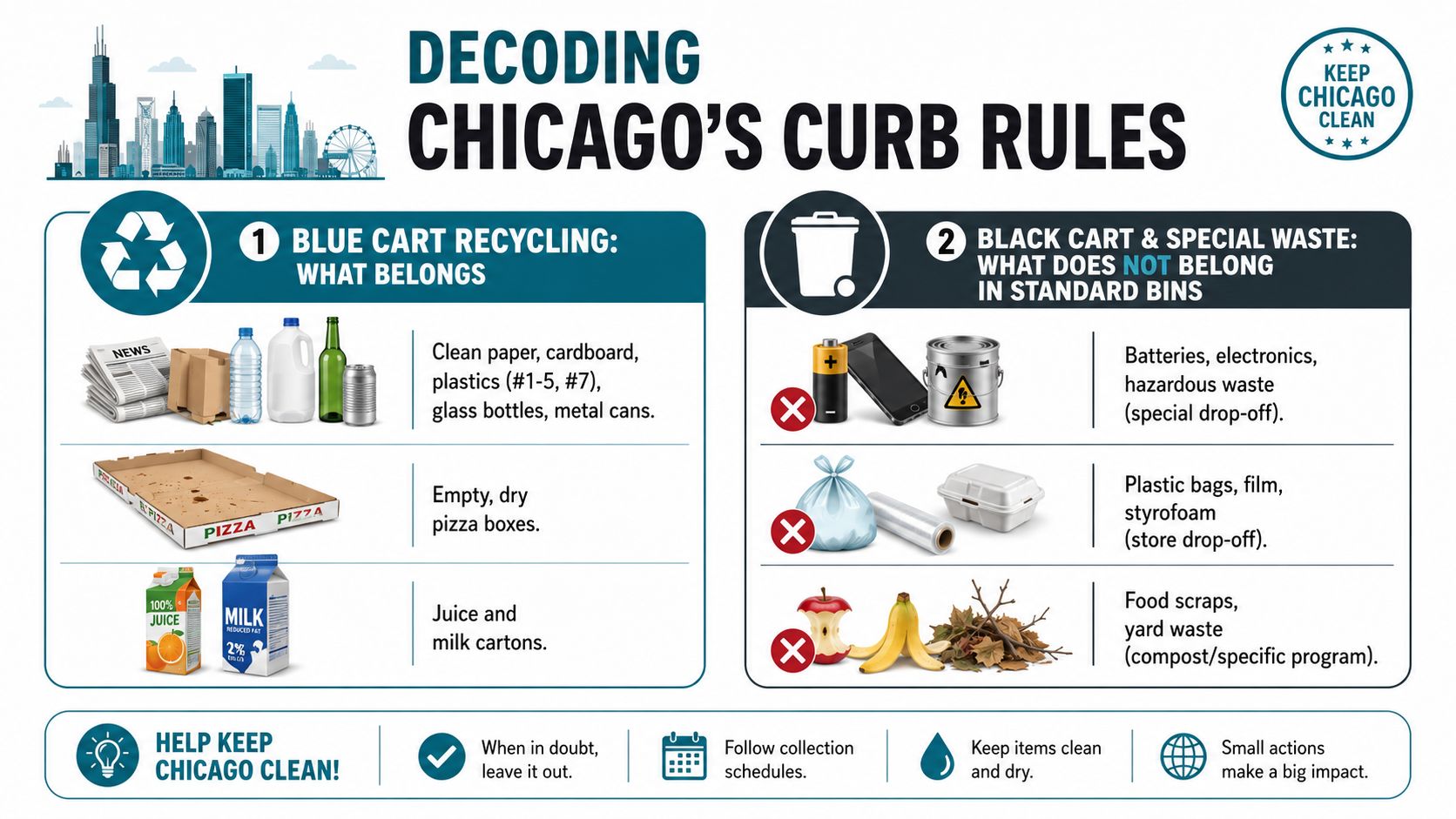
    An infographic titled Decoding Chicago's Curb Rules, showing items that belong in blue recycling carts versus black bins.

    What your bins want

    I keep it simple at home.

    The blue cart takes the everyday recyclables that are empty and reasonably clean. Paper, cardboard, bottles, cans, cartons, and accepted plastic containers usually belong there. The black cart takes the regular leftovers of life, the stuff that does not fit the standard recycling stream. Batteries, electronics, paint, and household chemicals belong in neither one.

    A pizza box is a perfect Chicago argument. If it is dry and mostly clean, recycle it. If the bottom looks like it survived a cheese flood, toss it in the trash. The same goes for yogurt cups and takeout containers. Empty and rinse them first. Plastic bags are another common alley mistake. They do not belong in the blue cart, even when everything else in your hand does.

    Ten extra seconds at the bin can save a whole load from getting dirtier than it needs to be.

    For the oddball items, use a real drop-off option instead of guessing. This guide to City of Chicago hazardous waste disposal helps with the items that need special handling.

    The curb has rules too

    Sorting is only half the job. Placement and timing shape whether pickup goes smoothly or your cart sits there all day like a missed cue.

    As noted earlier, city service follows a regular pattern for eligible homes, with trash collected weekly and recycling on alternating weeks. On pickup morning, get carts out early, keep the lid closed, and face the cart the right way for collection. Leave enough space so crews can grab it without wrestling it away from a fence, garage, or another cart. Then bring it back in that evening instead of letting it live at the curb for two more days.

    Holiday weeks are where solid routines wobble. One city holiday can push the remaining pickups later that week, and that single shift is enough to leave bags stacking up behind a three-flat by Friday night. I have seen one missed adjustment turn a tidy alley into a string of overfilled cans by the weekend.

    That is the bigger lesson here. The curb is not just a drop zone. It is one of the smallest places where pride shows up first.

    The System's Blind Spots and Your Alley

    One Tuesday morning, my own cart was perfect and the alley still looked wrecked. Tied bags. Closed lid. Nothing loose on my side. Twenty feet away, a dumpster behind a larger building was coughing trash into the lane, and by noon the wind had carried napkins, takeout lids, and one lonely pizza box halfway down the block.

    That was the morning I stopped treating every mess like a personal moral failure.

    A green City of Chicago dumpster overflowing with trash in an urban alleyway with city skyline background.

    The four-unit line nobody talks about enough

    Official Chicago collection is for single-family homes and buildings with four units or less, according to Recycle by City's explanation of Chicago trash and recycling collection. Cross that line, and the routine often changes completely.

    You can feel that split in the alley before you ever read a rule. A two-flat puts carts out and waits for the city truck. A bigger building depends on private hauling, a landlord's contract, a maintenance routine, or sometimes a system so loose that no one really knows who is supposed to fix what. When pickup slips, the alley pays first.

    That is the trash gap official guides tend to glide past. A resident in a six-unit building can follow every household habit perfectly and still live beside an overflowing dumpster that belongs to a setup they do not control.

    I have seen neighbors blame themselves for conditions that were bigger than one household. Then one person talks to the building manager, another files a complaint, somebody else starts picking up the spillover, and the problem finally gets named for what it is. Shared neglect. Shared responsibility too.

    What to do when pickup goes wrong

    If your home qualifies for city service and your trash is missed, report it quickly through 311 or Chi311, as noted earlier. Fast reporting matters more than angry guessing from the back porch.

    A simple response works best:

    • Snap a photo if the missed pickup or overflow is visible.
    • Check your own setup so you know whether placement or timing played a part.
    • File the complaint right away through 311 or Chi311.
    • Talk to the landlord or building manager if the mess is tied to a larger building or private dumpster.

    One clean cart cannot fix an alley shaped by bad contracts, absent management, or too few hands. People can.

    If your block keeps fighting the same mess, join neighbors who already treat cleanup as an act of pride. Our Chicago trash pickup volunteer crew was built for exactly that kind of alley. Bold enough to show up, brave enough to care, and kind enough to keep going when the system leaves a gap.

    Join a Crew That Cleans with Pride

    The first time I joined a block cleanup, I almost stayed home.

    My alley had worn me down that week. Overflow near the bins. Loose trash skating along the curb. The kind of mess that makes you feel like nobody is in charge, so why bother. Then I spent one Saturday morning with a few neighbors, a pair of gloves, and a trash bag, and the whole block felt different by noon. Cleaner, yes. Lighter too. People waved. Somebody brought coffee. A kid pointed at a cleared corner like we had fixed something much bigger than litter.

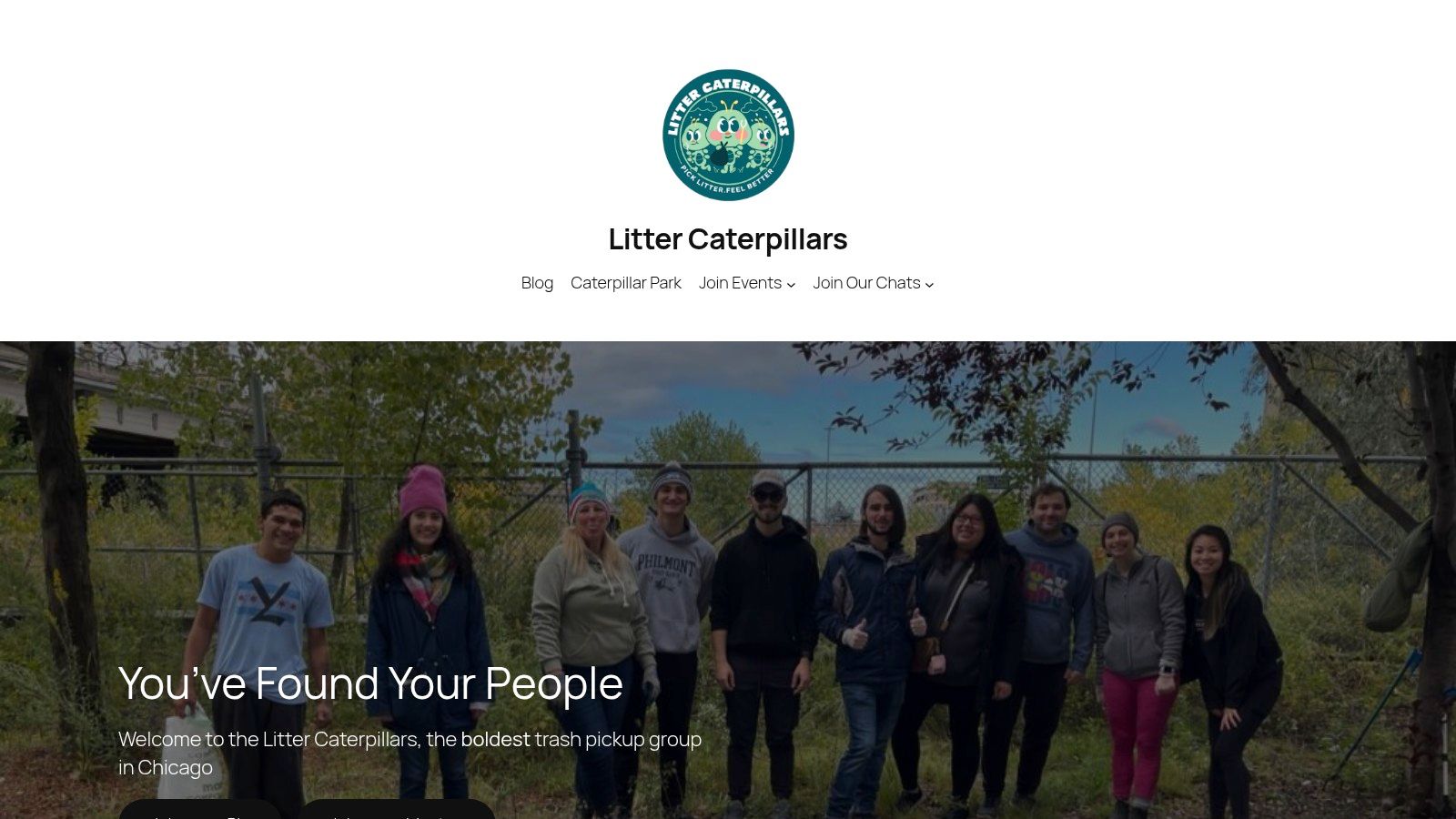
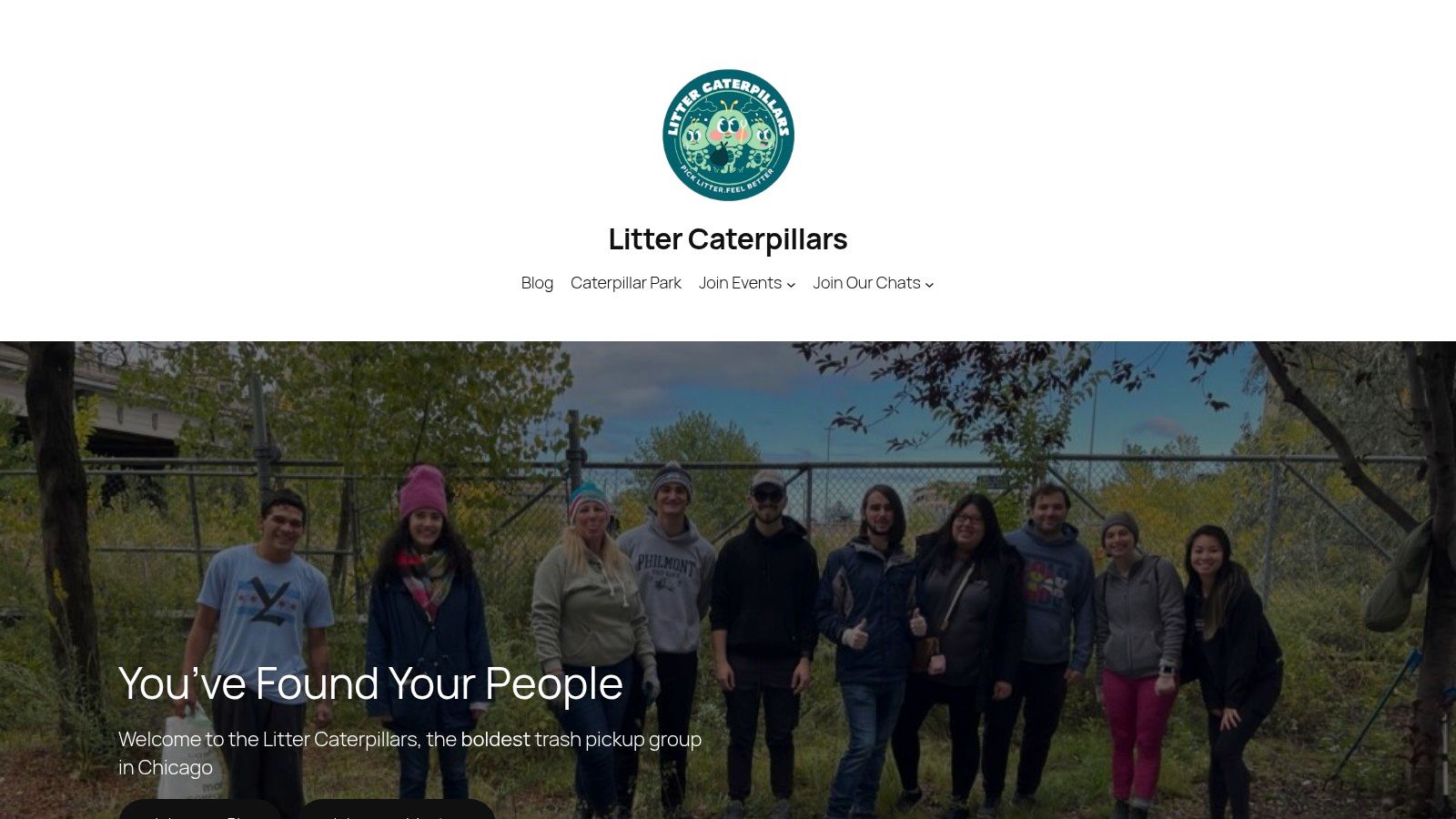
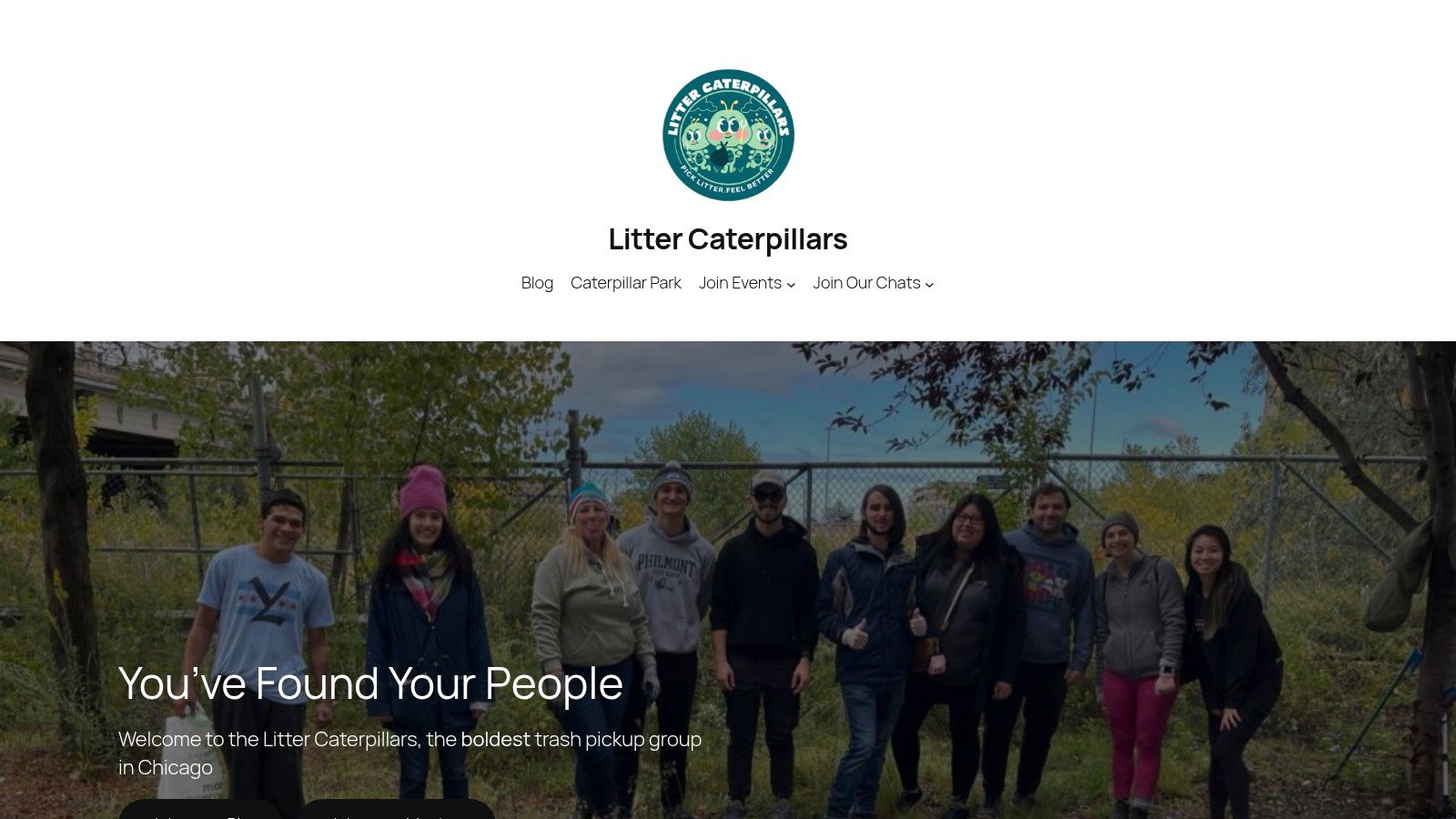
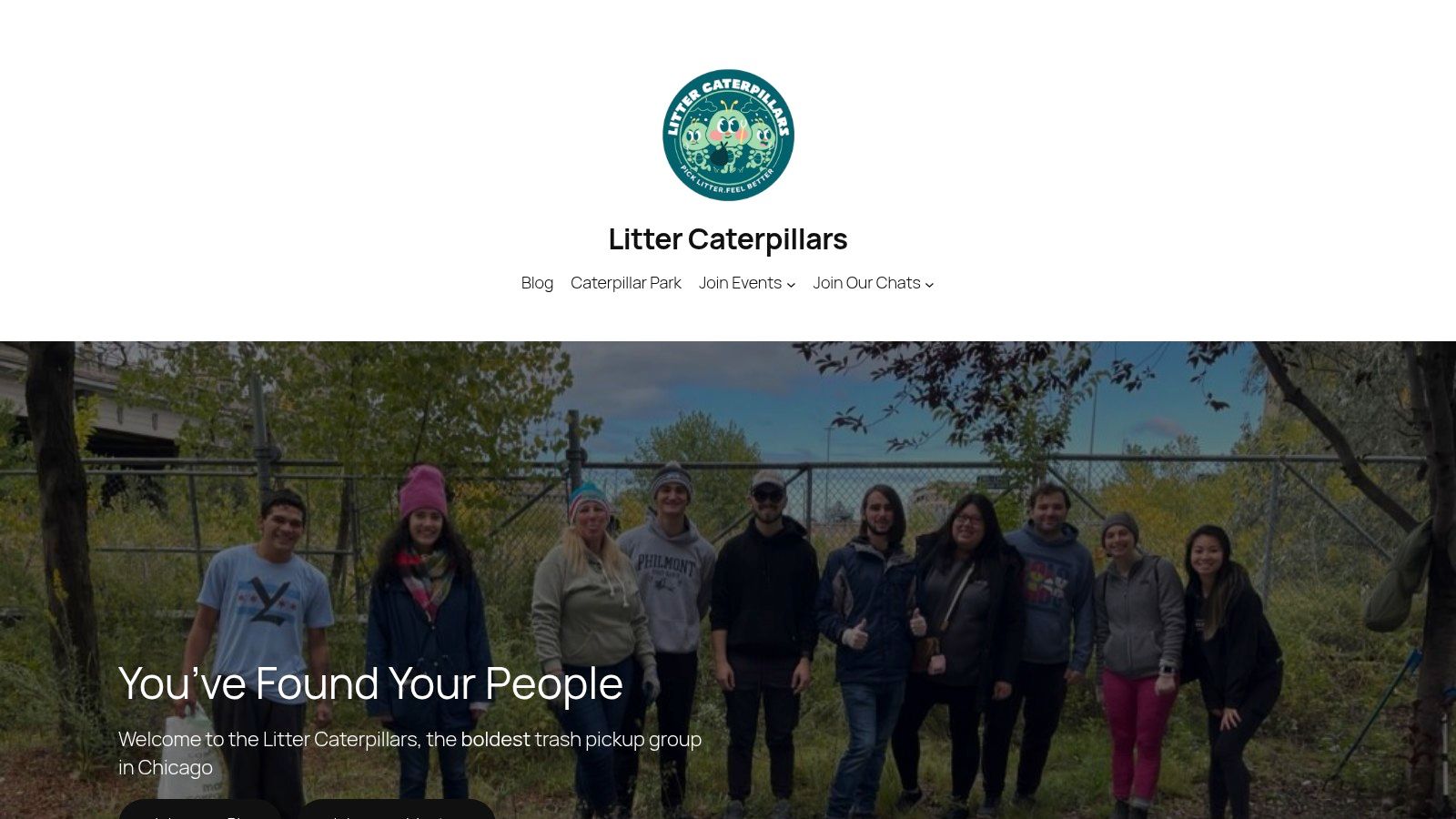
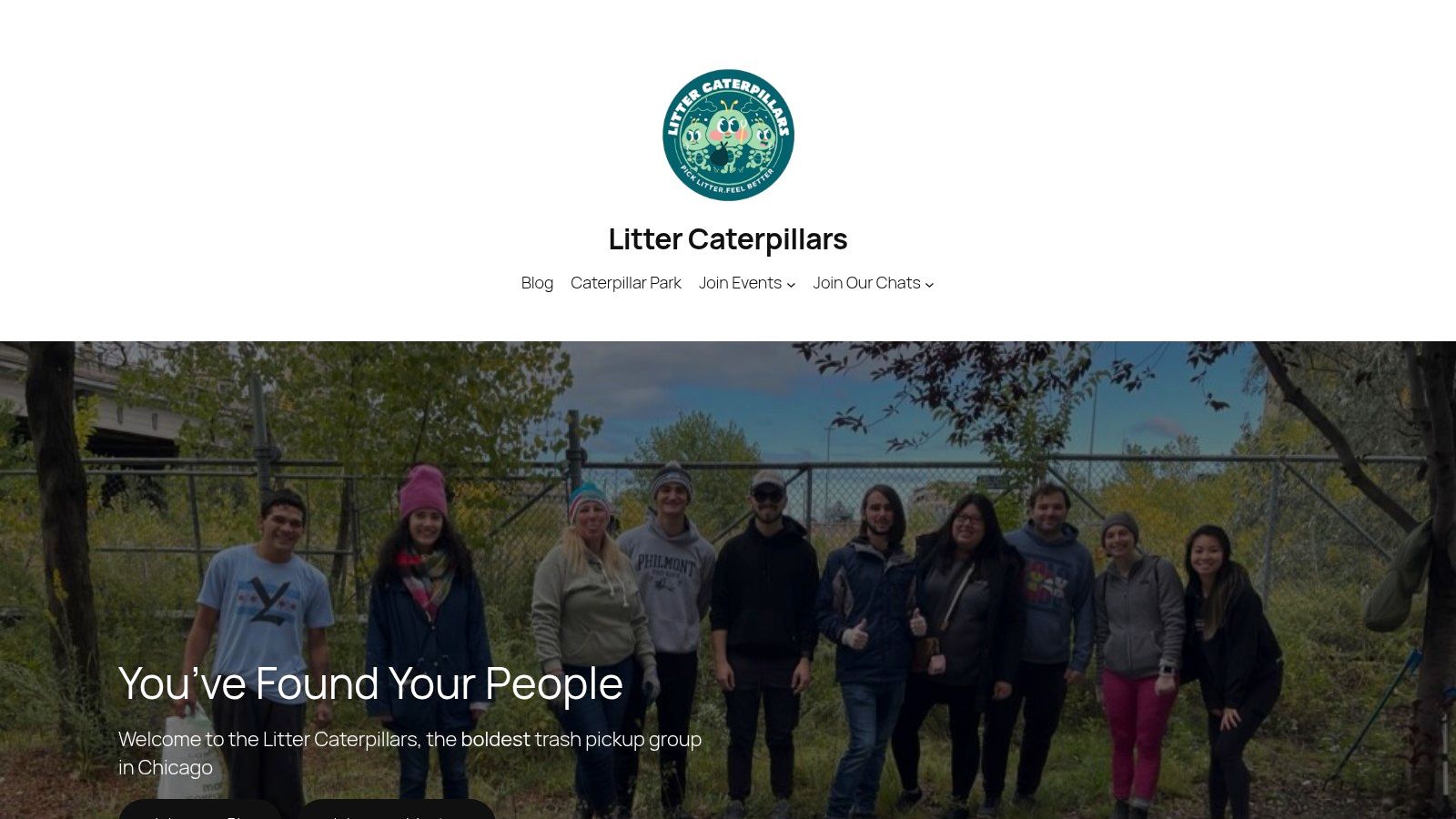
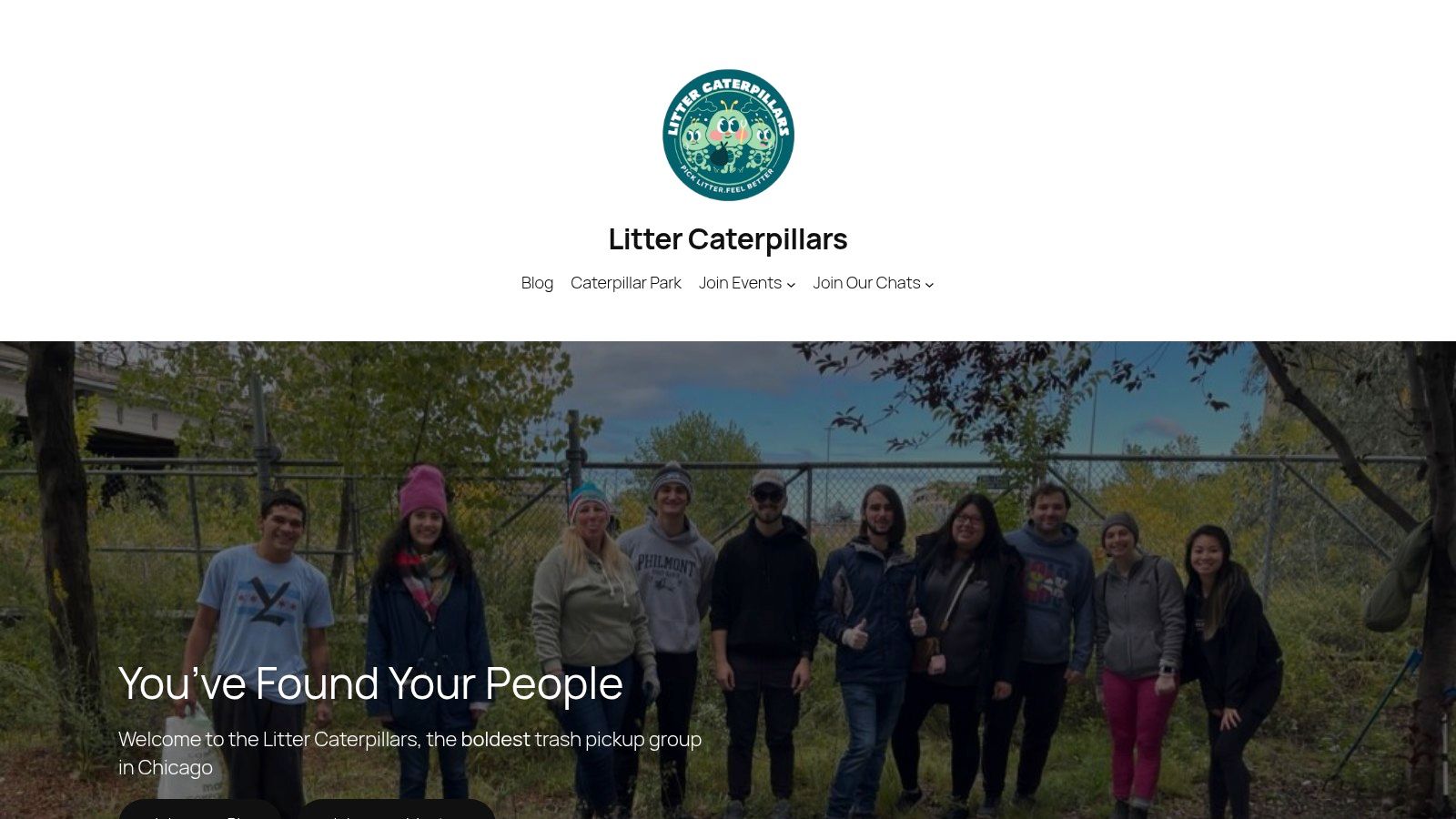
    Screenshot from https://www.littercaterpillars.com

    Why group cleanup feels different

    Inside your apartment, a pile of junk can carry old stress with it. Out on the sidewalk, the work gets simpler. A bottle goes in the bag. Broken cardboard gets stacked. The alley starts to look like a place people still believe in.

    That shift matters.

    The official pickup day handles part of the job. A proud block finishes the rest. This is especially true in the four-unit gap, where one property may follow the rules and still sit beside a mess created by a larger building, a private hauler, or weak management. In those spots, cleanup becomes more than tidying up. It becomes a way to say, we see the problem clearly, and we are not leaving it here.

    I have watched rough mornings turn into good ones fast. Neighbors who never spoke before start swapping stories over full bags. Someone points out a trouble spot behind the garage. Someone else knows who to call. By the end, you have cleaner pavement and a few more people who care what happens on your block.

    If you're tired of stepping around the same mess

    A cleanup crew changes your role. You stop being the person who winces at the litter from across the street. You become the person who showed up, did the work, and helped your alley feel claimed again.

    If that sounds like your kind of Saturday, check out trash pickup volunteer opportunities with Litter Caterpillars.

    People keep coming back for a few simple reasons:

    • You get a visible win. One full bag proves the morning counted.
    • You build a steadier routine. Showing up for your block can steady other parts of life too.
    • You meet neighbors who act with care. That changes the feel of a street faster than complaints alone.

    Cleaning up with other people can feel easier than cleaning up alone. Sometimes that is how pride comes back.

    Frequently Asked Questions

    What if I have paint, chemicals, or old electronics

    Don't put them in your regular bins. Those items need special disposal, not curbside guessing. If something feels like it could leak, spark, or poison, stop and look up the proper drop-off route before you touch the cart.

    How do I know if city pickup even applies to my address

    If you live in a single-family home or a building with up to four units, city collection may apply. If you live in a larger building, ask your landlord or building manager who handles hauling and what the pickup routine is.

    What if my bin didn't get picked up

    Move fast. If your household is covered by city service, report the missed pickup through 311 or Chi311 within the required window rather than waiting a few days and hoping it fixes itself.

    Can I get reminders so I don't forget again

    Yes. If you use the city schedule lookup, save a screenshot and use the calendar file if that works for you. A phone reminder the night before helps too, especially on holiday weeks when normal rhythm gets weird.

    What about large items that don't fit the usual week

    Watch for special collection events and city notices. Those limited windows can save you a lot of alley frustration.


    If you're ready to turn one small act into a better Saturday, visit Litter Caterpillars. You'll find a crew that picks up trash with guts, kindness, and a little swagger. Show up, grab a bag, and help make your block feel like somebody loves it.

  • Local Environmental Groups: Chicago Impact 2026

    Local Environmental Groups: Chicago Impact 2026

    I used to stare at trash in my own apartment like it was haunted. A jar of blueberry jam from a trip years ago. A bag of nuts from the week I swore I'd become healthy and then didn't. I couldn't throw them out. They felt heavier than they were, like every wrapper and expired thing had a memory glued to it.

    Then I ended a bad relationship and got honest with myself. I wanted to build a life around givers, not takers. I wanted to train the parts of me that were weak: cleanliness, consistency, and bravery. So I started with something strange but simple. I picked up trash outside.

    I learned fast that cleaning up someone else's mess is easier than cleaning up your own. It can even be fun. I showed up for a neighborhood cleanup to challenge myself, and I walked away with new friends, a lighter mind, and a reason to get out of bed on a weekend morning. If you've felt that pull too, this is for you. These local environmental groups can help you find a mission, but more than that, they can help you find your people.

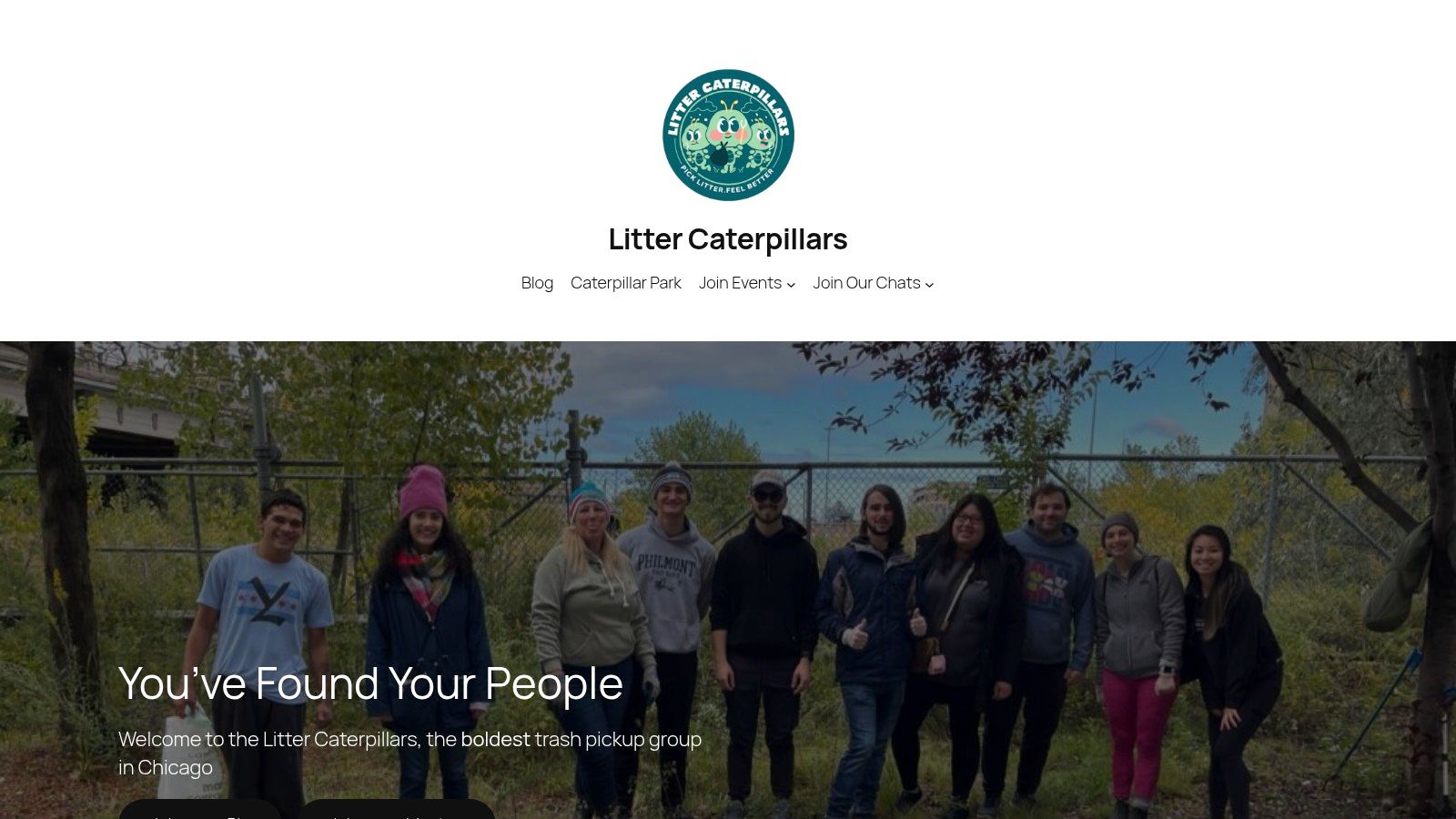
    1. Litter Caterpillars

    Litter Caterpillars

    One cold weekend morning, a few people in gloves filled bag after bag while the rest of the block stayed quiet. By the end, the sidewalk looked different, but so did the group. Strangers were teasing each other, comparing the weirdest things they had found, and making plans for the next cleanup. That is why I keep coming back to Litter Caterpillars in my head. It is not only about trash. It is about what happens to you when you keep showing up.

    Litter Caterpillars is the group I would point you toward if you want action fast and you do better with movement than meetings. They gather on weekend mornings, head out in rough weather, and make it easy to join. You do not need a background in activism. You need shoes you can get dirty and enough curiosity to try one morning outside with other people who care.

    Their style is simple. Show up, clean a block, talk to the people beside you, come back next time. For some personalities, that rhythm works better than formal committees or polished events. If you have been lonely, stuck, or tired of living too much in your head, this kind of work can reset you.

    Why this group stays with people

    Litter Caterpillars has cleaned in all 50 wards of Chicago, including places volunteers are often told to avoid, according to the group's Meetup page for Litter Caterpillars. That says a lot about their character. They do not chase easy wins or pretty backdrops. They go where the mess is real and keep coming back.

    One of the clearest examples is Caterpillar Park in Englewood. The group won a vacant lot at public auction, turned it into a community space, and still has to fight illegal dumping there, as reported in the Chicago Tribune's story on Caterpillar Park. I find that weirdly comforting. The work repeats. You clean a place, life happens, and you return. If you are trying to build resilience in your own life, that lesson lands hard.

    Practical rule: Join this group if you want to see a result before lunch. Carrying a full trash bag back to the meeting point changes your mood more than another hour of scrolling.

    I also like how openly they treat cleanup as community, not just service hours. The flags, badges, songs, group chats, and inside jokes might sound small. They are not. They give shy people a way in. They help new volunteers feel known. They turn a hard, dirty task into something closer to belonging.

    If river work interests you too, their guide to cleaning up rivers in Chicago gives a good sense of how street litter and water pollution connect.

    • Best for grit: A good fit if you like physical work, repetition, and neighborhoods that feel lived in.
    • Best for friendship: A strong choice if you want a group with personality and rituals that help people connect.
    • Best for new habits: Weekend cleanup can anchor your week and make consistency feel natural.

    The tradeoff

    Litter Caterpillars feels hands-on, improvised, and human. If you want a more formal nonprofit structure, another group on this list may suit you better.

    But if you are looking for a place where service can change your city and also change you, this one has a strong pull. You come for the cleanup. You stay because you start to recognize faces, trust yourself more, and feel a little less alone.

    2. Friends of the Chicago River

    Friends of the Chicago River

    If street litter makes you angry, river litter hits differently. It feels like the city's bloodstream is clogged. Friends of the Chicago River is a good fit when you want your volunteer time tied to water, habitat, and a long-running civic rhythm.

    Their home base is the Friends of the Chicago River website, and they run recurring stewardship work tied to the Chicago-Calumet River system. If you're curious how river cleanups connect to broader trash work, I also like this piece on cleaning up rivers in Chicago.

    Who I think should join

    This is the group for people who like structure. You sign up, get clear guidance, and plug into a larger machine. If Litter Caterpillars feels like a scrappy pickup basketball game, Friends of the Chicago River feels more like joining a league with refs and a schedule.

    I also think it's good for students, companies, and neighborhood groups that want a shared project with a clear setting. Water gives people a focal point. When you're standing by the river with gloves on, it's easier to feel what you're protecting.

    The river gives your effort a shape. You can point to a bank, a path, a canoe launch, and say, "I helped right there."

    Where it fits in your life

    The work can be seasonal and weather-sensitive, so you may need to plan ahead. Popular volunteer dates can fill quickly. But if you want logistics, recurring stewardship, and a mission that feels bigger than one block, this is a solid place to start.

    I wouldn't choose this one because it's trendy. I'd choose it if your brain likes order and your heart likes water.

    3. Urban Rivers (The Wild Mile)

    Urban Rivers (The Wild Mile)

    Urban Rivers is for the person who wants an environmental group that feels a little weird in the best way. Floating wetlands. Kayaks. Habitat work in the middle of the city. The whole thing feels like a science project built by people who refused to accept that an urban river has to stay dead-looking.

    You can browse projects and volunteer options on the Urban Rivers website. The Wild Mile is the sort of place that makes a skeptic stop walking and ask questions.

    Why this one feels different

    Some local environmental groups ask you to clean. Urban Rivers lets you clean and build. That mix changes the experience. You aren't only removing damage. You're helping put something living back into place.

    Their River Ranger training also makes this a nice fit for people who want to learn while they volunteer. If your personality leans curious, if you like being taught how systems work, this one can scratch that itch.

    • Best for visual thinkers: You can see the floating habitat and understand the idea fast.
    • Best for hands-on learners: Training adds depth that simple litter pickup sometimes doesn't.
    • Best for people who want a story to tell: Friends will ask what you did, and you'll have an answer better than "I stood around at a fundraiser."

    What to know before you go

    Some roles need planning, training, and comfort on the water. That can be a plus or a barrier, depending on who you are. If you want a fast drop-in volunteer option, another group may be easier.

    Still, I love that Urban Rivers makes environmental work feel inventive. It reminds me that some people heal themselves by restoring order, and some heal themselves by helping build something new.

    4. Alliance for the Great Lakes (Adopt-a-Beach)

    Alliance for the Great Lakes (Adopt‑a‑Beach)

    The first time I joined a beach cleanup, I thought it would feel like a prettier version of picking up trash on a sidewalk. It did not. I filled one bag, looked up, and saw the lake stretching out like it had all the time in the world. The work felt small and big at once. Small in my hands. Big in my chest.

    That is the mood of the Alliance for the Great Lakes. Their Alliance for the Great Lakes site is where you can find the Adopt-a-Beach program and sign-up options for shoreline cleanups. If you end up liking this kind of work, this guide to cleaning up a Chicago park or public green space can help you keep the habit going closer to home too.

    Why some people click with beach cleanups fast

    This one suits people who like patterns. You are not only picking up cups, wrappers, and bottle caps. You are noticing where trash collects, what keeps washing back, and how a place that looks peaceful can still carry a steady stream of human mess.

    That rhythm changes the experience. A beach cleanup can feel less like a chore and more like paying close attention. If you are the kind of person who likes sorting, spotting, and seeing what other people miss, you may feel useful here right away.

    It is also one of the easier groups to bring someone into. A sibling. A date. Your kids. A coworker who says they want to help but never knows where to start. The lakefront does part of the social work for you because people already want to be there.

    What I tell first-timers: If you want your first volunteer day to feel open, calm, and easy to share with other people, start at the beach.

    The honest tradeoff

    This is a seasonal fit for a lot of volunteers. Chicago weather decides a lot for you, and shoreline work is not always the thing you will want in January.

    Still, some personalities need that horizon. They need wind, water, and a task simple enough to quiet the noise in their head for two hours. If that sounds like you, Adopt-a-Beach is more than civic duty. It is a way to find your people while you clear space in yourself too.

    5. Friends of the Parks

    Friends of the Parks

    Some people don't want the edge of alley cleanup or the planning of habitat work. They want a park. Trees, fieldhouses, paths, playgrounds, and a task they can explain to a friend in one sentence. Friends of the Parks is good for that.

    Their Friends of the Parks website is a good place to find citywide park stewardship and major volunteer days. If you're already thinking in neighborhood-park terms, this page on how to clean up a park in Chicago pairs well with it.

    Why parks are emotionally easier

    A park is where city life softens. Kids play there. Grandparents sit there. Dogs drag people there before sunrise. When you clean a park, you get immediate emotional feedback because you can picture who uses it.

    That makes this a great first step for shy people. You're still doing public work, but the setting feels familiar. It doesn't demand a new identity from you on day one.

    • Best for first-timers: Parks are accessible and easy to understand.
    • Best for neighborhood pride: You can return later and see the same bench, path, or ballfield.
    • Best for people who want broad coverage: Citywide park networks give you lots of entry points.

    One honest downside

    The biggest mobilizations cluster around annual events, so if you're chasing frequent large-scale action, you may need to combine this with another group. Still, I think Friends of the Parks is one of the easiest ramps into local environmental groups because the mission feels close to daily life.

    6. Friends of the Forest Preserves (Cook County)

    Friends of the Forest Preserves (Cook County)

    If the city noise is frying your nerves, go farther out. Friends of the Forest Preserves gives you a different kind of volunteer day. Less concrete. More brush, trails, invasive removal, and work that feels slower and deeper.

    You can check current programs and stewardship options on the Friends of the Forest Preserves website. I think this group works well for people who want environmental service to double as recovery time.

    When this is the right fit

    Some local environmental groups meet your need for action. This one can meet your need for quiet. You still sweat, carry, cut, and clear, but the mood is different. It feels less like battling the city and more like caring for a place that can still surprise you.

    I also like this path for people who want to build practical outdoor skills over time. Brush work, stewardship habits, and guided workdays can teach patience. You're not just grabbing obvious trash. You're learning to notice what doesn't belong and what needs room to grow.

    Sometimes the best volunteer choice isn't the loudest one. It's the one that calms you down enough to come back next week.

    What might frustrate you

    Some preserve sites take more travel. If you live in a dense neighborhood and don't drive, getting there can be harder than joining a local block cleanup. And on certain days, the work leans more toward habitat care than simple litter pickup.

    That said, I think this is one of the best options for people who want service without constant urban intensity.

    7. Cleanup Club Chicago (Chicago Environmentalists)

    Cleanup Club Chicago (Chicago Environmentalists)

    A lot of people want to help their city. Fewer people know what kind of group will keep them coming back.

    Cleanup Club Chicago feels like the answer for the person who does better with a text thread than a formal orientation. You show up, grab gloves and a bag, and spend a morning doing something clear and useful with other people who also wanted a reason to get outside. That low-pressure setup matters more than it sounds. For some volunteers, this is the kind of group that turns good intentions into an actual habit.

    You can find them through Cleanup Club Chicago at Chicago Environmentalists. I like this option for people who want environmental service to fit into real life instead of taking it over.

    The kind of person who thrives here

    This group makes sense if your energy comes in waves. Maybe one week you want a scheduled cleanup with other people. Maybe the next week you want to do your own pickup close to home and still feel connected to something bigger. Cleanup Club Chicago leaves room for both.

    It also works well if you are looking for community first and a perfect volunteer identity second. That is part of what made Litter Caterpillars stand out earlier in this article too. Sometimes you do not find your purpose and then join a group. Sometimes you join a group, pick up one bag of trash, meet two good people, and realize your life feels a little less stuck.

    The work itself is simple, which is part of the appeal. You are not trying to learn a complicated system before you can help. You are cleaning a street, a park edge, a sidewalk, or a problem corner that everybody has walked past. That simplicity gives you room to talk, joke, and build friendships while your hands stay busy.

    • Best for flexibility: Easy to join and easy to fit around a changing schedule.
    • Best for social motivation: Good for people who stay committed when service also helps them meet people.
    • Best for straightforward impact: You can see the difference by the end of the cleanup.

    The limitation

    The same loose, grassroots energy that makes this group inviting can also make it less predictable. Some weeks will feel bigger than others. Some cleanup days will depend on who shows up and what the weather does.

    If you want a highly structured program with formal training and a fixed path, another group may fit you better. If you want a welcoming entry point, visible results, and a community that can grow with you, Cleanup Club Chicago is a strong choice.

    Comparison of 7 Local Environmental Groups

    Organization 🔄 Implementation complexity ⚡ Resource requirements 📊 Expected outcomes Ideal use cases ⭐ Key advantages / 💡 Tips
    Litter Caterpillars Low, volunteer‑first, recurring weekly meetups Low, volunteer time, basic tools; limited centralized funding High local visibility and steady neighborhood litter removal Low‑barrier volunteer engagement, neighborhood/lot cleanups, regular weekend volunteers ⭐ Strong community bonds and relentlessness; 💡 Expect physical outdoor work and minimal formal infrastructure
    Friends of the Chicago River Medium, structured nonprofit programs and event coordination Moderate, staff, logistics, water‑safety gear Reliable multi‑site river cleanups and advocacy outcomes Waterway stewardship, corporate/team days, media‑friendly events ⭐ Established reputation and logistics; 💡 Seasonal work, register early
    Urban Rivers (The Wild Mile) Medium‑High, specialized habitat projects and training High, kayaks, floating wetland materials, trained staff High‑visibility habitat restoration and biodiversity monitoring Innovative habitat restoration, storytelling events, trained volunteer roles ⭐ Distinctive site and skills development; 💡 Requires training and water comfort
    Alliance for the Great Lakes (Adopt‑a‑Beach) Medium, standardized shoreline program with protocols Moderate, volunteers, data collection tools, beach supplies Consistent shoreline cleanup with standardized data for advocacy Beach/adopt‑a‑beach programs, corporate beach days, citizen‑science events ⭐ Credible data and family‑friendly events; 💡 Best spring–fall, weather‑dependent
    Friends of the Parks Medium, large annual mobilizations plus year‑round support Variable, major event logistics and steady volunteer base Large‑scale park cleanups and broad community engagement Earth Day mass cleanups, neighborhood park stewardship, volunteer onboarding ⭐ Broad geographic reach and clear logistics; 💡 Peak activity in spring, site work may depend on PACs
    Friends of the Forest Preserves Medium, hands‑on land management with trained leaders Moderate, tools, trained leaders; may require travel to preserves Strong habitat restoration and volunteer skill building Preserve stewardship, teams wanting hands‑on conservation skills ⭐ Strong safety/training culture; 💡 Sites often require driving and can be physically demanding
    Cleanup Club Chicago (Chicago Environmentalists) Low, grassroots, flexible pop‑up cleanups Low, minimal supplies and social media coordination Frequent neighborhood cleanups and campaign amplification DIY pop‑ups, quick partner activations, neighborhood street/park cleanups ⭐ Flexible and fast to mobilize; 💡 Less formal training, best for straightforward litter work

    The Work Is Never Done. That Is the Good Part.

    One Saturday, you fill a trash bag and head home tired, a little sore, and oddly lighter. The next week, there is a fresh fast-food cup in the curb, two bottles by the bus stop, and a torn bag caught in the fence again. For a second, it can feel pointless. Then you realize the ultimate win was never a perfectly clean block. It was becoming the kind of person who comes back.

    That is what Litter Caterpillars made clear earlier in this piece. The bags matter. The cleaner sidewalk matters. But the deeper change happens in repetition. You keep showing up, and somewhere along the way, your weekends gain shape, your body gets stronger, and a few familiar faces turn into friends.

    This field is bigger than any one cleanup crew. Cause IQ's directory of U.S. environmental organizations lists 33,649 environmental organizations employing 154,254 people, generating over $32 billion in annual revenue, and holding $96 billion in assets. Still, almost nobody joins because they studied the numbers first. People join because they are restless, grieving, angry, lonely, or ready to stop scrolling and do something with their hands.

    And people stay for reasons that surprise them.

    A Saturday morning by the river can clear your head better than sleeping in. A park cleanup can introduce you to the neighbor whose name you should have learned three years ago. A beach pickup can give a teenager their first taste of being counted on. Service changes the city a little. It changes the volunteer, too.

    The environmental world also has real blind spots. The American Sociological Association article "Race, Diversity, and Transparency in Environmental Organizations" reports that a 2015 analysis of 324 organizations found people of color made up about 16% of the workforce, while 31.4% of organizations collected diversity data internally and only 4.5% reported it publicly. That matters on the ground. If you join a group, notice who gets welcomed, who makes decisions, and whether the room reflects the neighborhood it wants to serve.

    Trust matters just as much as good intentions. Duke University's Nicholas Institute report, "Understanding Rural Attitudes Toward the Environment and Conservation in America," found that some rural communities trust farmers, ranchers, and scientists more than environmental advocacy groups. City volunteers can learn from that. Listen before proposing fixes. Ask what people need. Help without performing expertise.

    So choose the group that fits your temperament and your season of life. If you like grit, early mornings, and visible results, start where the trash is. If water calms you, go to the river. If you need a gentler entry point, try a park day with families and regulars.

    You do not need to save everything.

    You just need to find your people, pick a corner of the city, and return often enough that the work starts building you back.

  • What Is Community Service: Your Guide to Impact

    What Is Community Service: Your Guide to Impact

    Trash clung to my life before it ever clung to my grabber. I could stare at an old jar in my fridge for months, not because it was heavy, but because every useless thing carried a memory, and every memory made my room feel impossible.

    Then one cold day, I went outside and picked up someone else's litter. Somehow that was easier. It was even fun.

    My Messy Room and the Start of an Adventure

    I started to understand what community service is when I failed, over and over, at cleaning my own room.

    I'm serious. My place used to feel like a museum of unfinished versions of me. The bag of nuts from the week I swore I'd get healthy. The old blueberry jam from a trip I didn't want to forget. Random papers, boxes, wrappers, half-plans, half-dreams. Every item looked small, but each one felt like it weighed five hundred pounds in my mind.

    Then my life cracked open. I got out of a chaotic relationship that drained me. I looked around and saw mess everywhere. My room was messy. My habits were messy. My social circle was messy. I felt stuck in the kind of way that makes even tiny tasks feel impossible.

    An artistic illustration featuring a human hand reaching toward a single flower growing from scattered items

    Why someone else's mess felt lighter

    So I tried something strange. Instead of fixing my whole life in one dramatic sweep, I went outside to pick up trash in my neighborhood.

    That first cleanup had only a few of us. We got caught in a Chicago spring hailstorm that felt more like a prank than weather. We huddled under a tree, freezing, while ride after ride canceled on us. I should've hated it.

    I didn't.

    I laughed. I felt awake. I realized that cleaning other people's messes was easier than cleaning my own, and that mattered more than I expected. A candy wrapper on the sidewalk didn't come with guilt. A bottle in the gutter didn't ask me to revisit an old regret. I could just bend down, grab it, and make the block a little better.

    Sometimes the first honest step in fixing your life is doing one small useful thing outside your own head.

    The plot started moving again

    That day gave me a weird kind of relief. Service didn't feel like punishment. It felt like motion.

    When you're stuck, motion is gold. You don't need a perfect plan. You need a task you can finish. Pick up the cup. Tie the bag. Walk to the next corner. Say hi to the person next to you. Survive the hail. Tell the story later.

    That's why I still think community service is one of the best ways to restart yourself. It gives you a simple job when your inner life feels too tangled. You don't have to solve everything. You just have to show up and carry one piece of the load.

    What Community Service Really Means

    Community service is simple. You give your time and energy to improve the shared world around you.

    That's it. It's being a good neighbor at a bigger scale. Maybe you clean a sidewalk, stock a pantry shelf, tutor a kid, plant flowers, or help at a library. The action changes, but the heartbeat is the same. You see a need, and you answer it with your time.

    A city is just a giant block party

    I like to think of a neighborhood as one big apartment building. If the hallway is dirty, the lights are broken, and nobody checks on each other, everyone feels it. Community service is what happens when you stop walking past the mess and decide, “I live here too.”

    That choice is common all over the world. About 862.4 million volunteers aged 15 and older take part each month worldwide, or roughly one out of every seven working-age people, according to Better Impact's volunteer facts roundup.

    That number doesn't mean you need to be heroic. It means ordinary people help all the time. Repeatedly. In ways that often look small up close.

    What counts and what doesn't

    A lot of people overcomplicate this. They think service has to be dramatic, formal, or impressive. It doesn't.

    Here's a better way to judge it:

    • Does it help other people or a shared place? Then it's probably service.
    • Does it cost you time, effort, attention, or comfort? Then it's probably real.
    • Does it make life a little easier, cleaner, safer, or kinder for someone else? Then you're in the right lane.

    If you want another angle on public participation, this guide on civic engagement and community action connects the dots between personal effort and shared life.

    Practical rule: If you can point to what got better because you showed up, you're probably doing community service.

    The cleanest definition I know is this: community service is love made visible through action. Nothing fancy. Just hands, time, and follow-through.

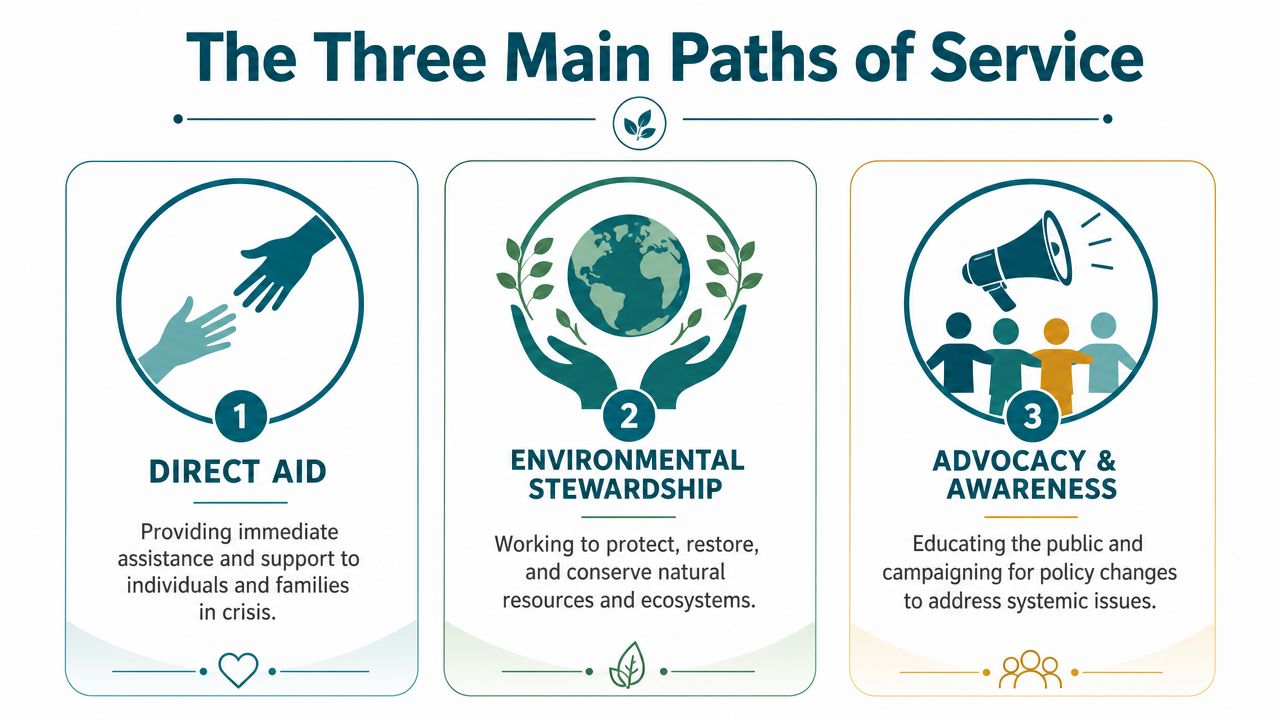
    The Three Main Paths of Service

    People use the phrase community service to mean different things. That's why confusion happens.

    I've seen one person say it after a joyful weekend cleanup, another say it about a court requirement, and a student say it about a class project. All three can fit under the same umbrella, but the reason behind the work changes the experience.

    An infographic detailing the three main paths of service: direct aid, environmental stewardship, and advocacy and awareness.

    Voluntary service

    This is the kind I know best. You choose it.

    Nobody sentences you to it. Nobody grades you on it. You wake up early on a Saturday, pull on your gloves, and go because you want your block, your river, your school, or your neighbors to feel more cared for. Voluntary service has a certain spark because choice changes the mood. You're there on purpose.

    You also learn fast that your reason can be mixed. Maybe you want to help. Maybe you want friends. Maybe you need structure. Maybe you're trying to become braver. That still counts.

    Court-ordered service and service-learning

    Court-ordered service is different. A person does work for the community because the legal system requires it. The task might look similar on the surface, but the starting point is obligation.

    Service-learning has another flavor. A school or training program ties service to reflection and education. You serve, then think about what happened, what you learned, and how the experience connects to a larger lesson.

    Here's a quick comparison:

    Path Why you do it What it often feels like
    Voluntary service Personal choice Freer, social, self-directed
    Court-ordered service Legal requirement Structured, mandatory
    Service-learning Educational goal Reflective, guided, tied to study

    Why motivation matters

    This matters a lot for students. Many people confuse general volunteering with the stricter meaning of community service in academic or professional settings. In medical school prep, direct work with underserved populations often matters most, and 78% of pre-med students overlook that distinction, according to GHL Foundation's discussion of underserved community service.

    So if you're asking what community service is, the full answer is this: the action matters, and the context matters too. Picking up litter, mentoring youth, visiting elders, helping with food distribution, or teaching health basics can all fit. The question is why you're there, who you're helping, and what kind of service the situation calls for.

    The Unexpected Gift You Get from Giving

    I started serving because I wanted to clean streets. I kept serving because it started cleaning up parts of me.

    That sounds dramatic, but I mean it in a plain, practical way. When you keep showing up to help other people, you build traits that are hard to fake. You become steadier. You get less fragile. You stop panicking every time conditions aren't perfect.

    You practice being the person you want to be

    I didn't become brave by reading about bravery. I became brave by standing outside when it was cold, awkward, inconvenient, and a little uncomfortable. I became more reliable by showing up again the next week. Then the week after that.

    Service works like a gym for character. One cleanup won't change your life. Repeated cleanups might.

    Here's what I got from it:

    • Bravery in small doses. Going to unfamiliar blocks, meeting strangers, and doing visible public work trained me to move before I felt fully ready.
    • Consistency I could feel. Weekend after weekend, the habit got stronger than my excuses.
    • Better friendships. Shared work is a great filter. People who wake up to help others usually have something solid in them.

    You find out who you are when the weather gets bad and you stay anyway.

    Volunteer-first groups change the experience

    Group culture matters. A lot.

    The healthiest service spaces I've seen protect the people doing the work. They care about safety. They care about morale. They don't treat volunteers like a wallet with legs. Volunteer-first groups that put safety and happiness ahead of pressure for money create a more sustainable experience, and that changes whether people come back.

    If you want a deeper look at what real results can look like over time, this page on measuring community service impact has a useful framework.

    The caterpillar idea is real to me

    I love the caterpillar image because nobody expects a caterpillar to stay a caterpillar.

    That's how service felt for me. I wasn't trying to become flawless. I was trying to become less afraid, less selfish, less flaky, less trapped in my own head. Service gave me a place to practice that transformation in public, one bag of trash at a time.

    And there's something else. Hard days become good stories. The freezing cleanup. The long walk. The muddy shoes. The weird conversation that turned into a real friendship. Service gives your life texture. It gives the plot somewhere to go.

    Watching Your Neighborhood Come Alive

    The first thing you notice after a cleanup is visual. A block looks calmer. A curb line appears again. Grass comes back into view. The street breathes a little easier.

    Screenshot from https://www.littercaterpillars.com

    But the deeper change is emotional. People walking by start talking. Someone thanks you from a porch. A kid stares like you're doing magic with a trash bag and a grabber. Another neighbor starts picking up around their own building a few days later. Service spreads because people copy what they can see.

    Block by block is how a city changes

    I've learned to trust repeated action more than grand speeches. One corner today. Another next week. A rough alley nobody wanted to deal with. A commercial strip full of bottles and wrappers. An empty lot that looked forgotten.

    That kind of work gets especially real in places people avoid. Community service grows when you stop treating some neighborhoods as disposable. Litter Caterpillars has cleaned all 50 Chicago wards, including neighborhoods others often avoid. I love that example because it refuses the lazy map in people's heads, the one that says some areas count more than others.

    There's also a direct environmental side to this work. Litter cleanup helps stop trash from washing into rivers, and the Chicago-Calumet River litter prevention effort shows how local cleanup connects to cleaner waterways.

    A short clip tells that story better than I can:

    You start seeing possibility where you used to see blight

    One of my favorite shifts is internal. You stop looking at an ugly space and thinking, “That's a shame.” You start thinking, “We can do something about that.”

    That mindset changes a neighborhood because it changes the people in it. Cleanup is rarely about making things look cute. It's about telling the truth with your hands. This place matters. These people matter. We're not waiting for someone else.

    A cared-for block invites more care. A neglected block teaches people to give up.

    That's why community service feels alive to me. You can watch the before and after happen in real time.

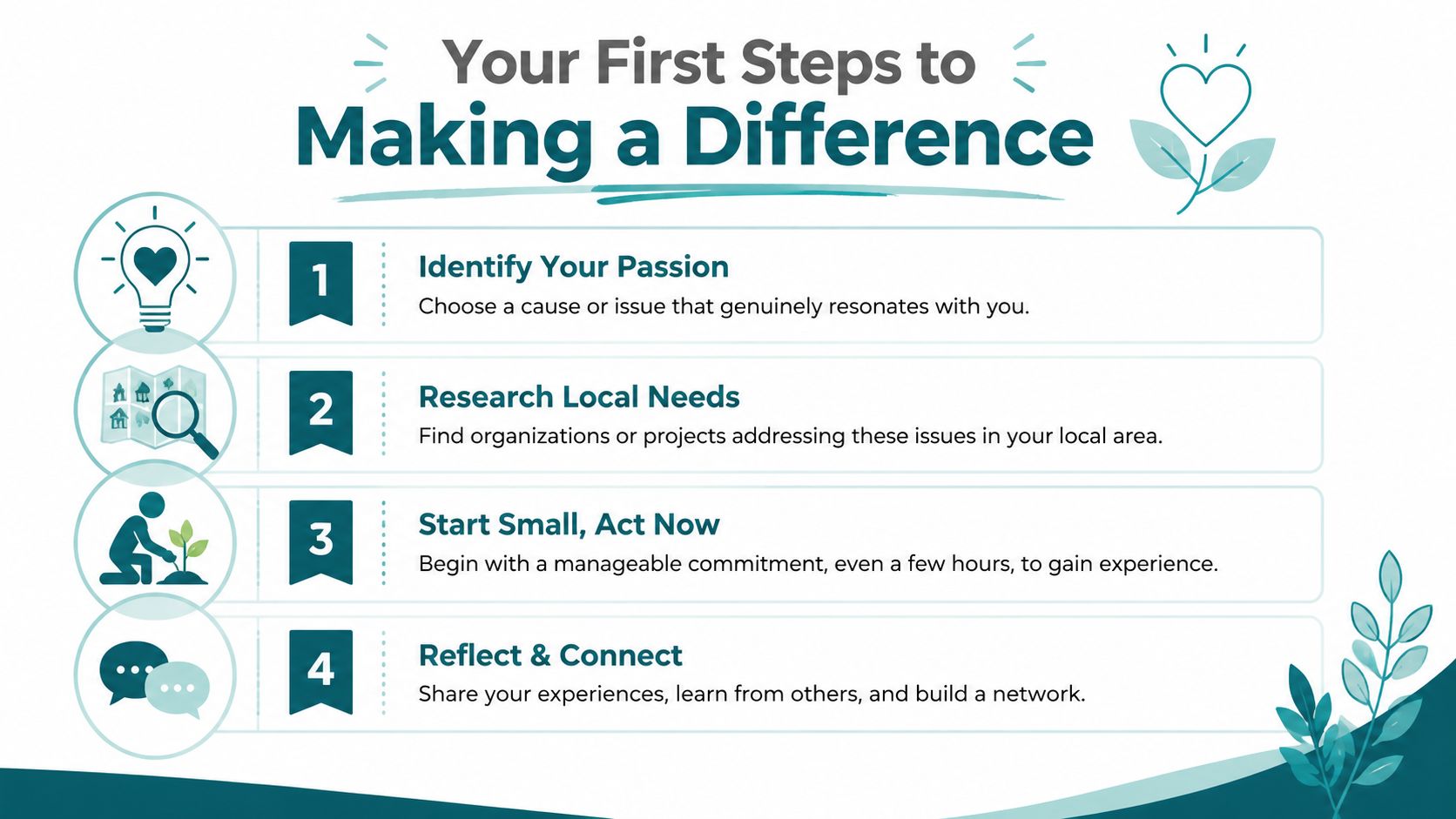
    Your First Steps to Making a Difference

    Individuals don't need more inspiration. They need a first move.

    The good news is that starting is much easier than performing some giant act of goodness. You don't need a full life mission. You need one cause you can stick with long enough to build a habit.

    A four-step infographic illustrating how to start contributing to community service and making a difference.

    Start with fit, then build consistency

    Pick something that pulls at you. If you care about litter, join a cleanup. If you care about hunger, find a pantry. If you care about reading, help at a library. Your odds of staying committed go way up when the work feels personal.

    Then make the commitment small enough that you'll keep it.

    • Choose one lane. Don't sign up for five causes at once. Pick one and learn its rhythm.
    • Check the group culture. Look for clear meeting details, safety norms, and respectful communication.
    • Use a simple schedule. One steady hour each week can change you more than one giant burst once a year.
    • Reflect after each shift. Ask yourself what felt energizing, awkward, useful, or meaningful.

    If you want a practical starting point, this guide to starting volunteering gives a straightforward way to begin. One factual option is Litter Caterpillars, which organizes volunteer trash pickups in Chicago and provides cleanup tools for participants.

    If you need service for school or applications

    Consistency matters even more when service connects to admissions or career goals.

    For academic or professional applications, longitudinal service over 6+ months is prioritized over one-day events by AMCAS and AAMC, according to this PMC article on service learning and sustained engagement. That tracks with what I've seen in real life too. A single service day can be nice. Ongoing service changes how you think, who you know, and what you notice.

    A good starting checklist looks like this:

    1. Pick a cause you can talk about without forcing it.
    2. Find a group that feels safe and grounded.
    3. Commit to a repeat schedule, even if it's modest.
    4. Keep showing up long enough for your presence to mean something.

    You don't have to become a saint. You just have to become dependable. That's where the change begins.


    If you want a simple way to try community service in Chicago, join Litter Caterpillars. You'll spend a morning cleaning a block, meeting other people who like to help, and finding out how much lighter life can feel when you carry one bag of trash at a time.

  • Harrison Smith Park: A Guide for Chicago Volunteers

    Harrison Smith Park: A Guide for Chicago Volunteers

    I once watched somebody show up to a cleanup in Chicago thinking they were headed to a park with a pool in Ohio. We laughed, handed them gloves, and by the end of the morning they said they were glad they got lost.

    Which Harrison Smith Park Are You Looking For

    You probably typed Harrison Smith Park because the name feels clear enough. It isn't. That name sends people in a few different directions, and I get why.

    One path takes you to Harrison Smith Park in Upper Sandusky, Ohio, at 525 E Wyandot Ave, Upper Sandusky, OH 43351, and it has a public swimming pool as its primary amenity according to the Harrison Smith Park listing in Upper Sandusky. If you wanted flip-flops, summer chlorine, and a pool deck, that's your place.

    The Chicago mix-up

    Then Chicago enters the chat and makes everything messier.

    Some people mean Harrison Park in Pilsen. Some mean Smith Park on the West Side. Some mash the names together and search for Harrison Smith Park as if the city fused them overnight. I like that confusion. It feels human. We do this with places the same way we do it with memories. We blur names, but we remember the feeling.

    If you're trying to sort out the Chicago side of this, start with this guide to Harrison Park in Pilsen. It helps if you're looking for the park by the museum, the courts, the fields, the neighborhood rhythm.

    A park name matters less than what your hands do when you get there.

    Why the confusion matters less than you think

    I care about this mix-up for a simple reason. Searchers aren't really searching for a noun. They're searching for a place to go, something to do, and maybe a reason to get out of their own head for a few hours.

    I've seen that search look a hundred different ways. One person wants a calm walk. One wants a place to volunteer. One wants to feel useful after a rough week. One just wants to be around decent people without needing to explain their whole life story first.

    So yes, there is a real Ohio park with a pool. Yes, there is a Harrison Park in Chicago. Yes, there is a Smith Park in Chicago that gets mixed into this too.

    Here's the simple version:

    Search phrase What you may mean What it has
    Harrison Smith Park Upper Sandusky, Ohio Public swimming pool
    Harrison Park Pilsen, Chicago Fields, courts, playground, garden
    Smith Park West Side, Chicago Historic park on former quarry and landfill land

    If you're in Chicago and you're looking for a park with grit in its story, dirt under its fingernails, and the kind of energy that makes you want to do more than stare at grass, you're probably looking for one of the Chicago parks. That's where this story really starts.

    A Chicago Park's Surprising History

    I love places with ugly beginnings. Maybe because I trust them more.

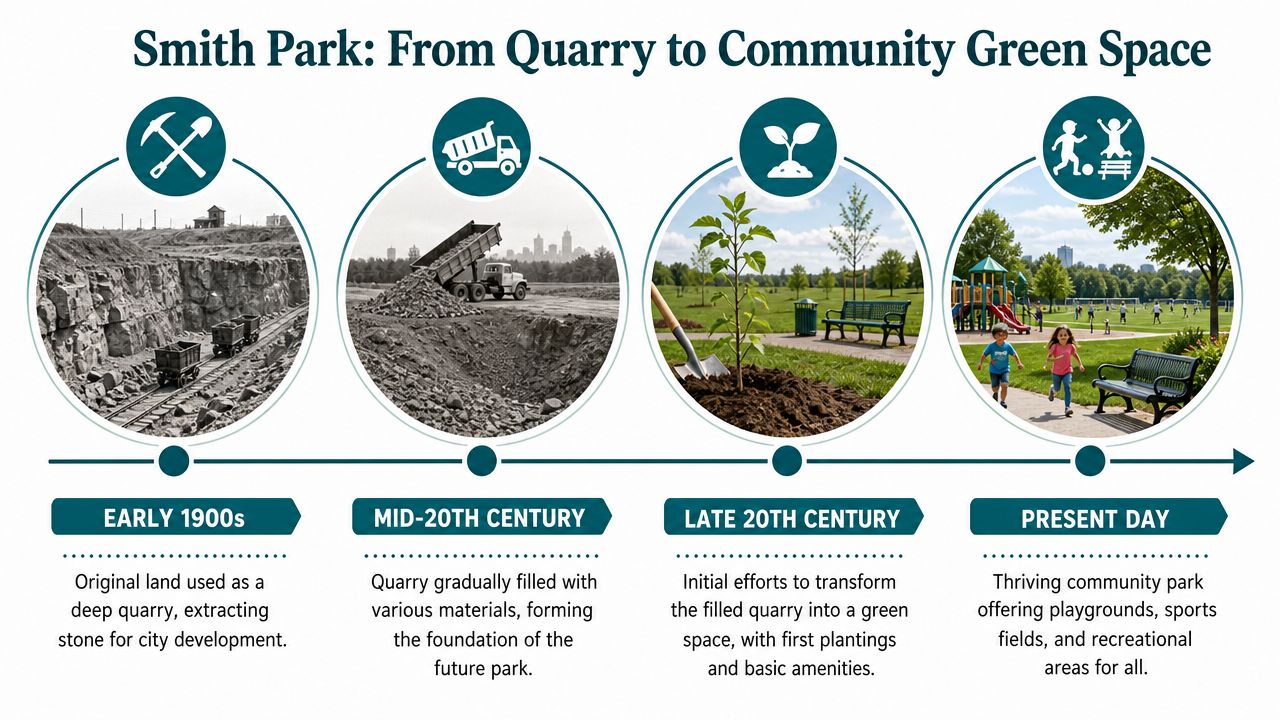
    Smith Park didn't begin as the kind of place where you'd toss a ball around or sit on a bench with a coffee. Smith (Joseph Higgins) Park in Chicago was founded in 1929 after a former quarry and landfill was filled to the brim by the mid-1940s, with the site transferred to the Bureau of Parks and Recreation in 1929, as described in this history of Chicago's West Side quarries.

    From hole to home ground

    Start there for a second. A quarry is a wound in the ground. People cut stone out of it. They take and take until the land looks like a giant missing tooth. Then people start dumping into it. Layer by layer, the city hides its mess in the same place it once carved for material.

    That story hits me hard because it feels familiar. I know what it's like to look at a mess and think, this thing is too old, too tangled, too embarrassing to fix. I know what it's like when every piece of junk has a memory attached to it, and moving one tiny thing feels like lifting a refrigerator with your bare hands.

    Then you look at a place like Smith Park and realize land can recover enough to become useful again. Not magically. Not cleanly. But well enough that kids run around there and neighbors gather there and life keeps happening on top of old damage.

    A timeline graphic showing the transformation of Smith Park from a stone quarry to a community park.

    Why I can't stop thinking about that story

    A lot of us carry quarry years. Then landfill years. Then maybe, if we're stubborn, we build something decent over the top.

    That doesn't erase what came first. It just means the old mess doesn't get the final word.

    Some places make sense only after you know what used to sit under your feet.

    When I walk through a park with that kind of past, I don't feel discouraged. I feel challenged. If a city can take a scar in the earth and turn it into a place where people meet, play, and breathe for a while, then you and I can probably face our own pile of wreckage too.

    Smith Park's history is earthy and blunt. That's why I like it. No fake perfection. Just dirt, trash, labor, time, and another chance.

    Exploring Chicago's Community Green Spaces

    If you want the practical version, here it is. Chicago gives you different flavors of public space, and the two parks tangled up in the Harrison Smith Park search each pull people in for different reasons.

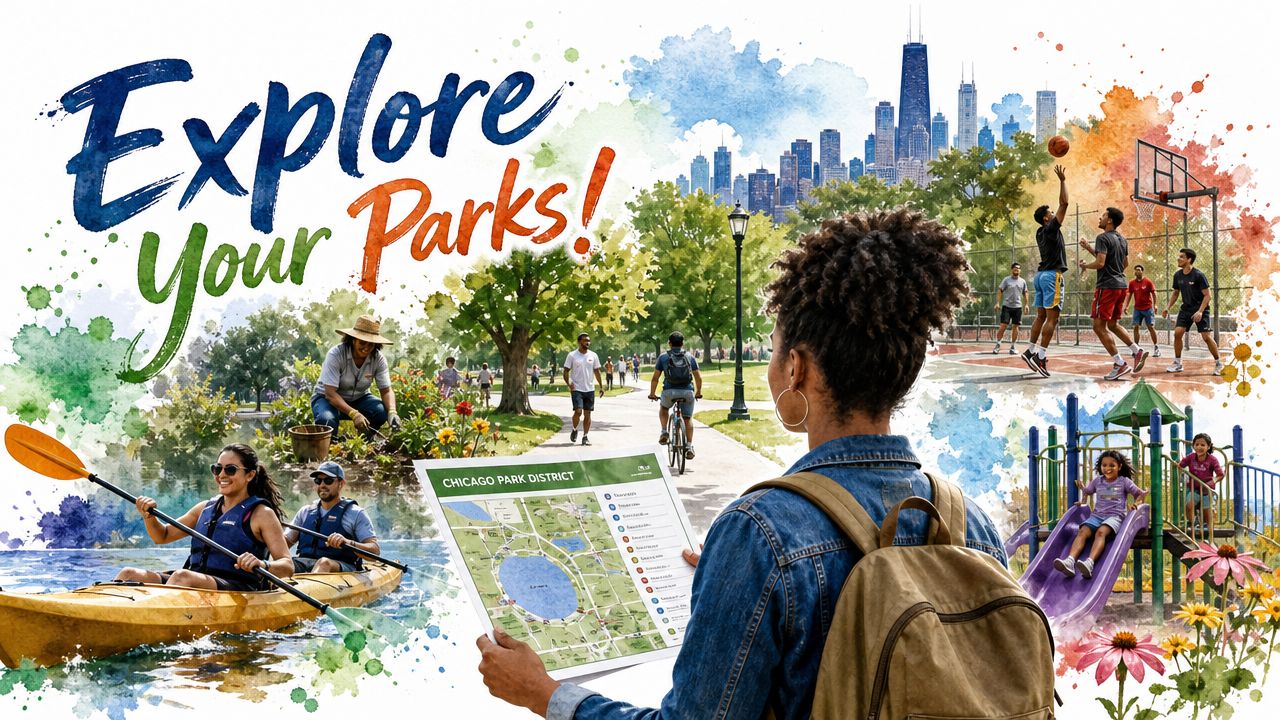
    A vibrant illustration of people enjoying various outdoor activities in Chicago parks, including kayaking, basketball, and gardening.

    Harrison Park in Pilsen

    Harrison Park is the one many Chicago searchers want. You can find it at 1824 S Wood St, Chicago, IL 60608, right next to the National Museum of Mexican Art in Pilsen, according to the Harrison Park page on Tripadvisor.

    And the park itself gives you room to move. Harrison Park's nearly 18 acres include tennis courts, basketball courts, baseball fields, athletic fields for football or soccer, plus a playground and community garden, as noted in Time Out's Harrison Park overview.

    That list matters because it tells you how to use the place.

    • If you want motion: Hit the courts or fields. This is the park for people who don't want to sit still.
    • If you want family time: The playground gives kids something immediate to do while adults breathe for a minute.
    • If you want neighborhood texture: Walk by the garden, circle the edges, and look at who's using the place.

    I like parks more when they have jobs. Harrison Park has jobs. It hosts games, walks, rest, noise, waiting, and small daily rituals.

    Smith Park on the West Side

    Smith Park feels different. The history changes the way I move through it. I pay more attention to edges, low spots, and the way built structures sit in relation to the ground.

    Here's a little street-level look before you go further.

    How to use these parks like a local

    Locals don't overcomplicate it. They pick a reason and go.

    Your mood Better fit Why
    You want activity all around you Harrison Park Courts, fields, and steady movement
    You want to think about place differently Smith Park The ground itself has a story
    You want to explore Pilsen on foot Harrison Park It's next to the museum and easy to pair with a neighborhood walk

    Practical rule: Don't arrive asking, "What's the perfect park?" Ask, "What kind of day am I trying to have?"

    That's a better question. It gets you out the door faster.

    How We Safely Clean Our Parks

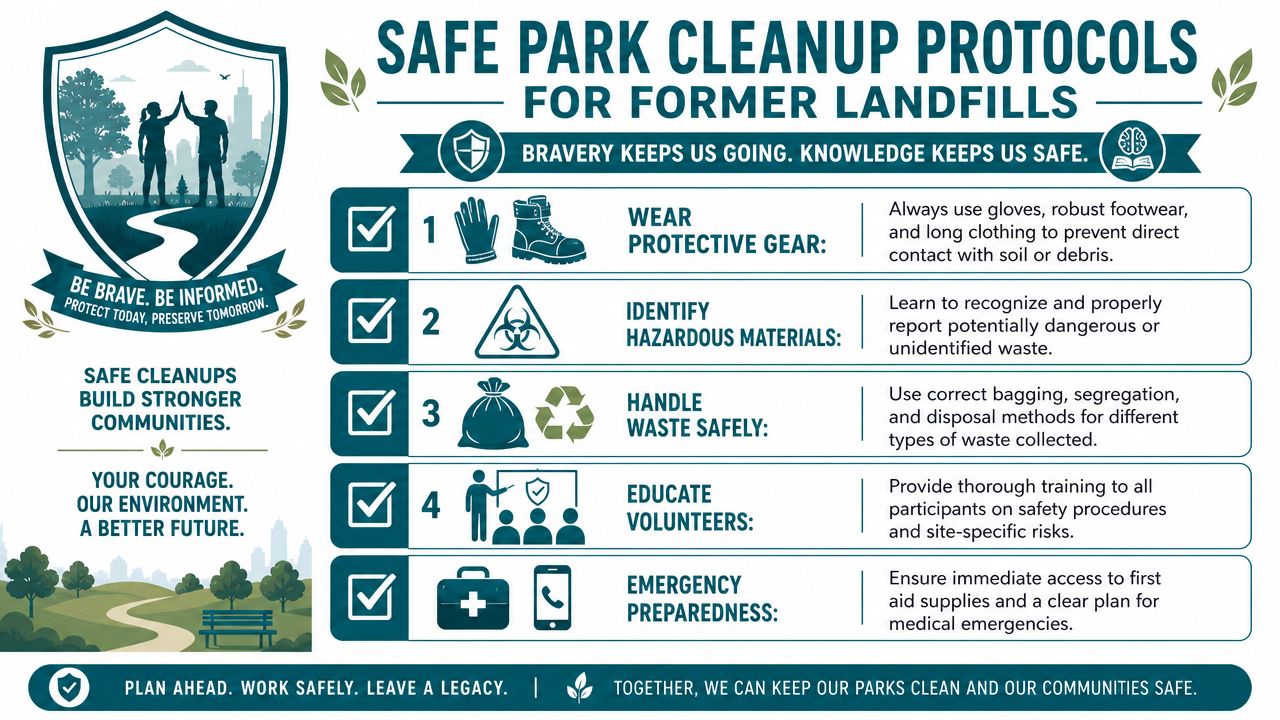
    Good intentions aren't enough when you're cleaning ground with a complicated past. You need judgment. You need discipline. You need to know when a trash grabber and a bag are enough, and when they aren't.

    One hard truth sits underneath this work. Parks built on historic landfills in Chicago can have 3–5x higher concentrations of legacy contaminants such as lead, asbestos, and hydrocarbons than naturally formed parks, and that risk can be higher in zones like drainage ditches, as noted in this post about landfill-built park risks in Chicago.

    Brave doesn't mean reckless

    I hate the fake version of courage. The version where somebody acts fearless because they don't know enough to be careful. That's not courage. That's ego wearing work boots.

    Real courage looks more boring. It looks like gloves. It looks like long pants. It looks like stopping to assess a weird material instead of poking it with your hand. It looks like telling a volunteer, "Leave that one. We're not touching it today."

    An infographic detailing safety protocols for volunteers cleaning up former landfill sites to ensure community safety.

    The method I trust

    When I clean a park with old industrial or landfill history, I keep the approach simple and strict.

    • Dress for contact: Wear protective gear that covers skin and keeps your footing steady.
    • Respect the weird stuff: If an item looks sharp, chemical, dusty, sealed, or unfamiliar, don't improvise.
    • Watch the edges: Drainage paths, fence lines, and ditch areas collect trash and can collect risk too.
    • Train before heroics: A volunteer who knows what not to touch is more useful than a volunteer trying to prove something.
    • Have backup plans: First aid, communication, and clear roles matter before the first bag gets filled.

    A lot of volunteer groups skip this because safety sounds less exciting than action shots. I think that's backwards. Safety is what lets good people keep showing up week after week instead of getting burned out, hurt, or scared off.

    If you want to think through the legal and planning side before you organize your own effort, read up on volunteer liability insurance for community cleanups. It helps you understand why structure protects generosity.

    If a park has a rough history, your cleanup plan needs a backbone.

    That isn't fear talking. That's respect.

    Join Us for a Weekend Cleanup

    Weekend mornings have a special energy. The city is quieter, the air feels less chewed up, and the people who show up that early for unpaid work usually have something good inside them.

    I think about Tom Sawyer a lot. He got stuck painting a fence and turned the punishment into an invitation. That's part of the fun here. Work changes shape when you stop treating it like humiliation and start treating it like a dare.

    What your first cleanup feels like

    You arrive a little unsure. Maybe you wonder if everyone already knows each other. Maybe you worry you'll be awkward, underdressed, too quiet, too late, too soft for the job.

    Then somebody hands you a bag.

    That moment matters. Holding a trash bag in a park is strangely clarifying. You stop performing. You stop trying to look interesting. You just start scanning the ground, picking targets, moving forward. Cup. Wrapper. Bottle cap. Broken toy. Fast-food bag snagged under a bush like it was trying to disappear.

    And the weird thing is, your brain starts to quiet down.

    Why the work feels good

    Smith Park got major upgrades in the late 1930s, including a field house with a gymnasium and meeting rooms, according to the Chicago Park District's Smith Park page. I love that detail because it reminds me that parks aren't abstract ideas. They are places where bodies gather, sweat, talk, rest, and return.

    That's why cleanups matter in a practical way. You're not cleaning some symbol. You're clearing a path for an actual person. A kid running near a field. A neighbor walking past. Somebody heading toward a meeting room. Somebody trying to have one decent hour outside.

    If you want a way in, check out weekend volunteer opportunities near you.

    What to expect when you say yes

    Your first cleanup usually includes a few things:

    1. A small moment of hesitation when you realize you're doing real physical work.
    2. A rhythm shift once your hands get busy and conversation starts to happen naturally.
    3. A quiet hit of satisfaction when the pile of full bags grows and a messy patch looks human again.

    Hard work with good people is one of the cleanest pleasures left.

    That's the pitch. No fake glamour. Just a better Saturday morning than doomscrolling.

    Building Friendships One Bag of Trash at a Time

    The first time I went out with a tiny cleanup crew, Chicago threw hail at us like the city was testing our sincerity. We huddled under a tree, freezing, phones out, watching ride after ride cancel. It should have been miserable.

    It was miserable. And it was funny.

    That combination changes people. When you shiver through something dumb and difficult with strangers, they stop feeling like strangers way faster than they would at a bar or a networking event or some polished little mixer where everybody is trying to seem effortless.

    Shared discomfort is glue

    I learned something that day. Cleaning somebody else's mess is often easier than cleaning your own. Maybe because there isn't any shame in it. The ground doesn't judge you. The bottle in the weeds doesn't ask why your apartment is a mess or why your last relationship blew up or why you've been avoiding your own life.

    You just pick it up.

    And when somebody next to you is doing the same thing in cold rain or sharp wind, you trust them a little. They've already shown you one thing that matters. They came.

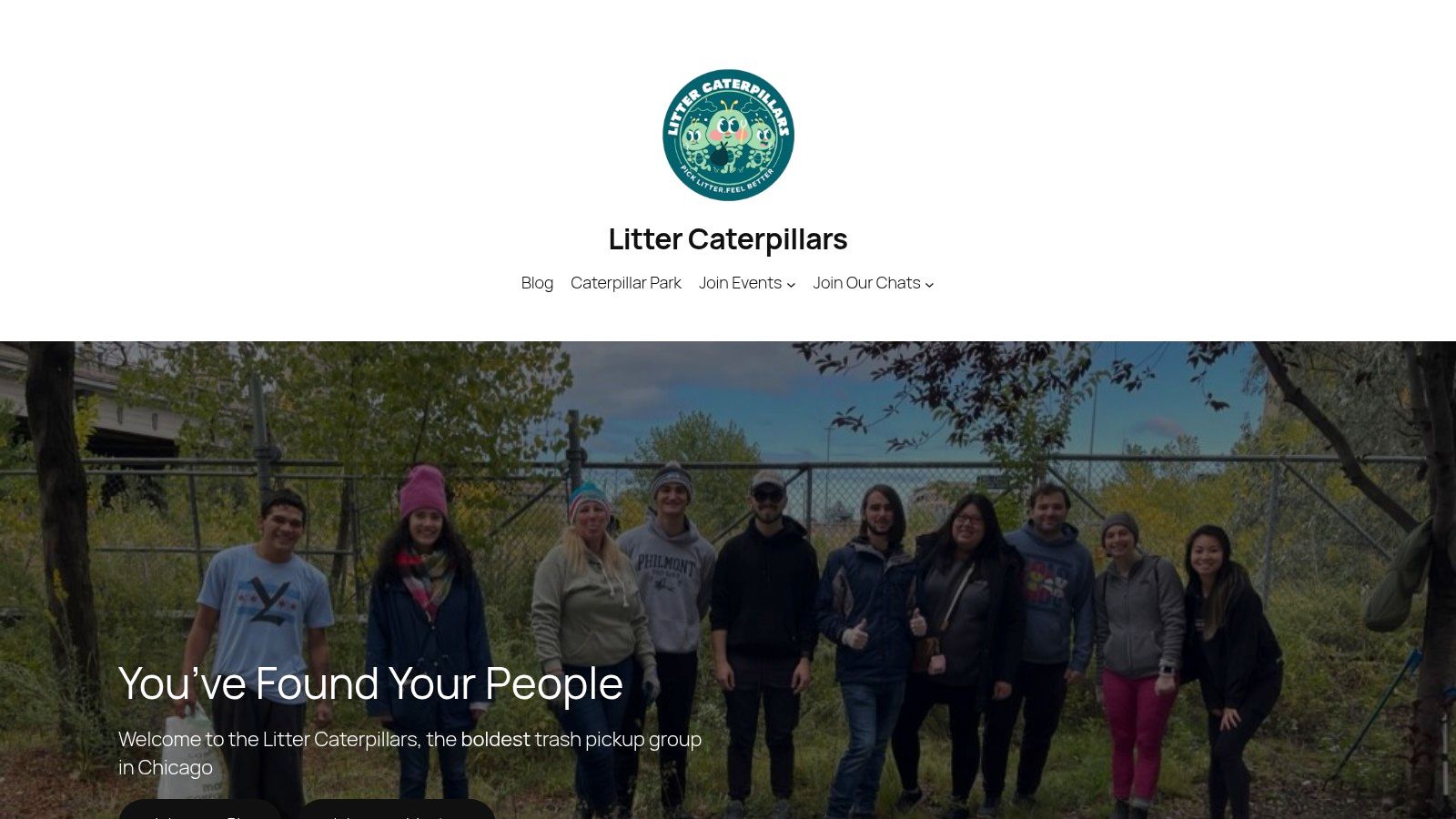
    Screenshot from https://www.littercaterpillars.com/

    Why people keep coming back

    Friendship doesn't always begin with deep conversation. Sometimes it begins with shared labor, an inside joke, and that look people exchange when a heavy bag finally gets tied shut.

    A cleanup group becomes social in sideways ways:

    • You earn trust fast: People see whether you help, drift off, complain, or stay steady.
    • You get stories immediately: Rain, weird finds, busted grabbers, lost gloves, surprise laughter.
    • You build identity through repetition: Same mission, different block, same people returning.

    I also think service scrubs away a lot of fake hierarchy. Out there, nobody cares who has the best resume. The wind doesn't care either. Trash equalizes people. That's one reason this kind of friendship feels less brittle.

    "We suffered a little together" is a stronger beginning than most small talk.

    If you've been lonely in a crowded city, this matters. You don't need a brilliant opening line. You need a reason to stand next to other people while doing something honest.

    Your Questions About Park Cleanups Answered

    People usually ask the practical stuff first. Good. Practical questions keep everybody safer and calmer.

    Is it actually safe to clean a park with a rough past

    It can be, if you respect the site and don't freeload on optimism. Use protective gear, avoid suspicious material, and treat certain areas with extra caution. If something looks off, leave it and report it through the right channel instead of trying to be a hero.

    What should you bring

    Keep it plain.

    • Wear sturdy clothes: Closed-toe shoes, long pants, and gloves are the baseline.
    • Bring water: Even short cleanups can sneak up on you.
    • Pack light: You don't need a whole expedition setup. You need mobility and common sense.

    Can you come alone

    Yes. A lot of people do. In fact, coming alone is often easier than dragging a half-interested friend who wants credit for almost showing up.

    The work gives you something to do with your hands right away, which takes pressure off conversation. That helps shy people more than they expect.

    What if you're nervous about not knowing anyone

    Then you're normal.

    It's common to feel that way before the first cleanup. The trick is to let the task carry the social weight for a while. You don't need to charm anybody. You just need to participate.

    Can you organize your own cleanup somewhere else

    Yes, including in a place like the Ohio park that comes up in the Harrison Smith Park search. Start small. Learn the site. Ask what risks are unique to that area. Keep your plan tighter than your ambition on day one.

    A simple checklist helps:

    Question Why it matters
    What kind of site is this Park history changes cleanup risk
    Who is coming Group size changes supervision needs
    What will you avoid Boundaries keep volunteers safe
    What happens if something looks hazardous You need a clear answer before you begin

    What mindset should you bring

    Bring humility. Bring energy. Bring a willingness to do unglamorous work.

    Don't bring the fantasy that one cleanup fixes everything. It won't. But one cleanup can fix one morning, one patch of ground, one conversation, one corner of your own drifting life. That's plenty.


    If you want a group that cleans Chicago with courage, humor, and actual care for the people doing the work, visit Litter Caterpillars. You'll find a crew that shows up on weekend mornings, takes safety seriously, and turns trash pickup into friendship, purpose, and a pretty wild kind of fun.

  • 7 Ideas for Community Service for Students (2026)

    7 Ideas for Community Service for Students (2026)

    I've stood in my kitchen staring at an old bag of nuts and a sticky jar in the back of the fridge like they were boulders. Then I went outside, picked up a stranger's crushed coffee cup, and it felt weirdly easy. That's when community service for students clicked for me.

    Your own mess has history. Other people's mess usually doesn't. You can move it. You can finish something. You can look down at a cleaner sidewalk, a sorted shelf, a planted tree, a happier classmate, and say, “I did that.” That's why service works so well when your brain feels jammed. It gets you out of rumination and into motion.

    This isn't only about hour logs and application blurbs. It's about finding out who you are when it's cold, or awkward, or early, or inconvenient, and you still show up. If you want community service for students that changes you, start with something real, visible, and easy to repeat.

    1. Litter Caterpillars

    Litter Caterpillars

    One of the clearest service stories I've seen starts with a cold Chicago morning, a grabber in your hand, and a block nobody else felt like claiming.

    You show up half-awake. There's fast-food trash pressed into the curb, bottles in the grass, a wet flyer stuck to the sidewalk. An hour later, the pile is in bags, people are laughing, and the street looks like somebody finally cared. That shift matters. You came out to clean a corner, but you also proved to yourself that you can finish something.

    That's the pull of Litter Caterpillars, the Chicago cleanup crew started by Kevin Tao. The idea behind it is stronger than “pick up litter.” If your own life feels backed up, helping clean up somebody else's mess can get you moving again. Weekly cleanups, rough weather, missed sleep, awkward first introductions. It all becomes training. You build courage by doing a simple hard thing on purpose, over and over, with other people beside you.

    Why students remember this one

    Some service programs give you a task and send you home. Litter Caterpillars built a culture people want to return to. Flags, badges, group chats, rituals, a theme song. That sounds goofy until you realize how many students quit volunteering because nothing pulls them back the next week.

    Practical rule: Pick a service group that gives you a reason to come back when your motivation disappears.

    That return factor is a real issue. Researchers at the Do Good Institute found that millions of U.S. high school and college students volunteered each year, while participation rates still sat far below half, according to the Good Intentions Gap in Action report. Interest is not the problem. Repetition is.

    Litter Caterpillars is strong at repetition because the work is visible and the identity is shared. You are not staring at a vague goal. You can point to a cleaner alley, an emptied lot, a park edge with fewer cans and wrappers, and say, “We changed that today.” If you want to understand more about why volunteering helps students grow over time, this kind of visible, recurring service is a powerful example.

    What stands out, and what can test you

    The biggest strength is how concrete it feels. Trash cleanup gives you a before and after in the same morning. Litter Caterpillars also pushed past one-day service and helped transform an empty lot into Caterpillar Park in Englewood. That kind of result changes how you see “small” volunteer work. A few bags of trash can become a habit. A habit can become a crew. A crew can change a block.

    A few practical notes matter.

    • Best part: You can join without money pressure, and the focus stays on volunteering, safety, and community.
    • Best for: Students, new residents, and anyone who wants friendship built into the work.
    • Hard part: It's physical. Weather, walking, and early mornings can wear on you.

    I like that last part more than I used to. Waking up early for a cleanup is not glamorous. That's why it works. You start to see yourself differently when you keep showing up anyway. For some students, community service is a line on a resume. For others, it becomes the place where they get their life back in order. Litter Caterpillars makes a strong case for the second version.

    2. DoSomething.org

    Some days you don't need a grand mission. You need one decent action that fits between class, work, and dinner. That's where DoSomething.org has an edge.

    It's built for teens and young adults who want service without needing a car, a huge time block, or a big group. The platform runs short actions you can do online or in person, and it gives you step-by-step guidance instead of dumping you into confusion. If you've ever wanted community service for students that feels less like “join a committee” and more like “start now,” this one is strong.

    When I'd choose this over an in-person crew

    I'd pick DoSomething if your life is scattered. Maybe your schedule changes every week. Maybe transportation is a pain. Maybe you need a smaller on-ramp before you try a recurring volunteer commitment.

    Its appeal is flexibility. Actions are usually compact, and the platform has photo-proof submission plus downloadable volunteer hour certificates. If you're trying to learn why volunteering helps students grow, this kind of low-friction action is a good first experiment because it removes a lot of excuses.

    Sometimes the best volunteer opportunity is the one you'll actually complete this week.

    There's also a real historical reason this matters. Student service has been common for a long time when schools and organizations make it organized and easy to join. The National Center for Education Statistics reported in 1999 that 64% of public schools had students participating in community service activities recognized by or arranged through the school, and 57% of public schools organized those activities. In schools where students participated, 89% had school-organized opportunities. That data is in the NCES report on student community service.

    The tradeoff

    DoSomething is clean and convenient, but some schools still prefer logs signed by a live supervisor. So before you bet your graduation or club requirements on a certificate, check what your school counselor or advisor accepts.

    • Great fit: Solo students, students with limited transportation, and students who need fast hour documentation.
    • Less ideal: Anyone whose school only accepts supervisor-signed paper forms.
    • Nice bonus: You can test different causes without getting locked into one identity too early.

    3. Habitat for Humanity Youth and Campus Chapters

    If you want service that feels solid, Habitat is hard to ignore. There's something powerful about touching materials, stocking a ReStore shelf, or helping a campus chapter run projects that support housing work. You leave with sore legs sometimes, but also with the feeling that your Saturday had a backbone.

    Habitat for Humanity youth programs give students a few paths in. You can volunteer locally, join or start a campus chapter, help with advocacy and fundraising, work in a ReStore, or try a Collegiate Challenge trip if you're old enough and ready for more commitment.

    Why students keep coming back to Habitat

    Habitat has structure. For a lot of students, that's a gift. You don't need to invent the opportunity from scratch or wonder if the adults know what they're doing.

    If you're searching for more community service ideas for college students, Habitat is one of the cleanest bridges between one-time volunteering and a longer service habit. It also works well for students who like team projects and don't mind rules, waivers, and clearer supervision.

    What I'd tell a nervous first-timer: Start with a ReStore or non-construction role if heights, tools, or job-site noise make you tense.

    The part people forget

    Habitat feels accessible, but local rules matter. Build-site tasks can change by age and affiliate, and some break-trip options bring travel costs or fees. So this isn't always the cheapest path.

    Still, there's a reason many students trust it. It's recognizable, visible, and easy to explain on an application without sounding fake. You worked with people. You showed up. You learned how much planning goes into something as basic as a safe, stable place to live.

    4. buildOn

    buildOn (U.S. Service Learning Program)

    buildOn is for students who don't want service to be random. If you do better when service is tied to school, mentors, teachers, and a long runway, buildOn's U.S. programs make a lot of sense.

    I like this model because it treats service like a practice, not a burst of guilt. In partner high schools, students get after-school and in-class service-learning tied to real community work. That can mean meals programs, tutoring, support for seniors, and leadership development over time instead of a single “volunteer day” photo.

    Why the school-based setup matters

    By the mid-1990s, student participation in service was already broad. One source summarized that an estimated 49% of U.S. students in grades 6 through 12 reported participating in a community service activity during the 1995–96 school year, and later national volunteer data showed continued large-scale adult volunteering as well. The same summary notes that in the year ending September 2023, 75.7 million Americans formally volunteered through organizations, or 28.3% of people age 16 and older. That overview is in the University of Nebraska Omaha service-learning summary.

    That doesn't mean every student turns service into a lasting habit. It does tell me that organized channels work. buildOn leans straight into that reality. If your school is already part of the network, you don't have to wrestle the logistics alone.

    For students curious about service-learning programs, this is one of the clearer examples of what “integrated into school life” looks like.

    The friction point

    The downside is access. buildOn is strongest inside partner schools, so if your campus isn't connected, you may need a teacher or administrator to help open the door. And the international Trek side takes extra commitment.

    • Best for: High school students who want sustained service and leadership, not occasional hour-chasing.
    • Hard part: You may need school buy-in before any of it becomes real.
    • Why I'd still consider it: Consistency gets easier when the opportunity already lives where you spend your week.

    5. Student Conservation Association

    Student Conservation Association (SCA)

    A lot of students do better once they get outside and start using their hands. I've seen what happens when someone spends a morning hauling brush, clearing a trail, or planting trees with a crew. They stop performing “being helpful” and start feeling useful.

    That's why Student Conservation Association stands out. It gives high school and college-age students real conservation work, often in crews and internships that put you in parks, public lands, urban forestry projects, and other outdoor assignments. If Litter Caterpillars begins with picking up one ugly mess on your own street, SCA feels like the next level. You learn what it means to care for a whole place with other people counting on you.

    Why this one changes people

    The shift happens fast. You show up early. You get dirty. You carry tools correctly or somebody gets hurt. You learn that “I forgot” does not help your crew when there's a trail to repair or invasive brush to remove before the heat gets bad.

    That kind of service gets under your skin in a good way.

    A school service club can teach responsibility. Outdoor crew work tests it. You feel the day's effort in your legs, your shoulders, and the quiet way your team starts trusting you more. For some students, that is the moment service stops being a college application line and starts becoming identity.

    There's a practical side too. Organized volunteer programs track hours, placements, and participation carefully, and the systems around volunteer work keep getting more formal. The Credence Research volunteer management platforms report says Independent Sector and the Do Good Institute estimate the value of a volunteer hour at $36.14 in 2025. That does not make your time meaningful by itself, but it does show that serious organizations treat volunteer work as real work.

    What I'd weigh before joining

    SCA makes a lot of sense if you care about climate, parks, forestry, restoration, or outdoor careers and want service that could grow into job skills. Some programs may offer stipends or education awards, depending on the role.

    The hard part is fit. Your region, the season, transportation, and gear can all affect what's available. Some opportunities are local and manageable. Others ask for more planning than a busy student can realistically give.

    Still, I keep coming back to this kind of work because it can straighten you out a little. A cold morning on a conservation crew has a way of cutting through excuses. You show up, do your part, and head home different than you arrived.

    6. Key Club International

    If you want community service for students that lives right inside school, Key Club International is the classic answer. I mean that in a good way. You don't have to build a service life from scratch when your club calendar, sponsor, and officer team already exist.

    Key Club is student-led, which changes the feeling of the work. You aren't only attending projects. You can plan them, recruit friends, run meetings, and learn how messy group leadership really is. That's useful. Service gets more real the second you have to remind other people to bring supplies and show up on time.

    Why this works for shy students too

    A lot of students think leadership clubs are only for polished extroverts. I don't buy that. School clubs are one of the safer places to practice taking up space because the stakes are lower and the rhythm is familiar.

    Key Club has school-based chapters, officer roles, guides, and a path to start or reactivate a chapter. It also has mentorship through Kiwanis sponsors, which can help if you want adults around who understand how to move a project from “good idea” to actual event.

    The downside nobody should hide

    The quality depends a lot on the local club. A strong chapter feels alive. A weak one can feel like a spreadsheet with snacks. There are also dues. The plan notes international dues at US$10, and district or local dues can vary.

    • Strong fit: Students who want recurring service with friends from school.
    • Better than it sounds for: Students who want to learn logistics, public speaking, and project ownership.
    • Watch out for: Dead chapters, uneven energy, and joining for the title instead of the work.

    If your school has a good chapter, it can become the simplest way to make service part of your normal week.

    7. Best Buddies Schools Programs

    Best Buddies – Schools Programs

    Trash cleanup changes a block fast. Best Buddies changes a room more subtly. You feel it when students who usually stay on the edge of school life are suddenly included in the joke, the lunch table, the event, the friendship.

    Best Buddies schools programs pair students with and without intellectual and developmental disabilities through one-to-one friendships, group activities, and leadership roles. There are middle school, high school, and college chapters, plus e-Buddies for virtual connection in some cases.

    Why this can change you

    This kind of service asks more from you than one good Saturday. It asks for patience, attention, consistency, and respect. If you're flaky, people feel it. If you show up, they feel that too.

    I think that's why this model can shape students so profoundly. You aren't dealing with an abstract cause. You're dealing with a person, a name, a conversation, and the responsibility of being someone safe and reliable.

    Community service gets personal fast when somebody notices whether you came back.

    What to know before you jump in

    Best Buddies has a clear chapter structure and strong materials for officers and advisors. That helps. But in-person matching can vary by school or region, and some students may need to help relaunch a chapter instead of stepping into a polished one.

    The plan notes that high school and college chapters are often expected to pay annual chapter dues, commonly around US$350. That cost can be a real barrier, so ask questions early instead of getting excited and then stuck.

    Still, if what you want from service is friendship, empathy, and a reason to become more dependable, this one is hard to fake your way through. That's part of its strength.

    Student Community Service: 7-Program Comparison

    Program 🔄 Implementation Complexity ⚡ Resource Requirements 📊 Expected Outcomes 💡 Ideal Use Cases ⭐ Key Advantages
    Litter Caterpillars Low–moderate (volunteer-run weekly events) Low (volunteers, grabbers, bags; minimal funding) High visible neighborhood cleanups; community projects (e.g., park) Weekend hands-on cleanups; local community-building Consistent visible impact; strong volunteer culture
    DoSomething.org Very low (digital, step-by-step actions) Minimal (internet access, short time blocks) Quick documented actions; volunteer-hour certificates Students needing quick/remote volunteer hours Very accessible and scalable for youth
    Habitat for Humanity – Youth & Campus Chapters Moderate (affiliate coordination; chapter setup) Moderate (training, possible trip fees, volunteer time) Tangible housing/neighborhood impact; resume value Structured campus service, ReStore roles, build projects Recognized brand with training and local support
    buildOn (U.S. Service Learning Program) Moderate (school partnerships; program integration) Low for partners (free in-class resources); requires teacher buy-in Sustained logged service, SEL and leadership gains Partner high schools seeking curriculum-aligned service Structured, school-integrated programs that boost retention
    Student Conservation Association (SCA) Moderate (applications, age limits, crew logistics) Variable (paid crews/stipends available; gear/travel may apply) Skill-building, paid field experience, AmeriCorps pathways Students pursuing conservation, urban forestry, career prep Paid opportunities and clear conservation career pathways
    Key Club International Low–moderate (school chapter with sponsor) Low (student time, small membership dues) Ongoing school-based service; leadership development High school students seeking leadership and service roles Large network, officer training, mentorship pipeline
    Best Buddies – Schools Programs Moderate (chapter setup, buddy matching, training) Moderate (advisor support, possible chapter dues) Measurable inclusion and improved school climate Schools aiming to increase inclusion for students with IDD Comprehensive training/resources and measurable social impact

    Making It Real Your First Step

    You've got options now. Good. Don't turn that into procrastination.

    Pick one thing and move. Send one message. Fill out one form. Join one cleanup. Ask one teacher about a chapter. Community service for students works best when you stop treating it like a personality trait and start treating it like a calendar event.

    If you care about hours, track them like they matter because they do. Use a notebook or a spreadsheet. Log the date, organization, what you did, how long you served, and the name and contact info of the adult in charge. Get signatures or confirmations right away. Don't trust your future self to remember details after three busy weeks.

    Safety matters too. Go with a friend the first time if you can. Tell a parent, guardian, or roommate where you're going. Wear clothes that match the job. If it's outdoor service, think about weather, water, gloves, and sunscreen. If anything feels off, leave. You don't owe anyone your discomfort just because the event has a good cause attached to it.

    Then there's the part students usually mess up on applications. They list duties and forget the story. Don't write like a robot. Write like a person who changed. Say you got up early every Saturday and learned that discipline feels less dramatic than movies make it look. Say you picked up trash with strangers and made actual friends. Say you joined a chapter, kept showing up, and found out reliability is a form of kindness.

    I also think you should be realistic about motivation. You won't always feel inspired. That's normal. Sometimes service is cold hands, awkward introductions, a long bus ride, or a morning when your bed is winning the argument. Go anyway, at least once or twice past the point where the novelty wears off. That's where the true stuff starts. That's where you stop borrowing identity from the cause and start building your own.

    If I had to give you one final push, it's this. Don't wait until your life feels organized enough to help other people. A lot of us started helping because our lives weren't organized. Service gave us a place to practice being the person we wanted to become.


    If you want a version of community service for students that gets you outside, gives you visible wins, and helps you build courage with other people, join Litter Caterpillars. Show up on a weekend morning, pick up one piece of trash, and see what happens to your mood, your habits, and your circle.

  • Kayak Fox River: Ultimate Guide to Planning Your 2026

    Kayak Fox River: Ultimate Guide to Planning Your 2026

    I slid my kayak into the Fox just after sunrise, and within minutes I was steering around a floating bottle pinned against a branch. I picked it up, tucked it behind my seat, and felt the whole trip change shape.

    More Than Just a River Paddle

    The first time I really understood the Fox River, I wasn't chasing speed or distance. I was drifting through a quiet stretch, listening to the blade drip after each stroke, when the river kept handing me small choices. Go left around the snag. Slide into the slower water. Pull one piece of trash. Keep moving.

    That mix is what keeps pulling me back. A Fox River paddle can feel easy and loose, but it can also feel like a real outing with a beginning, middle, and finish. The river itself explains why. The Fox River of Illinois is 202 miles (325 km) long and flows from southeastern Wisconsin to Ottawa, Illinois, which is why one trip can pass through very different towns and moods of water as noted in this Fox River overview).

    A person kayaking on the calm Fox River during a beautiful, vibrant sunset near a stone building.

    Why the Fox feels bigger than an afternoon float

    Some rivers feel like park amenities. The Fox feels more like a long road with water on it.

    You launch in one town, pass under bridges, drift by islands, and pull out somewhere else with wet sleeves and a better appetite than when you started. Even a short route can give you that little expedition feeling. You aren't circling a pond. You're traveling.

    I also like that the river has history in its bones. People once looked at this water as a route for movement and trade, not just a pretty place to spend a Saturday. You can still feel that practical side when you plan a shuttle, read a current seam, or choose a take-out before dark.

    Practical rule: A good kayak Fox River trip gets better when you treat it like a journey, not a random splash around.

    Adventure gets better when it has a job

    On a normal paddle, I notice birds, current, bridge shadows, and the sound of my hull touching gravel. On a cleanup paddle, I notice all that plus the stuff that doesn't belong there. A foam cup jammed into reeds. Fishing line wrapped on wood. A plastic bottle spinning in an eddy like it has nowhere else to go.

    That doesn't ruin the trip for me. It deepens it.

    When I paddle with a cleanup mindset, I come home with more than tired shoulders. I remember the cove I left cleaner. I remember the little puzzle of carrying litter without making my kayak unstable. I remember making a place look more like itself again.

    Regarding kayak Fox River advice, that's the angle I think matters most. Go for the paddle, yes. Go for the quiet. Go for the workout. But leave room for purpose, because purpose gives the day a sharper edge. It turns a float into a story you'll retell on the drive home.

    Charting Your Course on the Fox

    A good plan starts with honesty. Are you here to glide for a while and clear your head, or do you want a longer point-to-point outing with lunch, route decisions, and tired arms by the end?

    The Fox gives you both. In the Aurora area, paddlers have organized access points, a 1,100-foot bypass chute around the Glen D. chain of barriers, shuttle-backed route options through Howling Wolfe Canoe & Kayak between Batavia, North Aurora, and Aurora, and the Marge Cline Whitewater Course in Yorkville. The same regional guide also notes that the Fabulous Fox! Water Trail is a National Park Service Water Trail, which you can see in the Aurora outdoor guide to the Fox River.

    An infographic showing five numbered steps for planning a safe and enjoyable Fox River kayak journey.

    Pick the day you actually want

    I like to sort Fox outings into three simple stories.

    Trip style Best fit What it feels like
    Short float Newer paddlers or relaxed mornings Easy pace, fewer decisions, more looking around
    Town-to-town paddle People who want movement and variety A real journey with a launch and a different take-out
    Sport run Paddlers who want technical water More attention, more excitement, less drifting

    A short float works well when you don't want logistics to eat half the day. You launch, settle in, paddle a calm stretch, and get off the water before fatigue starts making sloppy decisions for you.

    A town-to-town route is where the Fox gets fun in a different way. Batavia to Aurora, or North Aurora toward Aurora, feels like travel. Shuttle support helps because your car doesn't have to be at both ends of the story.

    If you want something punchier, Yorkville changes the mood. The whitewater course asks for sharper attention and better boat control. That's not where I'd send someone on their first outing with a half-zipped life jacket and a coffee in the cup holder.

    Build around logistics, not wishful thinking

    I've seen plenty of paddlers make the same mistake. They choose a route because it sounds good, then try to force parking, timing, and pickup to match. Do it in the reverse order.

    Start with these questions:

    • Who is in your group. If one person is brand new, plan for their comfort, not the strongest paddler's ego.
    • How will you finish. A one-way trip needs a shuttle or two cars.
    • What will you do with cleanup bags. If you're collecting litter, your take-out matters even more.
    • Where are the barriers. A bypass chute or a known portage changes the whole day.

    If you want route ideas tied to community-minded paddling days, I like the local context gathered on the Fox River Valley page.

    Some days, the smartest route is the one that leaves you wanting one more mile instead of begging for shore.

    Match the route to your energy

    Morning calm doesn't mean the whole group will stay fresh, patient, or focused for hours. I keep that in mind every time I plan a paddle. A shorter route with a clean shuttle can beat a grand plan that falls apart at the take-out.

    When you search for a kayak Fox River trip, don't ask only, "Where can I launch?" Ask, "What kind of day do I want to have when I get back to the car?" That answer usually picks the route for you.

    Gearing Up and Staying Safe

    I once skipped water shoes because the river "looked deep enough." Later, I was out of the boat, ankle-deep on a rocky patch, pulling my kayak forward and trying not to think about what my bare feet were stepping on.

    That was dumb. Small mistakes on a river become long, annoying lessons.

    A man dragging a red kayak through shallow water, wishing he had sturdy water shoes for protection.

    The safety habits that matter aren't glamorous. They're the boring, repeatable ones you do every time. The Fabulous Fox Water Trail safety guidance says paddlers should always wear a U.S. Coast Guard-approved life jacket, go with a companion or group, carry a spare paddle and first-aid kit, and tell a trusted person the route, launch point, take-out point, and estimated timing. That same guidance indicates a typical paddling speed of 2 to 3 river miles per hour, notes that water levels can change quickly after rain, and warns that low bridges, dams, and cold water can turn a casual plan into a bad one.

    Wear the gear you brought

    A life jacket strapped to the boat is decoration. Wear it.

    The Fox can look forgiving right up until you hit a weird current line, a low bridge approach, or a shallow walkout where you lose footing beside the boat. If you flip, you won't have time for a neat, thoughtful equipment discussion with yourself.

    My basic list stays simple:

    • Life jacket on your body. Not under a bungee cord.
    • Durable water shoes. You may need to walk the boat.
    • Dry storage. Phone, keys, and anything you really need should stay dry.
    • Drinking water and food that won't fall apart. Wet granola mush is a morale killer.
    • Spare paddle and first-aid kit. The river doesn't care that you planned a short trip.

    I also keep my deck clean. Loose gear slides, catches, and distracts you when you need attention most.

    Float plan first, confidence second

    I trust skilled paddlers who plan conservatively more than bold paddlers who wing it. A float plan isn't overkill. It's what separates a smooth day from a guessing game if somebody is late.

    Tell one person where you launch, where you expect to exit, and roughly when they should hear from you. Then follow through after the paddle.

    If you're building confidence on moving water before trying the Fox or adding cleanup work to the mix, I like resources that talk plainly about urban paddling habits, such as this look at urban kayaks in Chicago, IL.

    Here's a useful visual break before you head out:

    The little mistakes that drain a whole day

    Most rough paddles don't start with drama. They start with friction.

    You launch late. Someone forgot water. Somebody else assumed the bridge clearance was fine. Then the group gets tired, slower, less patient, and more likely to make a bad call. Add a muddy portage or a stretch of shallow water and the day starts chewing on everybody's mood.

    Cold water can be "extremely dangerous," and the right call on some days is simply not to launch.

    I think of safety as buying myself freedom. The better I pack and plan, the more mental room I have to enjoy the river. That's true whether I'm chasing a peaceful morning or trying to haul out a bag of trash with me at the end.

    Reading the River Like a Pro

    A river talks in hints. It doesn't hand you labels.

    You learn by watching the surface the way you'd watch traffic from an overpass. Some lanes move cleanly. Some bunch up. Some look open until you get close and realize they're trouble.

    Look for texture before color

    When I approach a new stretch, I stop treating the river like flat water and start reading its skin. Tiny standing ripples often mean the bottom is coming up to meet you. They look playful from a distance, but they're really a warning sign.

    The deeper route often looks calmer. On the Fox, a river expert notes that a practical paddling benchmark is about 1.5 to 2 mph in a good flow, and that "ripples" often indicate shallow water while the deeper thread is usually marked by calmer, dark-green water, as described in this Fox Valley paddling tip sheet.

    That matches what I look for in real time:

    • Ripples over a broad patch. Likely shallow. Approach carefully.
    • Darker, smoother lane. Often the better channel.
    • Bubble lines or a clean seam. Water is organizing itself. Follow the logic.
    • Sudden fuss near wood or bridge structure. Slow down and inspect before you commit.

    Stage changes matter more than your map

    Mileage can fool you. The river you paddled last month is not exactly the river in front of you today.

    A low stage can turn a neat little route into a drag-and-walk chore. A higher stage can speed the day up, tighten lines near obstacles, and change where you can safely peel out. That's why I check current conditions first and let the route answer to the water, not the other way around.

    River lesson: Distance is only half the plan. Water level decides how that distance behaves.

    Read ahead, not at your bow

    New paddlers often stare too close. They react late because they're reading the water one boat length at a time.

    I try to look downstream in layers. First, I scan the broad shape of the river. Then I pick the lane I want. Then I check the surface details inside that lane. It feels a lot like reading a sentence instead of sounding out one letter at a time.

    That habit saves energy. It also helps when you add cleanup work, because a paddler who can read water well has more spare attention for the extra task of spotting and collecting litter without drifting into trouble.

    The Caterpillars' Call Paddling with Purpose

    I once slid into a side cove off the main current because the water looked quiet and inviting. It was quiet. It was also full of bottles, food wrappers, and beat-up foam pinned against branches like the river had been forced to keep a pile of everybody else's laziness.

    That spot changed how I pack for a paddle. Now I leave room for cleanup.

    Screenshot from https://www.littercaterpillars.com

    The hard part isn't deciding to help. The hard part is doing it without making your kayak unstable, blocking your cockpit, or getting stranded with a heavy bag and nowhere legal to leave it. That's a real gap in Fox River guidance. Safety material warns about obstructions that trap litter, but there isn't a clear playbook for carrying trash on the water, and 90% of shorelands are privately owned, which means you can't just dump your bag on shore and call it a good deed.

    A simple cleanup setup that actually works

    I keep the system plain.

    Bring work gloves, a grabber if you have one, and tough bags. I prefer securing an empty bag where I can reach it without twisting hard in the seat. Once the bag starts filling, I stop collecting bulky items before the load gets sloppy or top-heavy.

    A few habits help a lot:

    • Start small. Your first goal is one manageable bag, not a heroic mountain of trash.
    • Favor easy grabs. Floating bottles near shore, cups caught in reeds, and loose cans are worth taking. Don't wrestle dangerous tangles.
    • Keep weight low. A bag piled high behind your shoulders changes the way the kayak feels.
    • Leave the danger piles alone. If litter is jammed into wood near fast current or bridge structure, your safety wins.

    Carry it out without turning your kayak into a barge

    A kayak loaded with trash can paddle like a shopping cart with one bad wheel. You feel every shift.

    I like to think of cleanup load in three categories.

    Trash type Best move on the water Why
    Small loose items Bag them as you go Easy to stow, low drama
    Awkward bulky pieces Take only if they secure flat Big items catch wind and shift
    Hazard-zone litter Leave it for a safer day or bigger team Retrieval can put you in bad water

    If I collect enough to notice the boat handling differently, I stop cleaning and start heading toward the take-out. That's discipline, not laziness.

    For paddlers who want to make this kind of outing part of a bigger habit of river stewardship, I like the practical spirit behind cleaning up rivers with a volunteer mindset.

    The goal isn't to clean the whole Fox in one day. The goal is to leave one stretch better and get home safely enough to come back.

    Respect the shore, finish the mission

    Private shorelines change the rules. You can't assume that a patch of bank is your drop zone. That means your cleanup plan starts at the end. Choose a take-out where you can legally remove and dispose of what you collected.

    That one decision changes everything. It shapes how much you pick up, where you store it, and when you turn around.

    I also think cleanup paddling changes your relationship with the river in a good way. You stop consuming a place and start caring for it. Your strokes still count the same. The sun still feels good on your shoulders. But the day has a cleaner finish to it, in every sense.

    Your First Adventure Awaits

    Tom Sawyer made fence painting sound like a prize because he understood something funny about people. A task changes when you frame it as an adventure.

    A cleanup paddle works the same way. You're still out on the water. You're still reading current, choosing lines, and enjoying the motion of the boat. You just give your day one extra mission.

    Why your first trip should include one small act of service

    You don't need a grand plan for your first Fox outing. You need a route that fits your energy, basic safety habits that you won't negotiate with, and enough attention to read the water instead of fighting it.

    Then add one more promise. Pick up one thing.

    That keeps the mission human-sized. It also keeps you from drifting into the trap of treating cleanup like a dramatic performance. It's simpler than that. If a bottle is within reach and safe to grab, take it. If a can is lodged in a shallow, calm edge, bag it. If a trash pile sits in dangerous current, leave it and keep your judgment intact.

    We are still making the map

    One thing about the Fox is plain. There isn't a unified litter risk map that ties water changes to the places where trash piles up most, so volunteer effort is scattered and paddlers often learn those spots only by meeting them in person.

    That can feel frustrating, but I think it also gives everyday paddlers a job. We notice things. We remember where wood trapped bottles after rain. We remember which access point made it easy to carry out a cleanup bag. We become better route planners because we pay attention.

    Go paddle for fun. Bring back one story, one observation, and one less piece of trash than the river had before you launched.

    If you're waiting for the perfect day, the perfect route, or the perfect setup, you'll wait too long. Start with a modest trip. Keep your gear simple. Respect the water. Bring curiosity with you.

    The Fox is long enough for ambition, calm enough in the right places for beginners, and interesting enough that one trip usually leads to another. That's more than enough reason to get your boat wet.


    If you want a group that treats cleanup like real adventure, join Litter Caterpillars. You can show up, meet good people, and turn a simple outing into a day that leaves both you and the place in better shape.

  • Raven Glen Forest Preserve: A Guide to Your Next Adventure

    Raven Glen Forest Preserve: A Guide to Your Next Adventure

    I pulled into Raven Glen with a trash bag in my glove box and too much static in my head. Ten minutes into the trail, the noise started to break apart.

    An Invitation to a Different Kind of Place

    I want to walk you into Raven Glen Forest Preserve the way I'd walk a friend into it. No dramatic speech. No fake wilderness mystique. Just, “Come on, let's go. I think this place might help.”

    Some days your life feels like a junk drawer someone shook upside down. You've got half-finished thoughts, old stress, weird guilt, too many tabs open in your brain. I know that feeling well. I've had days where even a simple walk felt like too much effort, where my mind kept circling the same stale problems like a shopping cart with one bad wheel.

    Then I found places like Raven Glen.

    What got me wasn't some single perfect view. It was the way the preserve let me settle down in pieces. First the parking lot. Then the first stretch of trail. Then the quiet around the water. Then the moment where I stopped checking my phone because I didn't want to.

    You don't always need a breakthrough. Sometimes you need a place that lets your mind unclench.

    That's what this preserve feels like to me. It feels usable. That matters. Some outdoor places are beautiful but intimidating. Raven Glen Forest Preserve feels like a place where you can arrive exactly as you are. Tired. Distracted. Irritable. Hopeful. All of that is fine.

    What I think happens here

    When I walk through a place with a real history, I stop pretending change has to be clean and immediate. Raven Glen doesn't feel polished in that artificial way. It feels worked on. Lived through. Recovered.

    That's part of why I keep coming back.

    If you've ever looked at your own life and thought, “This is messier than I wanted,” this preserve has something to say to you without speaking. Land can change. Water can be redirected. Old uses can end. New care can begin.

    Come here for more than exercise

    Yes, you can come here for a walk. You can come for a bike ride. You can come to get outside for an hour because your week went sideways.

    But if you let it, Raven Glen Forest Preserve becomes something else.

    • A reset button: You step onto the trail one version of yourself and come back a little less tangled.
    • A quiet teacher: The land doesn't rush, and it doesn't perform for you.
    • A mirror: If a used-up place can be repaired, maybe you can too.

    I'm not trying to sell you a fantasy. I'm saying I've walked into Raven Glen feeling cluttered and walked out with one clear thought I could act on. Sometimes that's enough to change a day. Sometimes it changes more than that.

    The Story of a Place Re-Made

    Raven Glen makes more sense when you know what it used to be.

    Before it became the preserve you and I can walk today, Lake-Cook Audubon says the site was once a campground and daily farm, and it now holds a large glacial lake and scattered wetlands in the same setting, which you can read on the Lake-Cook Audubon event page about Raven Glen. I love that combination because it feels honest. This wasn't some untouched fantasy world waiting for us. People used it. Worked it. Moved through it. And under all that human activity, older forces had already shaped it.

    You can feel that when you're there.

    The place has the energy of a site with layers. The farm story is one layer. The campground story is another. The glacial water and wetlands are older layers still. Put them together and you get a preserve that feels less like a postcard and more like a recovery story.

    A timeline illustration showing the five stages of transformation for the Raven Glen nature preserve site.

    The land didn't “bounce back” by accident

    I think people sometimes talk about restoration as if nature heals itself the minute we step aside. Sometimes it does part of that work. But at Raven Glen, people are also doing real physical work on the site.

    A Daily Herald report on the Raven Glen restoration project says the plan covers 429 acres and involves $11 million, with the aim of easing flooding by changing how water moves through the preserve. I like that detail because it's concrete. This isn't decorative cleanup. This is the hard kind of repair. Dirt-moving, water-shaping, system-thinking repair.

    That idea hits me personally.

    A messy life usually doesn't improve because you bought a notebook and had one good Sunday. Real change is often more like water management. You look for the places where things keep overflowing. You find the weak spots. You stop pretending the same pattern will somehow fix itself. Then you start redirecting the flow.

    Why this story stays with me

    I've spent a lot of time thinking about trash, not in an abstract way, but with my hands. Picking it up. Bagging it. Looking at the weird stuff people leave behind. When you do that long enough, you stop seeing waste as a final state. You start seeing it as a call for intervention.

    Raven Glen gives me that same feeling.

    • It was used hard before: Farm and campground use leave marks.
    • It still carries old shapes: Glacial water, wetlands, uneven ground, all of that remains part of the place.
    • People chose to repair it: Large-scale restoration means someone looked at the site and decided it was worth the effort.

    Practical rule: When a place has been through a lot, don't ask why it isn't pristine. Ask what kind of care helps it recover.

    That applies to land. It applies to people too.

    When I walk here, I don't think, “Wow, what a perfect place.” I think, “This place got worked over, and it's still becoming itself.” That's a much better kind of hope. It's sturdier. It has dirt on it. It makes room for anyone who is still in progress.

    Finding Your Path at Raven Glen

    Raven Glen Forest Preserve is friendly in the way I like best. It doesn't demand a big production from you. You can show up, park, pick a direction, and move.

    The Lake County Forest Preserves page for Raven Glen says the preserve has 6.8 miles of trails overall. It also says Raven Glen East includes 4.5 miles for hiking and cross-country skiing and 2.8 miles for biking. You also get two entrances: a main entrance on Route 45 south of Route 173 and north of Miller Road, plus another entrance with parking and trail access on Route 173 just west of Route 45.

    That setup matters more than people think. A preserve gets easier to love when access is simple.

    Pick the entrance that matches your mood

    If I want a straightforward start, I like the idea of choosing my entrance based on energy.

    • Route 45 entrance: Good when I want the classic arrival. Park, breathe, begin.
    • Route 173 entrance: Good when I want to get moving fast and skip overthinking.

    That second option matters on low-motivation days. If you're waiting to feel perfectly inspired before you go outside, you'll lose half your best walks. Better to make the start easy.

    Raven Glen Trail Summary

    Trail Section Length (miles) Use Notes
    Total trail network 6.8 Mixed preserve use Good for choosing a longer outing or combining segments
    Hiking and cross-country ski trails 4.5 Hiking, winter skiing Best fit for slower walks, quiet loops, and winter visits
    Biking trails 2.8 Biking Gravel riding for a quicker, more rhythmic outing

    How I'd choose a route

    I don't think in terms of “best trail.” I think in terms of “best trail for the version of me that showed up today.”

    If my mind is busy and snagged on too many things, I walk. Walking lets me notice details in the water, the edges of the trail, the way the preserve opens and closes around me. If I'm carrying stress in my body and I need to physically shake it loose, I bring a bike and let repetition do the work.

    Here's the simple filter I use:

    1. Need calm? Choose the hiking trail.
    2. Need motion? Choose the biking route.
    3. Need to make the outing happen fast? Use the entrance that gets you moving with the least resistance.

    Start before you feel ready. Most of the value comes after the first few minutes.

    A few on-the-ground tips

    You don't need much, but a little preparation changes the whole experience.

    • Wear shoes you trust: The point is to pay attention to the preserve, not your sore feet.
    • Bring water: Even short outings go better when you're not running dry.
    • Keep your phone charged: Safety first. Then tuck it away when you can.
    • Decide your outing before you arrive: “I'm here to walk for a while” is enough of a plan.

    I'd also give you one mental instruction: don't chase completion. You do not need to conquer Raven Glen Forest Preserve. You do not need to optimize every mile. You just need to begin and stay present long enough for the place to work on you a little.

    That's the actual path. The trail only helps you find it.

    The Preserve Through the Seasons

    I don't trust the “perfect weather only” approach to nature. It turns the outdoors into a product review. Sunny enough? Mild enough? Convenient enough? That mindset misses most of what a place is trying to show you.

    Raven Glen Forest Preserve changes its face all year. If you keep returning, you stop asking the preserve to entertain you and start learning how to meet it where it is.

    A hiker walking through a forest path depicting all four seasons transitioning from spring to winter.

    Spring is messy in the best way

    Spring at Raven Glen feels like a room being reopened after a long winter. The ground softens. Water speaks louder. The preserve smells alive again.

    I like spring because it doesn't pretend renewal is neat. There's mud. There's dampness. There are sections where your shoes might come home carrying half the trail. Good. That's part of it. Growth usually starts ugly.

    When I'm out in early green-up, I think about how people want transformation without inconvenience. Nature never agrees to that bargain.

    Summer asks you to slow down

    Summer can feel full and noisy. The green closes in. The air gets thick. Everything seems to hum.

    That's when I like going early. The preserve feels gentler then. You hear more than you see, and that changes how you move. You stop charging ahead and start listening.

    If trees are part of what draws you out, this guide to trees in Illinois adds another layer to the walk. Once you start noticing tree shapes, bark, shade, and spacing, even a familiar trail feels fresh.

    Fall gives you the obvious beauty

    Yes, fall is the easy season to love. Crisp air helps. The color helps too.

    But even then, I try not to rush into “look how pretty” mode and leave it there. Fall at Raven Glen has a stripping-down quality I really like. The preserve feels honest. Things are letting go. The year is showing its wear. That can feel comforting if your own life is in a shedding season.

    • Go longer in fall: The cooler air invites a slower, deeper walk.
    • Pause more often: This is a good season for standing still near the water.
    • Notice what's thinning out: The preserve starts revealing its structure.

    Bad weather and changing weather often give you the most memorable day.

    Winter is where the place gets quiet enough to hear yourself

    Winter is my favorite season to test whether I really mean what I say about loving the outdoors. Snow, cold air, gray sky, empty stretches. That's where a place either becomes boring to you or becomes real.

    At Raven Glen, winter clears visual clutter. You start seeing lines, shape, distance, tracks, openings. The preserve gets simpler, and your thoughts often do too.

    I've learned a lot about myself in rough weather. Cold exposes your attitude fast. So does wind. So does the moment when comfort leaves and you have to decide whether you're still glad you came. I think everybody needs a few days like that. They teach you that toughness isn't loud. Sometimes it's just quietly continuing down the trail.

    Three Perfect Days at Raven Glen

    Some people freeze up because they think they need the ideal plan. You don't. You need a plan that matches your energy and gets you out the door.

    Here are three ways I'd spend time at Raven Glen Forest Preserve, depending on what kind of day I needed.

    The solo re-charge

    Start at the Route 173 entrance if you want the day to begin with very little friction. Park, silence your phone, and walk with no ambition beyond staying outside long enough for your breathing to settle.

    Bring a water bottle and a snack that won't turn into mush in your bag. Then give yourself permission to stop often. Look at the water. Look at the trail edge. Listen for the shift in your own mind when it stops producing fake emergencies every five seconds.

    This outing works best if you follow a few rules:

    • Don't track your performance: Leave the stats obsession at home.
    • Don't fill the silence: Skip the podcast for once.
    • Do one honest check-in: Ask yourself what's bothering you.

    By the time I finish a walk like this, I usually don't have every answer. I do have more room inside my head. That's enough.

    The family adventure

    For a family day, I'd begin at the main entrance on Route 45 and keep the pace loose. Kids don't need a lecture about ecology. They need a mission.

    Turn the outing into a scavenger hunt. Look for a cool rock, a strange leaf, a bird sound, a bend in the trail that feels secret even if it isn't. Let younger hikers stop and stare at small things. That's not wasted time. That is the day.
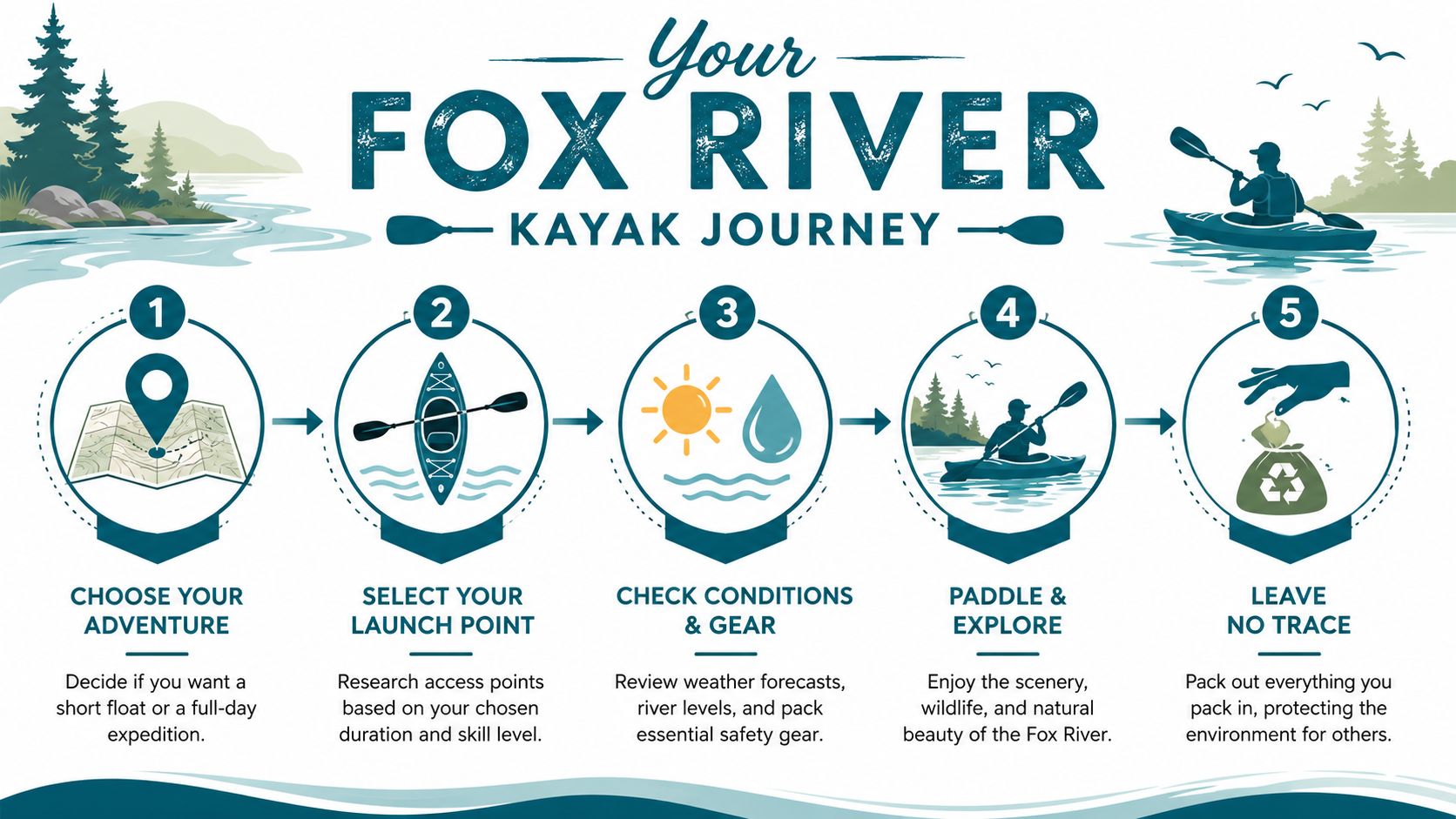
    A simple family rhythm works well here:

    1. Walk a while.
    2. Pause before anyone gets cranky.
    3. Eat a snack.
    4. Let curiosity set the next direction.

    A good family outing feels like discovery, not enforcement.

    If you're bringing kids, pack more patience than gear. The memory won't come from how far you went. It'll come from the odd little moments they decide matter.

    The after-work ride

    Some days you don't need serenity first. You need to burn the static off. That's what the bike day is for.

    Bring your bike, hit the gravel route, and let repetition clean out the mental junk. Pedal, breathe, corner, repeat. If the day at work left you annoyed, don't overanalyze it on the trail. Let your body process it through effort.

    I love this kind of outing because it's simple. You don't need a personal breakthrough speech. You need movement.

    Pack like someone who respects the basics:

    • Sturdy shoes or riding gear: Comfort keeps your focus where it belongs.
    • Water: Small oversight, big difference.
    • Charged phone: Practical, boring, necessary.
    • A small spare bag: If you see trash, you can carry it out.

    That last item changes your posture. The moment you're willing to leave a place better than you found it, you stop acting like a customer and start acting like a participant. I think that's a better way to move through any preserve.

    Keep the Adventure Going Nearby

    When I drive out to a preserve, I like letting the day stretch a little. A good outdoor trip doesn't have to end the second you leave the lot.

    If you want a totally different texture after Raven Glen Forest Preserve, head toward the northern unit of Illinois Beach State Park. Raven Glen gives you woods, trails, water, and that inland quiet. Illinois Beach gives you sand, open shoreline, and a very different mood. Doing both in one day can make the whole outing feel bigger without making it complicated.

    Make Antioch part of the trip

    After time outside, food tastes better. That's just true.

    Downtown Antioch has the kind of easy small-town stop that works after a hike or ride. Grab a burger. Get pizza. Sit down somewhere casual and let the dirt on your shoes be part of the story. You don't need a curated experience. You need something satisfying.

    A simple way to build a full day

    If you like structure, this is the format I'd use:

    • Start with Raven Glen: Let the preserve set your pace.
    • Add a second stop: Choose shoreline if you want contrast.
    • End with food nearby: Reward helps habits stick.

    If you enjoy planning preserve visits as a recurring habit, this roundup of Waterfall Glen forest content is another good rabbit hole to go down. I like collecting ideas this way because one walk usually leads to the next.

    Why I like spending locally

    There's also something nice about not treating a preserve like a sealed-off destination. You go outside, then you re-enter ordinary community life a little lighter. You support a local restaurant, maybe wander a bit, maybe stay out longer than you planned.

    That's my favorite kind of adventure anyway. Not the flashy kind. The kind that starts with a trail, picks up momentum, and sends you home more awake than when you left.

    Your Adventure in Service

    A place changes when you care for it with your hands.

    That's the thought I keep coming back to after a walk at Raven Glen Forest Preserve. It's one thing to admire a trail, enjoy the quiet, and head home with a clearer mind. I'm for all of that. But there's another step available, and I think it changes you faster.

    Bring a small bag.

    That's it. Nothing grand. Nothing ceremonial. Just make yourself available to pick up the bottle by the edge of the path, the wrapper caught in brush, the random bit of litter that would otherwise become part of the background. The act is small, but your relationship to the place changes right away.

    Screenshot from https://www.littercaterpillars.com

    Why service feels different

    When you care for a shared space, you stop consuming it. You join it.

    That's a big shift. A visitor asks, “What did I get from this place?” A steward asks, “What can I do while I'm here?” I think that second question is better for the soul. It gets you out of your own head. It gives your body something clear and good to do.

    I've found that service works like a powerful catalyst. If your life feels messy, helping with a visible mess can restart your sense of agency. You may not know how to solve everything at home, at work, or inside your own mind. But you can pick up one piece of trash. Then another. Then another.

    Start small and stay consistent

    You don't need a perfect environmental identity. You don't need special gear. You need willingness.

    Here's the version I believe in:

    • Carry one small bag: Easy to bring, easy to use.
    • Pick up what you safely can: No heroics. Just care.
    • Leave the place a little cleaner: Small wins matter because they are real.
    • Repeat the habit elsewhere: One preserve can teach you how to notice every public space differently.

    If the service side of outdoor life speaks to you, you might enjoy learning more about environmental stewardship programs. I think the best programs don't just clean places. They train people to become the kind of person who notices, returns, and helps.

    The moment you help care for a place, it starts living in you differently.

    Raven Glen is a great place to practice that. Walk it. Breathe there. Reset there. Then do one thing that makes the place better after you've passed through it.


    If that idea hits something in you, take the next step with Litter Caterpillars. It's a simple, brave way to turn time outdoors into service, friendship, and the kind of personal change you can feel.

  • Your Guide to Crooked Creek Woods and How to Help It Thrive

    Your Guide to Crooked Creek Woods and How to Help It Thrive

    I bent down to grab a crushed bottle near the edge of the trees, and for a second I forgot the rest of my life. The noise in my head got quiet. That's what happened to me the first time I really paid attention in Crooked Creek Woods.

    Finding Your Path in Crooked Creek Woods

    I didn't come to the woods because I had myself figured out. I came because I was tired, scrambled, and carrying the kind of inner mess that follows you from room to room. Cleaning my own life felt impossible. Picking up one piece of litter on a trail felt doable.

    That's still one of the strangest truths I know. Sometimes it's easier to lift someone else's mess than your own. You reach down for a bottle, an old can, a wrapper snagged in brush, and somewhere in that simple motion, your shoulders drop. You breathe deeper. You remember you can act.

    Crooked Creek Woods gave me that feeling.

    I've walked into a lot of green spaces hoping for some kind of reset. Some places are pretty but distant, like they don't need you. Crooked Creek Woods doesn't feel like that to me. It feels approachable. Human-sized. A place where you can arrive restless and leave steadier.

    The first walk that changed me

    I remember one visit when I didn't even mean to stay long. I thought I'd walk a little, clear my head, then head back to the car. Instead, I kept going. The trees made a kind of shelter that didn't ask anything from me except attention. I started noticing small things. Bent grass. Bird calls I couldn't name. Mud at the creek edge. Sun through branches.

    That was enough.

    Practical rule: If your mind feels loud, don't wait for the perfect plan. Start with one short walk.

    You might come here because you want exercise. You might come because your kids need room to run. You might come because you're lonely and need to be somewhere alive. All of those reasons are good reasons.

    Why I want you to go

    I want you to think of Crooked Creek Woods as more than a place to pass through. I want you to treat it like a trailhead for your own next chapter. Maybe that sounds dramatic, but I mean it in a plain, everyday way. The same way a sink full of dishes can break your spirit, a quiet walk can put it back together a little.

    Here's what I love about starting here:

    • You can keep it simple. Show up, walk, breathe, notice.
    • You can come as you are. Tired, hopeful, annoyed, curious. The woods can handle all of it.
    • You can leave with momentum. One good hour outside can change the rest of your day.

    If you've been waiting to feel ready before you visit, don't. Read this like a note from a friend who wants to meet you at the trailhead and say, come on, let's go.

    Getting to Know the Woods and Its Creek

    The first time I crouched beside Crooked Creek, I saw a bluegill flash near the bank and a plastic wrapper snagged in roots a few feet away. That is Crooked Creek Woods in one frame. Life holding on, and people being asked to choose what kind of neighbors we want to be.

    Crooked Creek runs through a chain of wooded preserve corridors, including Country Lane Woods, Cranberry Slough, and Pioneer Woods, and it belongs to the larger Chicago River system. According to a Chicago River story on Crooked Creek, the waterway supports fish such as largemouth bass, bluegill, and pumpkinseed, and a restoration project was anticipated to begin in May 2017 to improve hydrologic processes and aquatic habitat.

    An infographic titled Crooked Creek Woods: A Living Story, detailing its ecosystem, creek journey, biodiversity, and community connection.

    The creek teaches by example

    I come here for that lesson as much as the scenery.

    Crooked Creek bends, slows, gathers itself, and keeps going. After a hard season in my own life, that mattered to me more than any brochure language ever could. You may feel it too when you stand at the edge and watch the current work around a fallen branch instead of fighting it head-on.

    That shape of persistence is part of why this place stays with people. The creek is not background. It is the organizing force of the woods. Trees cluster around it. Wildlife depends on it. Walkers keep drifting back toward it, even when they start out thinking they are only here for a short stretch under the canopy.

    A woods with an old foundation

    The ground here carries a much older story than any single visit. Crooked Creek Woods sits in the Palos and Sag Valley division, which the Forest Preserves of Cook County describes as mostly hilly and forested, with roots in glacial and geologic history. You can feel that history in the rises under your feet and the way the land folds around water instead of flattening it into something generic.

    I love that about this place. It asks you to pay attention to shape, slope, and time.

    For me, that attention changes behavior. Once you notice how a creek bank crumbles, how roots hold soil in place, or how a bottle can wash downstream after one rain, care stops being abstract. It becomes practical. You pick up the can. You step more lightly. You start reading the woods as a living system instead of a backdrop for exercise.

    That is the heart of the Litter Caterpillars philosophy. We do not only visit natural places. We build a relationship with them through small acts of service, steady observation, and shared responsibility. If you want to bring that spirit with you here, our guide to cleaning rivers and waterways is a good place to start.

    You do not need expert training to care for a creek. You need attention, respect, and the willingness to leave the bank better than you found it.

    When you get to know Crooked Creek Woods this way, the place gives you more than a pleasant walk. It gives you practice in noticing what matters, and then doing something about it.

    Your Guide to the Trails

    When you first arrive at Crooked Creek Woods, don't worry about doing it the “right” way. You don't need elite hiking gear or some secret route. You need decent shoes, enough water, and permission to wander a little.

    I like to think of trail choices the way I think of conversations. Some are easy and social. Some are quiet and long. Some are best when you bring kids along and let the pace stay loose.

    How to choose your walk

    If you're coming with family, I'd keep your first visit simple. Pick the path of least resistance. Let the day be about curiosity, not distance. If you're coming alone and need room to think, give yourself more time and take the route that lets the sounds of the road fade.

    Since trail conditions can shift and on-the-ground route patterns can vary, I'd treat the woods like a place to explore rather than a place to conquer. For nearby route ideas across the region, I often browse Chicago trail guides before heading out.

    Here's a planning table I'd use with a friend before we go.

    Trail Name Approx. Length (Miles) Difficulty Best For
    Creekside Start Short Easy First-time visitors, kids, slow walks
    Grove Connector Walk Moderate Easy to Moderate Families, casual conversation, picnic day add-on
    Quiet Woods Loop Moderate Moderate Solo walkers, birdwatching, decompression
    Extended Wandering Route Longer Moderate People who want more solitude and time outdoors

    If you're bringing kids

    Kids don't usually need a perfect trail. They need discoveries close together. A stick bridge. A patch of mud. A sudden bird call. Space to ask questions that don't have answers.

    I'd keep a family visit focused on rhythm instead of mileage:

    • Start early enough to go slow. Rushing turns every root and puddle into a problem.
    • Let children lead for stretches. They notice mushrooms, feathers, and odd-shaped leaves adults walk right past.
    • Stop before anyone melts down. The best ending is one that makes your kids want to come back.

    If you want quiet

    I know the difference between taking a walk and going somewhere to hear yourself think. If that's what you need, arrive with your phone on silent and resist the urge to track every turn. Walk until your thoughts stop performing for you.

    Look for the moments when the trees seem to close around the path and the outside world loosens its grip. That's where Crooked Creek Woods gets especially good.

    Go slower than you think you need to. The woods open up when you stop trying to win at walking.

    A few things I'd watch for

    I won't pretend nature works on cue, but some patterns repeat. If you come at the softer edges of the day, the whole place feels more alert. If you pause near openings in the trees, you may catch better views through the canopy. If you stay quiet near the creek, you'll notice more than if you stomp through like you're late.

    My own trail method is simple:

    1. Walk the first part without taking photos.
    2. Stop at the first place that makes you exhale.
    3. Turn around only after your pace changes on its own.

    That last one matters. Your body usually knows before your mind does. At some point your stride gets easier, and that's when the walk begins to do its real work.

    The Woods Through the Seasons

    My relationship with Crooked Creek Woods changed when I stopped treating it like a one-season place. I used to think a preserve had one best moment. Now I think that's like saying a friend has one best mood. You get a different truth each time you return.

    A hiker walks along a scenic river in the crooked creek woods, featuring lush trees and blooming flowers.

    Spring wakes the place up fast

    Spring in the woods always feels a little reckless to me. Everything starts speaking at once. Birds get loud. The ground shifts from dull to alive. You smell damp soil and fresh growth before you can explain it.

    I like spring because it gives me hope without asking whether I earned it. You step onto the path carrying winter heaviness, and the woods answer with motion.

    Summer teaches you how to slow down

    Summer here is deep green shade and longer pauses. The air feels fuller. The trees create that cool cover that makes you want to stay out longer than planned.

    When I walk in summer, I stop expecting speed from myself. I let the day stretch. I pay attention to the smell of leaves warming in the sun and the places where the creek draws your eye even when you can't fully see it.

    A summer visit works well if you bring:

    • Water you'll want to drink
    • Shoes you trust on uneven ground
    • Patience for a slower pace

    Autumn is my favorite for thinking

    Autumn doesn't need much salesmanship. You know what leaves can do. But what gets me is the sound. That dry crunch underfoot makes every step feel counted.

    This is when I come to sort things out.

    A hard conversation. A decision I've delayed. A season of life that's ending before I'm ready. Fall gives me room for all of that. The woods feel honest then. Nothing hidden. Nothing rushed.

    Some days the best thing you can do is walk through leaves until your thoughts stop knotting themselves.

    Winter clears the noise

    A lot of people skip winter woods, and I think they miss something special. Without thick cover, you can read the shape of the land more clearly. You notice trunks, branches, slope, sky. The place feels stripped down to its lines.

    Winter doesn't flatter. It steadies.

    If there's snow, I look for tracks and follow them with my eyes until they disappear. If the air bites, I walk anyway because the silence feels clean. It's the season that reminds me strength doesn't always look cheerful.

    Come back in every season if you can. Let the place meet you in all your moods.

    Plan Your Visit the Smart Way

    The first time I brought a small volunteer crew here, one friend showed up in slick-soled shoes, another forgot water, and all of us had different ideas about where to meet. We still had a good day, but we spent the first half hour fixing preventable problems. Since then, I've learned that a better visit often starts before you leave home.

    According to the Forest Preserves of Cook County page for Crooked Creek Woods, the preserve is open sunrise to sunset year-round, has four groves with capacities of 100, 350, 100, and 200 people, and portable bathrooms are typically available from Memorial Day through Labor Day, weather permitting.

    Know the setup before you go

    Those details matter more than they sound like they should.

    If you are planning a birthday meal, a family reunion, or a quiet meetup after a walk, knowing the grove sizes helps you choose a gathering that fits the day instead of forcing the day to fit your plan. The larger groves with shelters can make a group visit feel calmer from the start.

    I also like knowing the hours before I arrive. Sunset comes faster than you think when conversation gets good and the creek keeps pulling you farther down the path.

    My simple visit checklist

    I pack for Crooked Creek Woods the same way I pack for a cleanup or a community walk. Light, useful, and honest.

    • Water you will drink
    • Shoes with grip for dirt, roots, and damp patches
    • A charged phone for maps and timing
    • A small bag for snacks, tissues, and hand sanitizer
    • An extra layer if the weather looks uncertain

    If you want to add one more thing, bring a spare bag or gloves so you can leave with a few pieces of trash if you spot them. That small habit changes the whole feeling of a visit. It turns a walk into participation, which is a big part of the spirit behind the Litter Caterpillars environmental stewardship programs.

    If you're meeting other people

    Group outings get better when someone claims the unglamorous job.

    Send the meeting point. Send the arrival time. Tell people what kind of walk this is going to be. A short wander? A picnic with kids? A longer afternoon with time to sit and talk? Clear plans make room for everyone to relax once they get there.

    I've also learned to arrive early if a grove is part of the plan. A few quiet minutes at the beginning can set the tone for the whole day.

    A few safety habits I always keep

    These are simple, and they work.

    1. Tell someone where you are going.
    2. Keep an eye on the time so you are heading out well before dark.
    3. Walk at a pace that lets you notice the ground and your own energy.
    4. Turn back if weather, footing, or your gut says it is time.

    I want you to have the kind of visit that leaves you steadier than when you arrived. Good planning helps with that. It gives you more room to listen, notice, and care for the woods while they care for you.

    Become a Guardian of the Woods

    There's a moment that happens after you visit a place enough times. It stops feeling like scenery. It starts feeling personal.

    You notice the bottle near the creek bank. The wrapper caught in low branches. The can half-hidden in leaves. And then you get to choose what kind of person you're going to be in that moment.

    A watercolor illustration shows a hand touching a tree trunk next to a forest stream with plastic pollution.

    Museum mindset or garden mindset

    I think a lot of people move through public land like they're walking through a museum. Look, admire, move on. Don't touch anything. Don't get involved. Keep your role small.

    I don't think that mindset helps us much.

    A better analogy is a community garden. In a garden, you don't own the place, but you still care for it. You pull a weed. You water what's thirsty. You leave it better than you found it. That's how I want you to think about Crooked Creek Woods.

    Small acts change the relationship

    The first time you pick up trash in a place you love, something shifts. You stop being only a visitor. You become a participant. Your walk gets a new layer to it.

    That change matters because action builds attachment. Attachment builds care. Care makes you come back.

    Here are a few easy ways to practice that:

    • Pick up one thing. You don't need a grand cleanup. Start with one bottle or one bag.
    • Carry a glove or grabber if you like structure. Tools make action easier when hesitation shows up.
    • Leave room for joy. Stewardship isn't punishment. It can be light, social, and even funny.

    Caring for a place is one way of practicing care for yourself.

    Service works on you too

    This is the part I learned the hard way. I used to think service was mainly about output. Bags filled. Ground cleared. Mess removed. But service changes the person doing it.

    When I started cleaning outdoor spaces, I got stronger in ways that had nothing to do with muscle. I got more consistent. Less afraid of starting small. Less trapped by perfection.

    That's why I care about environmental stewardship programs. They give people a simple doorway into responsibility. You show up, do one concrete thing, and your identity starts to shift around it.

    If you love Crooked Creek Woods, care for it in a visible way. Don't wait for someone else to be the kind of person who helps. You can be that person today.

    Join the Litter Caterpillars Adventure

    One Saturday at Crooked Creek Woods, I watched a teenager pull a crushed soda can from the creek bank while his grandmother held the trash bag open beside him. Ten minutes earlier, they had been quiet. By the time we reached the bend in the trail, they were trading stories about other parks they loved and arguing, happily, about who had found the strangest piece of litter. That is the kind of morning that stays with you.

    The Litter Caterpillars bring people together for cleanup events around Chicago, and the work has a way of turning a simple outing into something larger. You show up for a few hours outside, and you leave with muddy shoes, new names in your phone, and a stronger sense that public land belongs to all of us.

    Screenshot from https://www.littercaterpillars.com

    I love that nobody has to arrive with a perfect résumé in environmental service. You can come tired, curious, shy, or brand new. What matters is your willingness to pick up one piece of trash, walk one stretch of trail, and care for a place with other people who are learning the same habit.

    That is part of the Litter Caterpillars philosophy that changed me. Service is not only about removing litter. It is a practice of belonging. When you kneel to clear a bottle from the leaves or carry out a bag someone else ignored, you start seeing yourself differently. You are no longer passing through the woods. You are helping shape what kind of place it will be for the next child, dog walker, bird watcher, or exhausted neighbor who comes here to breathe.

    I have seen strangers become a crew in less than an hour. Gloves on, eyes scanning the ground, someone calls out a rusted can by the roots, someone else laughs at an ancient fast food cup, and the whole morning loosens up. If Crooked Creek Woods stirred something in you, follow it with your hands. Join a cleanup, bring a friend, and let your next walk become an act of care.

  • Swallow Cliff Woods: Your Guide to the Ultimate Climb

    Swallow Cliff Woods: Your Guide to the Ultimate Climb

    I stopped at the bottom of the stairs and laughed, mostly because the other option was turning around. My legs felt ready for a normal walk, not a stone ladder climbing up a bluff like it had a personal grudge against me.

    My First Time Facing the Climb

    The first thing that hit me at Swallow Cliff Woods wasn't peace. It was doubt.

    I looked up, saw the staircase, and had that private little argument you only have with yourself. You know the one. Maybe later. Maybe after coffee. Maybe I'll just “do the trails” and save the stairs for some stronger version of me.

    Then I saw other people climbing. Some moved fast. Some stopped halfway. Some had the same face I probably had, half determined, half offended. That helped. The stairs didn't feel like a stage for perfect athletes. They felt like a place where regular people came to wrestle with themselves in public.

    A traveler with a backpack stands before a long, steep staircase leading up a misty, forest-covered hill.

    The place behind the challenge

    Swallow Cliff Woods is bigger than the staircase that gets all the attention. It is an 800-acre nature preserve near Palos Park, Illinois, in the Palos Forest Preserves, and the best-known climb rises up a 100-foot bluff by way of 125 limestone stairs built in 1930 by the Civilian Conservation Corps. Those stairs were first built so people could reach a toboggan slide, and the preserve now has about 8 miles of trails for year-round recreation, as noted in the Swallow Cliff Woods history summary.

    That bit of history changed the mood for me. I wasn't staring at some random fitness gimmick. I was standing in front of something old, practical, and a little stubborn. Stone steps. Big hill. People climbing them decade after decade.

    Practical rule: Don't look at the whole staircase at once. Pick a small section and earn that first.

    What that first climb did to me

    I took the first section too fast. Bad idea. By the middle, my breathing got loud enough that I started pretending I was “just taking in the view.” By the top, my calves burned, my pride had taken a hit, and I felt weirdly happy.

    That surprised me.

    I didn't feel happy because it was easy. I felt happy because it wasn't. The climb had no interest in my excuses. It only cared whether I kept going. Swallow Cliff Woods gave me a simple trade. Effort in, clarity out.

    After that day, I started seeing other hard things the same way. A messy week at work. A conversation I was avoiding. A habit I kept postponing fixing. Each one felt less like a wall and more like those stairs. Too much if I stared at the whole thing. Manageable if I took the next step.

    Here's how I'd describe the place to a friend:

    • If you want a challenge, the stairs will give you one right away.
    • If you want history, you can feel it under your shoes.
    • If you want room to roam, the preserve stretches far past the staircase.
    • If you want a reset, this is one of those places where your mind gets quieter because your body is busy.

    I came for a climb. I left with a better way to handle resistance.

    Conquering the Stairs One Step at a Time

    The trick with the stairs is simple. Respect them, but don't dramatize them.

    People sometimes treat the climb like a test you either pass or fail. I think that's the wrong frame. Swallow Cliff Woods works better when you treat it like a conversation between your lungs, your legs, and your ego. Your ego usually loses first.

    A five-step guide on how to safely climb and conquer the Swallow Cliff stairs.

    How I pace the climb

    The main stair route is a 2.5-mile out-and-back with about 226 feet of elevation gain, and the area's trails range from 200 to 436 feet of gain. A second set of 168 steps was added in 2016, which lets you turn the visit into a full circuit and adjust the effort to match your day, according to this published Swallow Cliff route overview.

    That matters because you don't have to do one giant all-or-nothing effort. You can build your own version of hard.

    Some days, I go up once and wander. Other days, I loop the stairs and tack on trail miles. If I'm stressed, I climb slower. If I'm restless, I make the route sting a little.

    Here's the pacing system that works for me:

    1. Start slower than your pride wants. The stairs punish show-offs fast.
    2. Use the landings well. A short pause beats a dramatic collapse.
    3. Keep your eyes close. Looking ten steps ahead is better than looking at the top.
    4. Let your breathing set the rhythm. If you can't settle it, back off a little.
    5. Leave one good climb in the tank. You want to finish strong, not crawl to your car in silence.

    Going slow on the first climb isn't weakness. It's strategy.

    Two staircases, two moods

    The original limestone steps feel old-school. They're the part people talk about most. The newer staircase changes the flow of the visit. Instead of one hard burst and done, you can move through a fuller loop and keep the effort going.

    That's why I like Swallow Cliff Woods more than a treadmill or a gym stair machine. A machine gives you repetition. This place gives you context. Trees, weather, dirt, wind, your own thoughts.

    The climb also changes with the season. In cool air, the stairs feel sharp and clean. In summer, they feel like a negotiation with sweat. In winter, the hill taps into its old sledding identity and the whole place gets louder, looser, more playful.

    The hill has two personalities

    One day I came for a focused workout and left after a few climbs, feeling like I'd wrung stress out of my body. Another day I came in winter and watched families hauling sleds uphill, kids wiping out, adults pretending they weren't just as excited.

    That contrast is part of the charm. The same bluff can feel like a trial or a playground depending on the day.
    If you go, don't chase someone else's version of success. Set your own target.

    Goal Good approach
    First visit Climb once, then walk and recover
    Steady workout Alternate stairs and trail segments
    Head-clearing day Climb at a talking pace and stay relaxed
    Stronger effort Use repeated climbs and the full circuit

    The stairs build you the same way carrying groceries up too many apartment steps builds you. No applause. No shortcut. Just repeated proof that you can do hard things without making a speech about it.

    What You Will Find Beyond the Crowds

    The best turn I ever made at Swallow Cliff Woods was the one away from the stairs.

    I had already finished a few climbs and felt that twitchy urge to leave once the “main event” was over. Instead, I kept walking. The noise thinned out. Footsteps got softer on dirt. My breathing settled. The whole place changed character.

    A woman with a backpack hiking along a scenic forest path surrounded by vibrant watercolor flowers

    The quiet part most people miss

    Beyond the stairs, the preserve has unpaved trails in the Sag Valley system, woodlands with lots of bird activity, marshes, and sedge meadows. It's also especially good for spring and fall migration viewing, as noted in this Swallow Cliff trail guide.

    That shift matters. Near the staircase, your attention narrows. Out on the trails, it widens again.

    I remember one walk when the climb had left my legs shaky and my mind loud. Ten minutes into the woods, everything slowed down. I could hear separate bird calls instead of one fuzzy wall of sound. I started noticing wet ground near the marshy patches, the darker shade under thicker tree cover, the way the trail asked for more attention than the stairs did.

    If you want to stretch your day, I like using nearby trail planning ideas from the Palos Trail System guide before I go. It helps if you're the kind of person who climbs first and then suddenly decides you're not done yet.

    How the place changes when you stay longer

    Most first-timers treat Swallow Cliff Woods like a challenge course. Get there. Climb. Snap a photo. Leave. I get it. The stairs are magnetic.

    But the preserve feels more honest when you keep moving past the obvious attraction. The trails let your body come down from the effort while your attention wakes up in a different way. It's like finishing a hard conversation and then taking a long walk home.
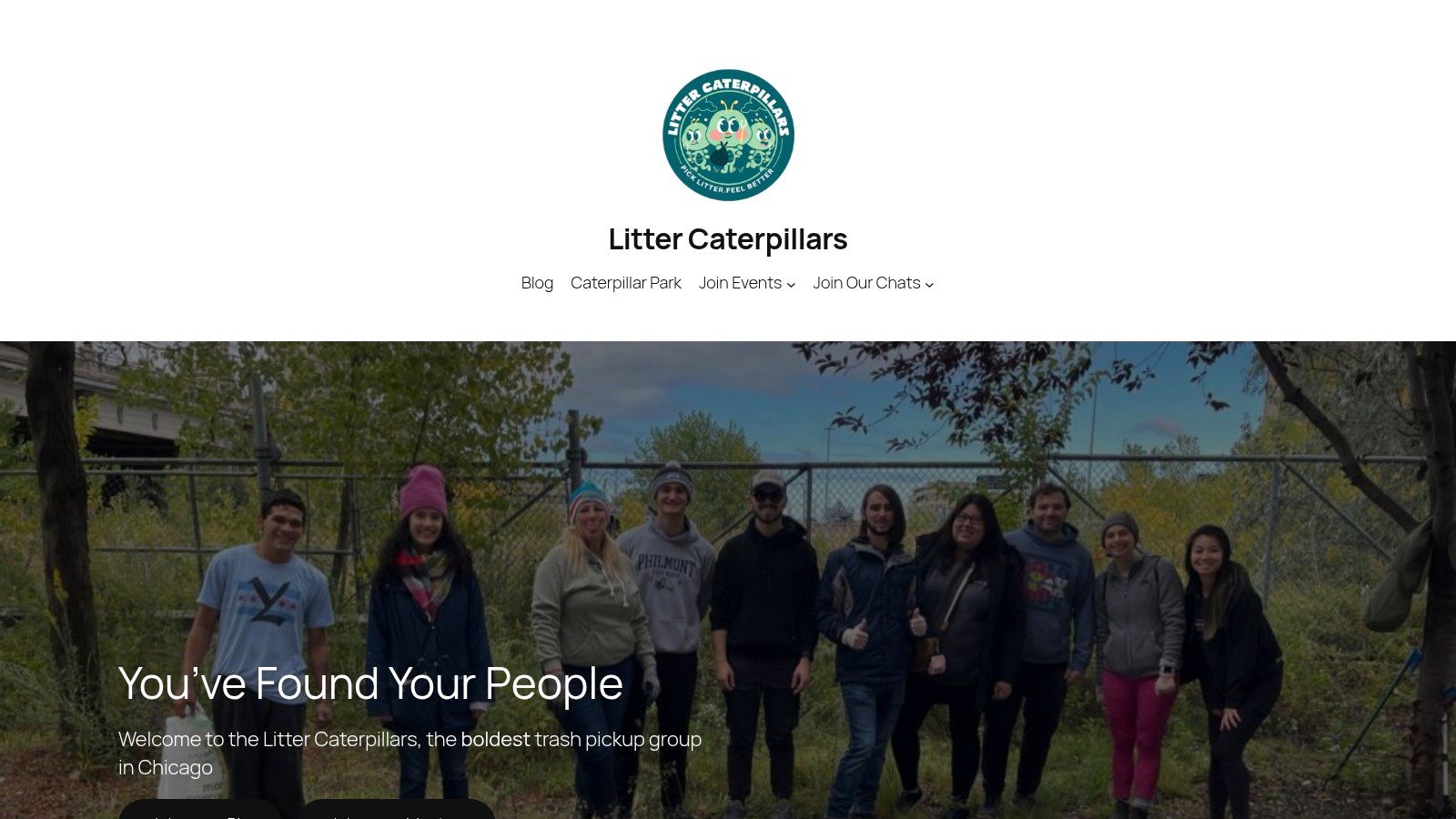
    The woods reward patience more than speed.

    A spring visit feels alert. Birds are active, the ground feels restless, and the trails seem to pull you forward. Fall has a steadier mood. It feels like the preserve is exhaling.

    Later in the route, this video gives a feel for the atmosphere people come for when they look past the stair count and just move through the place.

    My favorite way to do the day

    I like splitting a visit into two acts:

    • Act one is effort. I take on the stairs while my legs are fresh.
    • Act two is attention. I head onto the quieter trails and let the preserve change the pace.
    • The payoff is mental. The climb burns off noise. The walk lets me hear what's left.
    • The memory lasts longer. I never remember only the staircase. I remember the hush after it.

    That's the version of Swallow Cliff Woods I return for. The place where strain and calm live close together.

    How to Plan Your Trip Like a Local

    If I'm meeting you there, I'm texting you one thing first. Don't make your first visit harder than it needs to be.

    Swallow Cliff Woods is more fun when you arrive with a tiny bit of strategy. Nothing fancy. Just the kind of planning that keeps you from showing up in bad shoes, circling for parking too long, or realizing halfway up the stairs that you brought almost no water.
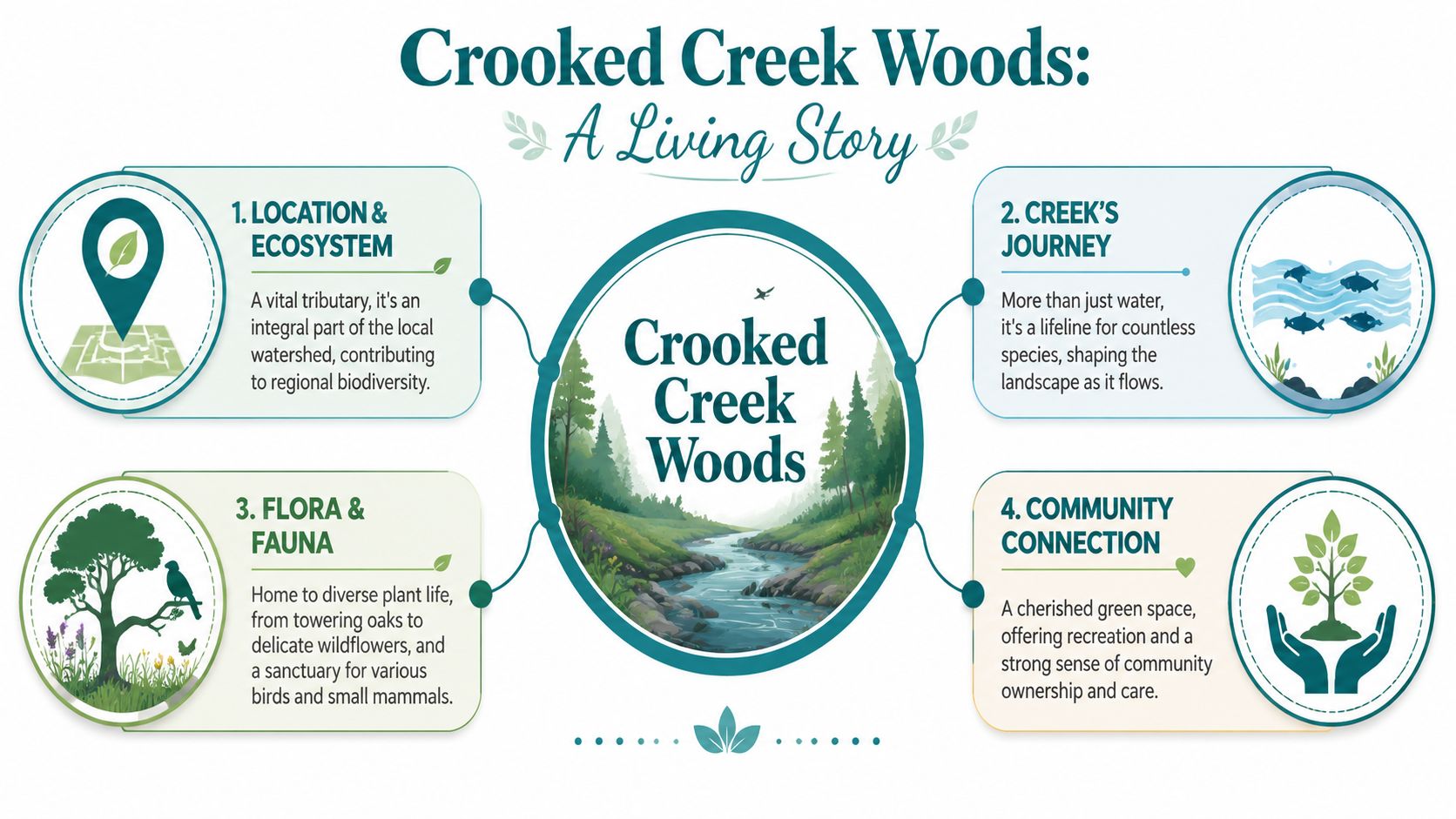
    What I bring every time

    I've made enough dumb mistakes here to keep this list simple.

    • Shoes with grip: The stairs and unpaved trails both feel better when your footing feels solid.
    • Water you'll drink: Bring enough for the climb and the walk after. Don't count on “toughing it out.”
    • A light layer: The woods can feel different once you stop moving hard.
    • A small snack: It helps if you turn a quick climb into a longer outing.
    • Your phone charged: Mostly for navigation, photos, or checking in with a friend.

    If you don't have a car, I'd still consider going. Before I plan a transit-heavy outing, I usually check ideas like the eco-friendly transport guide and then compare them with my starting point. The exact route depends on where you live, so I won't pretend there's one perfect answer for everyone.

    Best times to go

    I like mornings. The place feels cleaner in every sense. Your legs are fresher, the light is softer, and the whole visit starts with less friction.

    Weekends can get busy, especially when the weather is great. If crowds drain you, try an earlier arrival. If you like more energy around the stairs, go when the place is lively and then drift onto the quieter trails after.

    Here's the quick local version:

    When you go What it feels like
    Early morning Cooler, calmer, easier to settle in
    Midday More social, more movement, more parking stress
    Late afternoon Nice light, but timing matters if you want a longer hike

    A few friend-to-friend tips

    I wouldn't eat a heavy meal right before the stairs. I've done it. Regret has a heartbeat.

    I also wouldn't make the mistake of treating the preserve like only one thing. If you come only for a quick climb, great. If you leave room for a longer walk, even better. Swallow Cliff Woods gets more generous the less rushed you are.

    Wear the shoes for dirt, not for photos. You'll thank yourself on the first uneven stretch.

    And if you're going alone, tell one person where you're headed. That's just good outdoor habit. Quiet places feel better when you've handled the basics.

    How to Visit with Respect and Care

    A place can toughen you up and still ask you to be gentle.

    That's the part of Swallow Cliff Woods that I think people need to hear more often. The preserve can handle your sweat, your heavy breathing, and your sore legs. It can't handle thousands of people deciding that marked paths are only suggestions.

    Why staying on trail matters

    Unofficial trails were damaging rare ecosystems at the preserve. After the Forest Preserve District installed barriers and signs, researcher data showed an 80% reduction in users on those rogue routes, and wildlife began reclaiming territory, according to this report on the Swallow Cliff trail protection effort.

    I love that because it turns “stay on the trail” from a boring rule into a real story. People changed their behavior. The land responded.

    That's a clean bargain.

    Bravery can look quiet

    I think a lot about how easy it is to mistake boundary-breaking for freedom. You see a little side path, trampled enough to look usable, and part of your brain says, why not? Shorter route. Better photo angle. Less crowded.

    But a preserve isn't a blank space for our impulses. It has marshes, woods, meadows, and living things trying to hold their ground. Respect means letting the place stay itself.

    Here's what I do now without overthinking it:

    • I stay on marked trails. If a path looks unofficial, I treat that as my answer.
    • I keep my pace under control. Speed makes people cut corners and drift off route.
    • I watch where I stop. Resting is fine. Spreading into sensitive edges isn't.
    • I treat barriers like information, not a challenge. They're there because the land needed help.

    The strong move isn't taking more space. It's knowing when not to.

    What respect feels like on the ground

    This doesn't have to turn your visit into homework. It's simple.

    You climb hard. You breathe deep. You enjoy the trails. You leave the place better off because you didn't treat it like a personal obstacle course. That's it.

    I've noticed something funny. The more I care for a place, the better it feels to return to it. I don't mean that in some grand philosophical way. I mean in a practical way. Cleaner route. Healthier habitat. Better walk. Better mood.

    Swallow Cliff Woods asks something useful from you. Push yourself, yes. But keep your feet where they belong.

    Join Us and Help Keep Our Parks Clean

    After a hard climb, I always feel more open to doing one small good thing. Maybe that's because effort strips away a lot of nonsense. Your body worked. Your mind cleared. You stop looking for the perfect gesture and start respecting simple action.

    That's how park cleanup makes sense to me.

    I started seeing trash differently after days at places like Swallow Cliff Woods. A bottle near the trail isn't just ugly. It breaks the spell. It reminds you how easy it is for people to take from a place without giving anything back. Picking it up is small, but small actions have a way of changing your posture toward the world.

    Screenshot from https://www.littercaterpillars.com

    Why cleanup feels like the same kind of challenge

    Climbing stairs and picking up litter don't look related at first. To me, they are.

    Both ask you to do a thing that's easy to postpone. Both feel better once you start. Both chip away at that sluggish part of you that always wants comfort first and meaning later.

    If you ever leave the preserve thinking, I want to do more than just visit places like this, one easy next step is to join a park cleanup with Litter Caterpillars. It's a practical way to turn that post-hike energy into something useful.

    What you can expect

    The good thing about service is that it doesn't require a dramatic personality. You don't have to show up as an expert, an organizer, or some flawless outdoors person.

    You just have to show up ready to help.

    • You'll meet people who like action more than excuses
    • You'll see visible results fast
    • You'll leave with the same earned tiredness that a good climb gives you
    • You'll probably have more fun than you expected

    That's the sneaky part. Work done with other people often feels lighter than work done alone. The same way a staircase gets easier when you stop making it a performance and start making it a practice.

    Your Quick Questions Answered

    Are there bathrooms

    Sometimes, yes, but I wouldn't build my whole plan around that. I always try to handle that before I arrive, especially if I'm planning a longer hike.

    Can I bring my dog

    In general, people do bring dogs to forest preserves, but I'd keep it simple. Use a leash, stay on marked trails, and be honest about whether your dog likes crowds, stairs, and other dogs.

    Is there a cost to enter

    I'm not aware of an entry fee for a basic visit, but check current official preserve information before you go if that matters for your planning.

    Is it safe to go alone

    I've gone solo and felt fine, especially when I stayed aware and kept to normal, active areas. I still think the smartest move is to tell a friend where you're going and when you expect to head home.

    What should I wear

    Shoes with grip, clothes you can move in, and a layer you can add or remove. Dress for dirt and weather, not for some imaginary perfect photo.

    Is the place only worth visiting for the stairs

    No. The stairs may pull you in, but the trails are what make the visit feel complete.

    What if I'm out of shape

    Then this is still for you. Start slower. Climb less. Walk more. Build from there.


    If this piece made you want to do more than just visit parks, take a look at Litter Caterpillars. It's a Chicago group built around cleaning up neighborhoods, building friendships, and becoming the kind of person who shows up.