
Category: Uncategorized

  • 10 Bold Friendship Building Activities for 2026

    10 Bold Friendship Building Activities for 2026

    Friendship Isn't Found, It's Built. My life used to be a mess. I'm not speaking in metaphors. My apartment was a museum of old projects and forgotten snacks, and every piece of trash had a story attached to it, which made it feel weirdly impossible to throw away.

    Then a chaotic relationship ended, and I got honest with myself. I didn't need more random social plans. I needed a better life structure, one that could filter for decent people while forcing me to face the stuff I'd avoided for years: cleanliness, consistency, and bravery.

    That's how I ended up building friendship through service instead of small talk. I learned that good friendship building activities don't start with a cute prompt card or a lukewarm happy hour. They start when you show up with other people, do something real, get a little uncomfortable, and come home with a story.

    I didn't find my people by accident. I built the conditions where they could find me. You can do that too.

    1. Group Service Projects with a Shared Mission

    The first cleanup that felt like friendship happened on a cold, ugly day. Three of us showed up anyway. We stood on the curb with grabbers and trash bags, looking at a block everyone else had learned to ignore. An hour later, our hands were freezing, our bags were full, and nobody was making polite small talk anymore. We were working. By the end, we had that rare feeling of having done something real together.

    That is why a shared mission works so well. A clear task cuts through the social fog. Meet here. Bring gloves. We are clearing this alley by noon. People do not have to guess why they came, and they do not have to perform. The work gives everyone a role right away.

    At Litter Caterpillars, that mattered more than chemistry. Chemistry is unreliable. A mission you can point at holds up better. Side by side, people settle into a rhythm. One person lifts the soggy cardboard. Another ties bags. Someone jokes about the smell. Someone else spots a needle and calls it out. Trust starts getting built in plain sight.

    Researchers writing for the Stanford Social Innovation Review on social connectedness and collective action note that working toward a common purpose can strengthen social ties because people start to see themselves as part of something larger than a casual gathering.

    A mission also gives the group a memory with some weight to it. You remember who kept showing up when the weather turned. You remember who noticed the older neighbor trying to carry a bag and ran over to help. Those are the moments that create war buddy energy. Not because anyone was pretending to be heroic, but because service strips away a lot of the usual social posing.

    A few things make this easier:

    • Choose a target people can see: one lot, one trail, one bus stop, one corner store block.
    • Give one simple instruction: bring gloves, wear boots, meet at 10.
    • End with proof: stacked bags, before-and-after photos, a street that looks cared for again.
    • Keep the invite direct: ask people to help finish a job, not to vaguely hang out.

    If you want formats that are easy to run, these group service project ideas from Litter Caterpillars are a solid place to start.

    Practical rule: Ask for help with a concrete task. Friendship grows faster when people can carry the weight together.

    2. Theme and Identity Symbols

    A group gets stronger when it has a face. I learned that fast. People want something they can point to and say, "Yeah, that's us."

    I don't mean fake branding cooked up in a meeting. I mean symbols that grow out of what you've lived through.
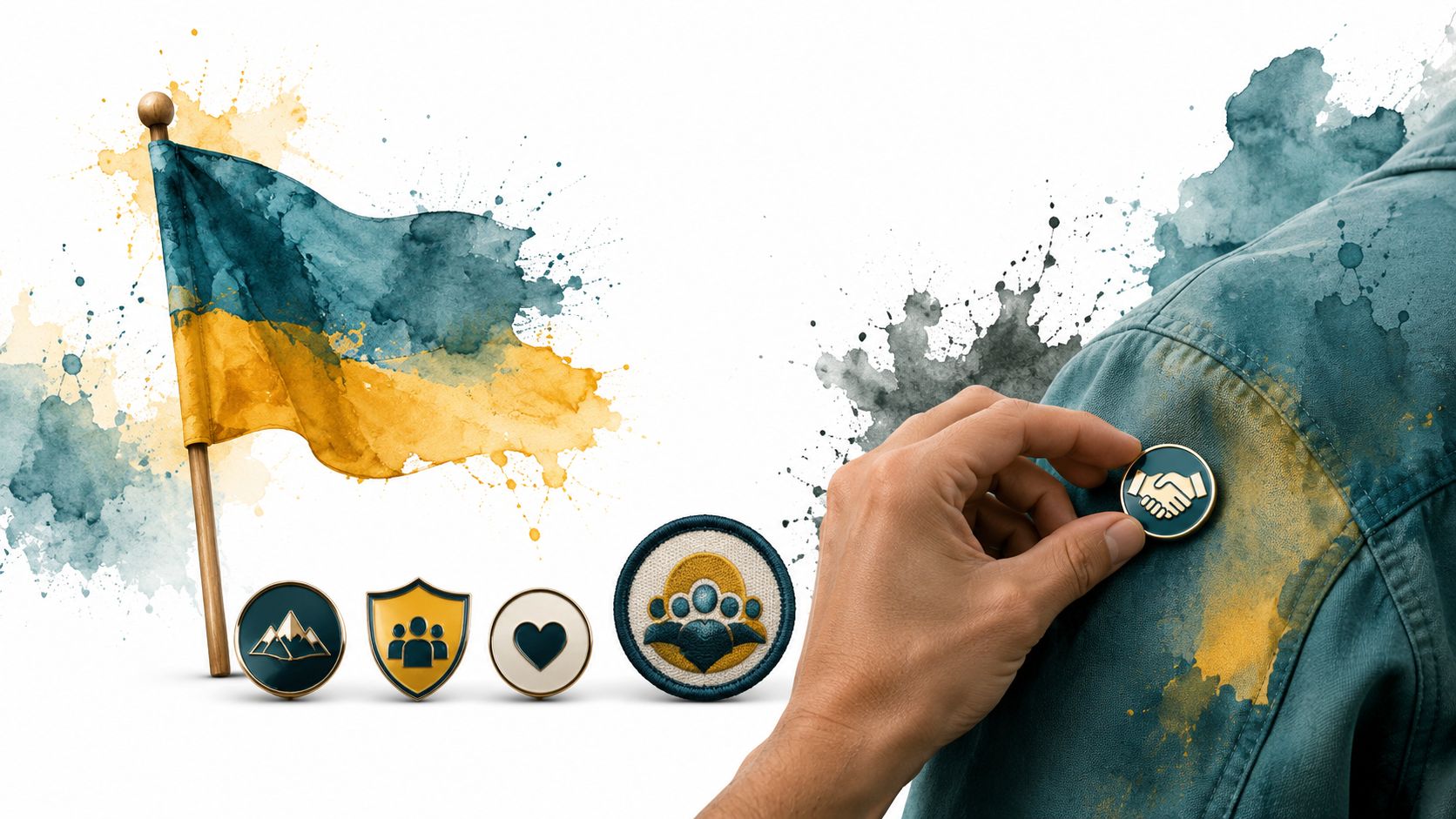
    A hand placing a handshake pin on a teal jacket next to a Ukrainian flag with patches.

    Give the group something to wear, carry, or sing

    Our logo came from that first awful, memorable cleanup when only three of us got stuck in hail and cold. Our theme song came later, made by Ella Duke, and suddenly the group had a sound as well as a story. Flags, badges, pins, patches, a recurring color, a joke phrase you all use. These things matter because they turn memory into identity.

    When someone puts on a badge before a cleanup, they aren't dressing up. They're reminding themselves who they are when things get uncomfortable.

    A good symbol has to be earned. If your group cleaned a nasty underpass, let that become part of the myth. If you kept showing up in rough weather, build your identity around that grit. People feel closer when the symbol connects to a shared memory instead of a marketing idea.

    • Let it emerge from real events: The best symbols come from moments your group already talks about.
    • Give, don't gatekeep: Hand people a badge or patch. Don't make belonging feel like a purchase.
    • Repeat it often: Use the same flag, phrase, or song until it sinks into people's bones.

    3. Intentional Scheduling to Filter for Values

    The first time I moved a cleanup to 9 a.m. on a Saturday, I expected complaints. I got something better. The people who showed up were the ones I kept seeing months later.

    One guy arrived with sleep still in his eyes and a gas-station coffee in his hand. Another biked across town because his car was in the shop. Nobody acted like they were doing me a favor. They came ready to work. By the end of that morning, I knew more about their character than I would have learned from ten pleasant conversations at a bar.

    Your calendar reveals your standards

    A group schedule is never neutral. It subtly answers a big question. What kind of life does this group reward?

    I put cleanups on weekend mornings on purpose because that time slot filters for people who can make room for service before comfort. That does not make them better people than everyone else. It does tell me they are willing to organize their life around something outside themselves, and that matters if you're trying to build war buddy friendships instead of loose acquaintances.

    Predictability helps too. When people know the cleanup is always there, they stop treating it like a maybe. It becomes part of the week. Familiar faces return. Trust grows through repetition, not speeches.

    I learned this after trying the opposite. I used to bounce events around to fit everyone's schedule. Thursday night one week. Sunday afternoon the next. Turnout looked fine on paper, but the group felt slippery. New names, shallow conversations, no backbone. Once I picked a repeating slot and held it, the culture changed. People started planning around the mission instead of asking the mission to bend around them.

    That is the filter.

    If someone will wake up early, put on gloves, and spend their free time doing useful work with strangers, they are already telling you what they value. If that idea sounds harsh, good. A real community needs shape. Every schedule includes some people and screens out others.

    You should choose that shape on purpose.

    Pick a time that matches the kind of person you want next to you when the day gets ugly.

    I also found that morning service changes the tone of the conversations. People are less performative. Less polished. You get the honest version of them before the day fills up with excuses and noise. That same idea sits at the heart of my piece on why shared hardship builds stronger character and stronger bonds.

    Try this:

    • Choose one repeating slot: Same day, same rough time, often enough that people remember it without checking.
    • Say the reason out loud: "We meet in the morning because this group is built around service first."
    • Stop reshuffling to please everyone: A steady schedule attracts people who respect commitment.
    • Let the time do some sorting: You do not need to chase every person. You need the right ones to keep returning.

    4. Shared Discomfort and Adversity

    Some of my strongest friendships started while I was cold, wet, annoyed, and carrying a trash bag that kept ripping.

    That sounds miserable on paper. In real life, it works.
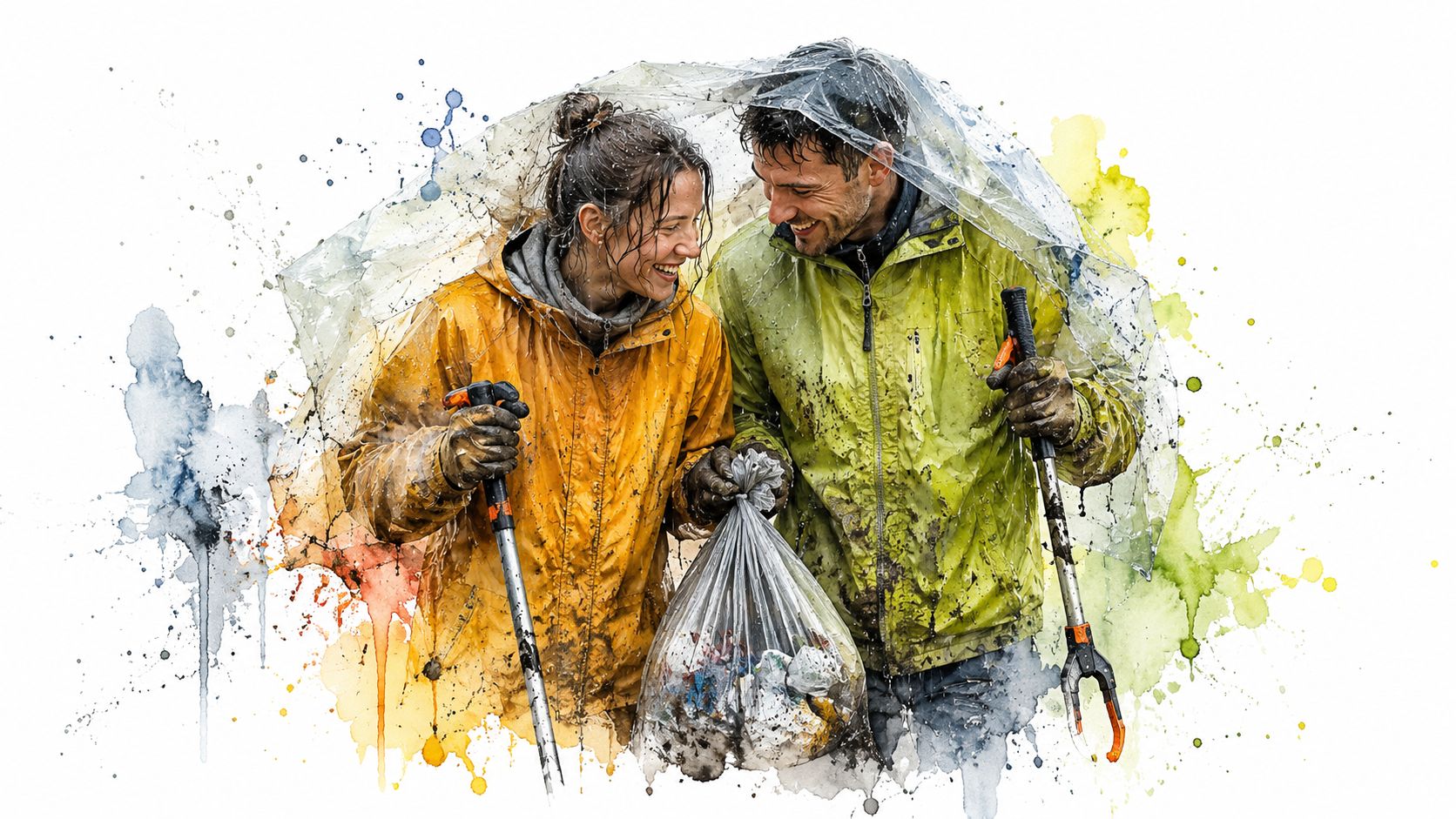
    A happy couple trekking together in raincoats while collecting litter in a plastic bag during cleanup.

    Fun is fine. Shared hardship goes deeper

    A lot of advice about friendship building activities stays safe and polished. It leans on low-stakes exercises and performative bonding. The better route for adults is often shared vulnerability and discomfort. The idea that deep bonds grow through communal suffering is spelled out in this community-building explanation of friendship formation.

    I felt that in our first hailstorm cleanup. We huddled under a tree and watched Uber rides cancel over and over. It was miserable, then funny, then weirdly memorable. By the end, we weren't just people who had met. We had gone through something together.

    Shared discomfort gives the day flavor. It creates plot. It gives you someone to text later and say, "Can you believe we did that?"

    If you want more on that mindset, I wrote about it in Suffering Builds Character.

    • Keep it safe: Bring water, gloves, layers, and a plan.
    • Let people scale their effort: One person may do an hour. Another may do twenty minutes.
    • Retell the hard moments later: That's where the bond hardens.

    5. Low-Barrier Entry With Multiple Connection Points

    Some people want to join your group right away, but their nerves get in the way. If your process is clunky, they disappear. That's not because they don't care. It's because life is messy and attention is fragile.

    I try to make joining feel almost embarrassingly easy.

    Remove friction before people talk themselves out of it

    A good first step is simple. Someone sees a post on Instagram. They find the next event on Meetup. They ask a question in a group chat. They text because they're nervous about showing up alone. Each of those is a doorway.

    This matters even more for adults whose lives feel chaotic. There isn't much practical guidance for friendship building for adults with executive dysfunction or messy lives. One background source notes that many adults struggle with consistency or organization, and standard friendship advice often assumes low-friction lives. It also points out a useful truth: cleaning other people's messes can feel easier than cleaning your own in this discussion of friendship activity gaps.

    That idea hits home for me. Cleaning my own apartment felt emotionally loaded. Cleaning a block with other people felt possible.

    • Use the platforms your people already use: Meetup for scheduling, Instagram for vibe, group chat for reassurance.
    • Say what to bring: Gloves? Water? Closed-toe shoes? Say it plainly.
    • Have one welcoming person: A friendly greeter can carry the whole first impression.

    6. Exploring Neighborhood by Neighborhood

    A great friendship activity doesn't have to stay in one place. Movement changes people. It gives the group a sense of journey.

    That's one reason I love neighborhood-by-neighborhood cleanup. You don't just build friendship. You build a shared map of your city.

    Learn a city together

    Litter Caterpillars has cleaned across all 50 Chicago wards. That kind of movement changes the feel of the work. One week you learn a quiet residential block. Another week you meet people near a busy corridor. A city stops feeling abstract when you've walked it, cleaned it, and carried bags through it with the same crew.

    The scale of the garbage problem can feel huge, but the work gets manageable when you break it down. Chicago collects about 800,000 tons of garbage every year, and a crew handles 7 to 15 alleys daily while covering an average of 25 households per alley. That's exactly why local volunteer work feels so grounding. You don't need to solve the whole mess. You need one alley, one morning, one team.

    This kind of citywide movement gives friends a shared memory bank. You remember the block with the strange mural, the alley with the impossible couch, the resident who came out to thank you, the morning the sky looked silver over the train tracks.

    Here's a glimpse of that spirit in motion.

    • Map your route in advance: Give the group a sense of progress.
    • Invite locals in: A neighborhood feels different when residents join you.
    • Keep records: Photos and notes turn scattered service into a shared adventure.

    7. Volunteer-First Ethos Without Asking for Money

    I've gotten more protective of volunteer energy over time, not less. If someone gives me their morning, their labor, and their attention, I treat that as precious.

    That's why I don't like mixing early friendship with financial pressure.

    Keep the relationship clean

    When a group keeps asking volunteers for money, the vibe changes. Even if the cause is good, people start wondering whether their presence is enough. I don't want that question hanging in the air. I want people to know that showing up is the contribution.

    That volunteer-first approach also makes the room feel more honest. You can focus on work, jokes, stories, and mutual trust instead of transactions. Friendship needs room to breathe.

    I still think creatively about supplies. Borrow tools. Accept material support through separate channels if you need to. Partner with people who can donate bags, gloves, or plants. Just don't make new volunteers feel like they walked into a checkout line.

    People relax faster when they know you want their company and effort, not their wallet.

    A few rules I stick to:

    • Say it plainly: Tell people their time is enough.
    • Thank labor directly: Thank the person who showed up in the rain, not some abstract "support."
    • Protect against burnout: End the day before people hit the wall.

    8. Safety and Happiness as Core Priorities

    If you want people to trust you, care for their body first and their mood second. That order matters.

    I don't mean this in a corporate liability way. I mean it in a human way. If I invite you into hard work, I need to care whether you're warm enough, hydrated enough, and okay.

    People bond faster when they feel protected

    Chicago's trash rules create a weird but useful lesson here. Trash trucks legally can't make pickups between 10 p.m. and 7 a.m., and tickets start at $500 and can go to $1,000 for breaking that rule. If you've ever stood around early in the morning waiting for the city to start moving, you know patience becomes part of the day.

    That kind of waiting can either feel miserable or strangely bonding. It depends on whether people feel cared for. Do they have coffee? A warm layer? Clear expectations? A way to step back if they need to?

    I always think in basics first.

    • Weather plan: Shade in heat, layers in cold, water either way.
    • Body plan: Let people modify tasks for their knees, back, or stamina.
    • Exit plan: Make it easy to tap out without shame.

    When people know you'll never pressure them past their limit, they trust you more. That's where friendship starts to feel solid.

    9. Storytelling and Meaning-Making Around the Work

    Work alone doesn't finish the job. People need to make sense of what they did together.

    That's why I like the before-talk and the after-talk almost as much as the cleanup itself.

    Tell people why you showed up

    I tell my real story. I tell people I had trouble cleaning my own life. I tell them my apartment felt emotionally impossible. I tell them a breakup pushed me to build a better social circle on purpose. The honesty changes the room. People stop performing and start speaking like actual humans.

    Then other stories come out. Someone says they came because they felt lonely. Someone says they wanted to get out of the house after a rough month. Someone remembers the hailstorm cleanup and starts laughing halfway through the story.

    Keep those stories alive. Save them. Repeat them. Let new people hear them. The group gets stronger when memory is shared instead of scattered.

    If you want to hear how volunteers describe that experience, spend time with these Litter Caterpillars volunteer testimonials.

    The story you tell after the work often decides whether people come back.

    Try these habits:

    • Go first with vulnerability: If you take the first risk, other people usually meet you there.
    • Create a ritual moment: A quick circle before or after the work is enough.
    • Call back old stories: It shows people you listened and remembered.

    10. Visible, Measurable Impact You Can Return To

    Some friendship building activities feel nice in the moment and vanish by dinner. I prefer work you can revisit with your own eyes.

    That return is powerful. You go back and see that the corner is still clean. The lot is still alive. The thing you built is still there.

    Make the result impossible to miss

    One of my favorite examples is Caterpillar Park in Englewood. A volunteer group bought a vacant 6,000-square-foot lot for exactly $10,000 at a citywide land auction in April 2025, then planned another $10,000 for plants. That's concrete. You can stand there and see what friendship plus persistence can do.
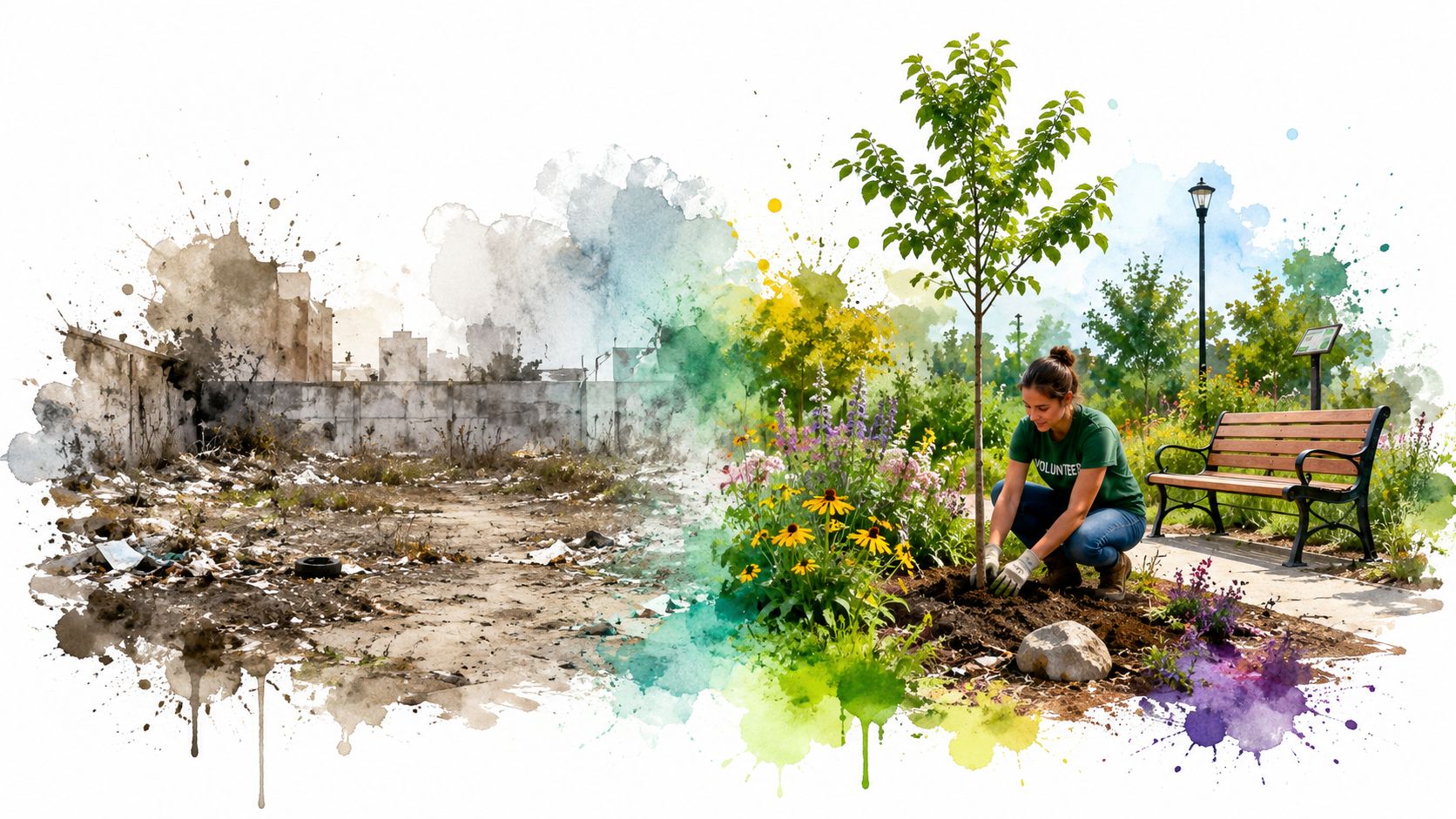
    A volunteer woman plants a tree in a park, transforming a neglected wasteland into a vibrant garden.

    Chicago also uses a grid garbage collection system designed to improve crew productivity and service efficiency. I like that because it gives volunteers a practical lane. The city has its system. Friends can fill the gaps the system misses.

    Visible impact keeps friendship from getting vague. It gives the group receipts.

    • Take before-and-after photos: People need proof of their own effort.
    • Return to the site: Maintenance turns a one-off event into a shared project.
    • Choose work with staying power: A restored lot or a cleaner block keeps giving back.

    10-Point Comparison: Friendship-Building Activities

    Strategy 🔄 Implementation Complexity ⚡ Resource Requirements 📊 Expected Outcomes 💡 Ideal Use Cases ⭐ Key Advantages
    Group Service Projects with a Shared Mission Medium, recurring coordination, logistics and volunteer management Volunteers, basic tools, organizer time, site access 📊 Immediate visible improvements; fast trust-building Neighborhood cleanups, park builds, regular team service ⭐ Rapid trust, tangible results, attracts committed people
    Theme and Identity Symbols Low, design and authentic rollout; cultural maintenance Small budget for flags/badges, time to craft narrative 📊 Strong group recognition and increased belonging Recruitment, public events, groups seeking identity ⭐ Boosts pride, visibility, group cohesion
    Intentional Scheduling to Filter for Values Low, set and maintain consistent schedule; clear communication Organizer consistency, calendar management, clear messaging 📊 Higher alignment and reliable attendance Groups wanting committed volunteers and predictable turnout ⭐ Naturally filters for committed, value-aligned members
    Shared Discomfort and Adversity Medium–High, safety planning, risk mitigation, contingency plans Safety gear, first-aid, extra planning, possible exclusions 📊 Deep, durable bonds and memorable shared stories Teams aiming for rapid trust/resilience-building ⭐ Produces intense, long-lasting connections
    Low-Barrier Entry with Multiple Connection Points Medium, multi-platform management and timely responses Accounts on platforms, a coordinator to respond, clear templates 📊 Increased sign-ups, broader diversity of participants Rapid growth, outreach to newcomers, accessibility-focused groups ⭐ Maximizes onboarding and reduces friction to join
    Exploring Neighborhood by Neighborhood High, travel logistics, local outreach, route planning Transport time, local contacts, research and coordination 📊 Broad network, citywide relationships, fresh activities City-scale initiatives, discovery-focused volunteer programs ⭐ Expands reach, fosters cross-neighborhood ties
    Volunteer-First Ethos Without Asking for Money Medium, sourcing supplies without donations; sustaining operations In-kind donations, partner relationships, volunteer labor 📊 Authentic participation and high volunteer loyalty; limited scaling Community-led groups prioritizing equity and volunteer wellbeing ⭐ Preserves volunteer energy; encourages honest commitment
    Safety and Happiness as Core Priorities Medium, planning, training, liability awareness and check-ins First-aid kits, contingency plans, training time, communication 📊 Higher trust, retention, and fewer negative incidents Activities with new or vulnerable participants, physical work ⭐ Builds foundational trust and lowers participation anxiety
    Storytelling and Meaning-Making Around the Work Low–Medium, allocate time for sharing and documentation Time for facilitation, recording tools, a culture of vulnerability 📊 Strong emotional bonds, clearer group culture and purpose Groups seeking deeper retention and cultural identity ⭐ Turns actions into meaning; strengthens long-term ties
    Visible, Measurable Impact You Can Return To Medium–High, project selection, sustained maintenance, documentation Ongoing volunteers, materials, possible partnerships and signage 📊 Tangible legacy that motivates continued involvement Long-term neighborhood projects, legacy or placemaking efforts ⭐ Concrete proof of achievement; sustains pride and recruitment

    Now, Go Build Something Real

    Friendship is the good thing that happens while you're busy doing other good things. That's the cleanest way I know to say it. If you chase friendship directly, you can end up with a lot of pleasant conversations and very little depth. If you chase shared effort, the depth sneaks up on you.

    That's why I don't get excited about generic mixers anymore. I'm not against fun. I like fun. I just think adults often need a stronger recipe than snacks, name tags, and a room full of people hoping somebody else will say something interesting. Real friendship usually needs friction. It needs repetition. It needs a reason to exist outside of itself.

    The best friendship building activities have a few traits in common. They give you a shared mission. They happen on a real schedule. They let people struggle a little. They create stories worth retelling. They leave behind proof that your time mattered. When those pieces come together, people stop feeling interchangeable.

    I also think a lot about the kind of people a group attracts. Your timing attracts certain habits. Your culture attracts certain values. Your standards attract certain levels of honesty. That's a good thing. You don't need everyone. You need people who are ready to build something with you.

    If your own life feels messy, I want to say this plainly. You do not need to become perfectly organized before you earn community. You do not need to clean your whole apartment, heal your whole past, or become charming on command. Sometimes the door into friendship is simpler than that. You show up somewhere useful. You carry a bag. You ask where to help. You come back next week.

    That's how I changed my life. I stopped waiting to be discovered by the right people. I built a place where the right people would naturally appear. Then I kept showing up long enough for trust to grow.

    So pick one idea from this list and make it real. Start a cleanup. Adopt one block. Create a weird little flag. Set a Saturday morning rhythm. Invite three people. Bring water. Tell the truth about why you're doing it. Give the day enough structure to hold strangers and enough meaning to turn them into friends.

    Go build the thing you wish already existed. Your people might be waiting inside that work.


    If you want a place to start, join Litter Caterpillars. Show up on a weekend morning, meet people who care, and do something real for Chicago. Friendship gets easier when your hands are busy and your purpose is clear.
  • 10 Neighborhood Improvement Projects to Start Now

    10 Neighborhood Improvement Projects to Start Now

    My life used to be a mess. My apartment was chaotic, and my life felt the same way. Every piece of trash had a story, and every story felt too heavy for me to throw away.

    So I did something strange. I cleaned up someone else's mess instead. I went outside with two friends, grabbed bags, and started picking up litter. Then the sky turned on us. Hail. Wind. Cold fingers. Canceled rides. We stood there shivering under a tree, laughing like idiots.

    That day taught me something I still carry. Hard work with good people changes you. It scrapes off excuses. It gets you out of your head. It gives you a small win you can hold in your hands. One full trash bag. One cleaner block. One proof that you can face discomfort and keep moving.

    That's how I think about neighborhood improvement projects. Sure, they fix streets, lots, sidewalks, and parks. But they also fix something inside the people who show up. You learn consistency. You learn courage. You learn that friendship comes easier when your hands are busy and the work is real.

    If your life feels stuck, don't wait for some perfect plan. Start outside. Start with something ugly and neglected. Put your back into it. Let the work introduce you to a stronger version of yourself.

    1. Community Litter Cleanup Crews

    The first cleanup crew I joined had all the polish of a garage band's first show. We had bags, gloves, bad timing, and no clue what weather was coming. It was miserable for about ten minutes. Then it became fun, because struggle shared with other people has a weird way of turning into glue.

    That's why cleanup crews work. You're not asking people to care in theory. You're giving them a route, a bag, and a visible problem they can attack together. A block with trash on it feels hopeless. A block with six people cleaning it feels alive.

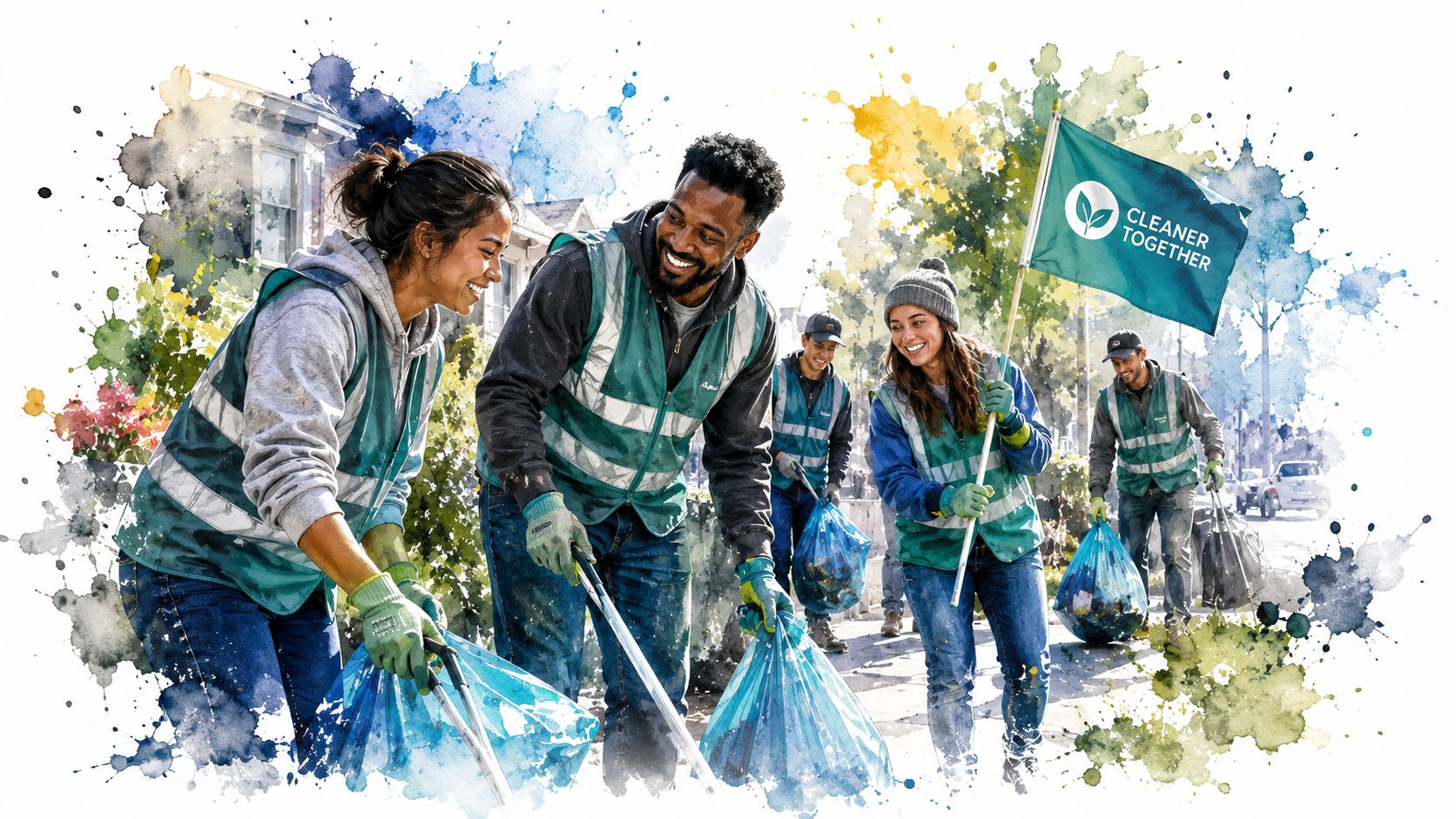
    A diverse group of volunteers in high-visibility vests working together to clean up their neighborhood streets.

    Build a crew, not a one-off event

    I like to think of litter crews like a rec league team. The point isn't one heroic Saturday. The point is rhythm. You show up on the same morning, people start trusting the schedule, and strangers slowly become the kind of friends who text each other when they're running late.

    One lesson matters more than commonly assumed. Weekend mornings filter for a different kind of volunteer. A Mercatus neighborhood-strength brief makes the same point plainly: weekend morning timing is the sharpest filter for attracting givers instead of party people.

    Practical rule: Pick a schedule that shapes the culture you want. Time is a filter.

    If you want help getting one off the ground, use this guide on how to organize a neighborhood cleanup.

    • Start with one dependable route: One alley, one park edge, one commercial strip. Let consistency beat ambition.
    • Pair rookies with regulars: People stay longer when they feel useful in the first hour.
    • Give the crew an identity: Safety vests, a flag, matching grabbers, even a dumb team nickname. Pride matters.
    • Protect volunteer energy: Don't turn every cleanup into a fundraising pitch. Let the work be the work.

    Chicago's Litter Caterpillars built their name through weekly pickups across the city, rain or shine. You can do the same on a smaller scale. Your first crew doesn't need to look impressive. It just needs to return next week.

    2. Vacant Lot Transformation into Parks

    An empty lot can mess with your head. You walk past it enough times and start accepting neglect as normal. Broken fence. Weeds. Dumped junk. Dead space. Then one day somebody cuts it back, clears it out, puts down seating, and suddenly the same ground feels like a different world.

    That kind of change hits hard because it's physical. You can point at the dirt and say, “Yeah, this used to be a mess.”

    For me, this project always feels personal. Taking land that people gave up on and turning it into a gathering place is a lot like rebuilding your own life after chaos. You don't begin with perfection. You begin by clearing what's rotten.

    Video tells that story better than theory sometimes.

    Start rough, then keep shaping it

    In Englewood, Litter Caterpillars bought two adjacent lots at 6316 and 6318 South Sangamon Street for exactly $10,000 at a wide land auction organized by Hilco in April 2025. I love that story because it isn't polished. It's direct. See a problem. Get the lot. Start building.

    You can read more of that journey in the tale of the vacant lot.

    A park project doesn't need fancy bones on day one. It needs clearing, a path people can walk, and a reason to pause there.

    What people actually use

    • Add seating early: A bench or simple chairs invite people to stay, and staying changes how a place feels.
    • Create a maintenance rhythm: If nobody owns the weeds, the weeds win.
    • Ask neighbors one blunt question: “What would make you come here?” Kids' play space, shade, flowers, a grill area, raised beds. Let the answer shape the site.
    • Open it with a real gathering: Music, snacks, cleanup supplies, introductions. A place becomes public when people make a memory in it.

    Philadelphia, Detroit, and Chicago all have examples of neighbors reclaiming forgotten land this way. The pattern is simple. Dead ground drags people down. Shared green space lifts them back up.

    3. Street Mural and Public Art Programs

    Some blocks look tired before anybody even says a word. Blank walls do that. They flatten a place. Then a mural goes up and the whole street gets a pulse.

    I've seen people stop in front of painted walls the way they stop in front of a campfire. They lean in. They talk. They take pictures. They straighten up a little. Color gives people a reason to look longer, and looking longer is the first step toward caring.

    An artist on a ladder paints a colorful community mural featuring city silhouettes for observers.

    Paint changes the temperature of a block

    Think about neighborhoods like living rooms. A bare cinderblock wall says, “Get through this space.” A mural says, “Somebody bothered.” That emotional shift matters. It can make nearby residents more protective of the area and more willing to join cleanups or report damage when they see it.

    Chicago's Pilsen neighborhood, Philadelphia's long-running mural culture, and Denver's RiNo all give you strong models. The lesson isn't “copy their style.” The lesson is “use art to make care visible.”

    A good mural gives a block a face. Once a place has a face, people treat it differently.

    Keep the project grounded

    • Get permission in writing: Don't skip this. Enthusiasm isn't a permit.
    • Use local artists first: Art lands better when it sounds like the neighborhood that has to live with it.
    • Invite residents into the design: Ask for themes, names, symbols, memories.
    • Plan touch-ups from the start: Sun, weather, and tags don't care how beautiful the wall is.

    One of the best versions of this project is simple. Pick the ugliest wall on a route people walk. Then replace “nobody cares” with something people want to show their friends.

    4. Community Garden and Green Space Development

    Gardens are sneaky. You think you're building raised beds and tomato cages. Then a month later you realize you've also built a place where people slow down enough to talk.

    I love community gardens because they give people a clean, honest feedback loop. You water. It grows. You ignore it. It droops. That kind of clarity is rare in modern life.

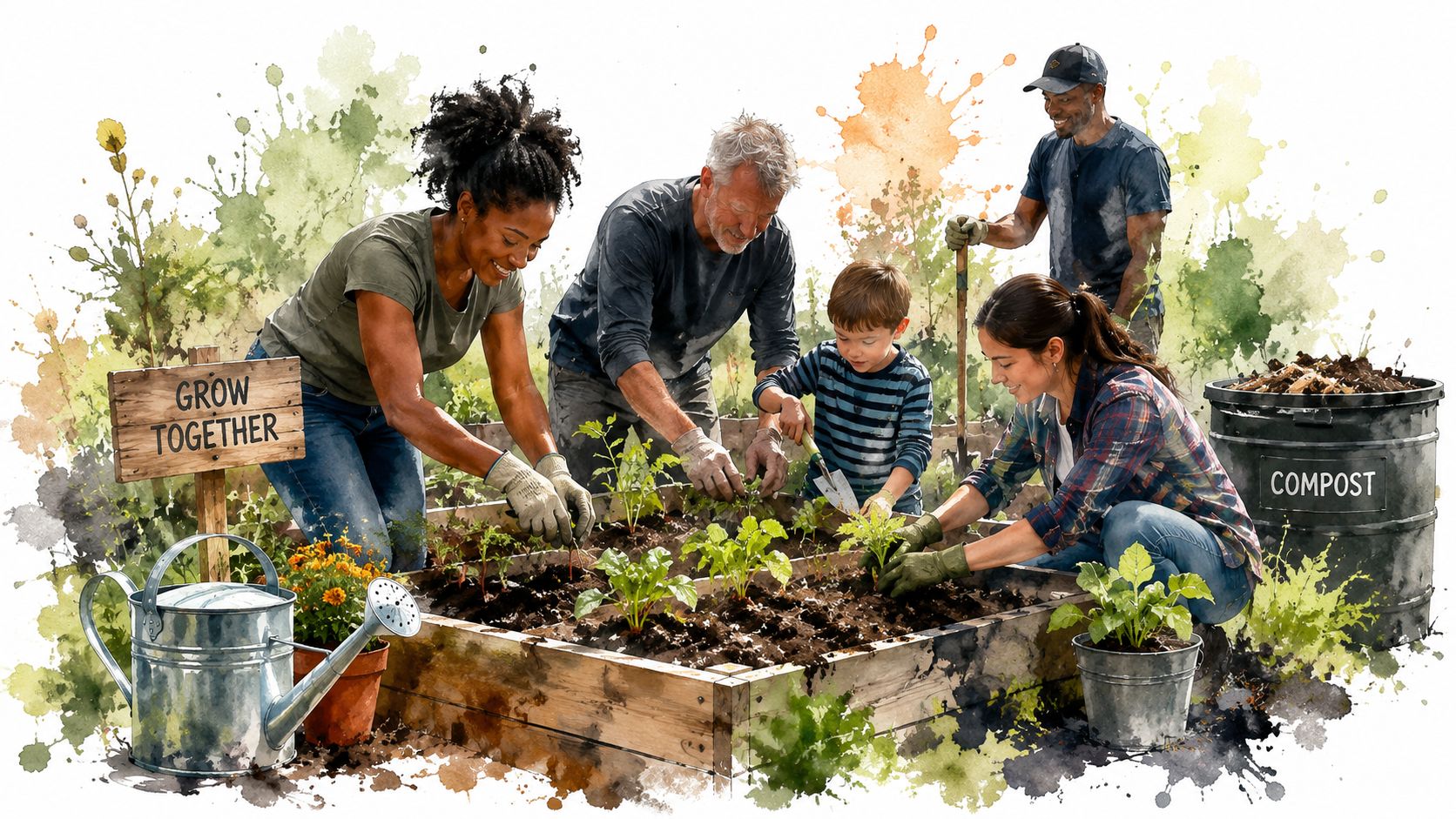
    A multi-generational diverse group of people planting vegetables together in a community garden raised bed.

    A garden teaches people they can tend something

    In Mexico, the Hábitat para el Desarrollo program randomly allocated $68 million across low-income urban neighborhoods, averaging $567 per household, and the investment improved infrastructure access while also triggering private investment in housing stock. I like this example because it shows a basic truth. When people see a place improve, they often start investing their own effort and money too.

    A garden can create that same chain reaction on a smaller patch of land. One clean bed turns into three. One tomato plant turns into a conversation about fencing, water access, herbs, compost, and whose grandma knows how to grow peppers right.

    If you want local inspiration, check out these community gardens in Chicago, IL.

    Keep the first season humble

    • Begin with a manageable footprint: A few plots beat a giant failed field.
    • Install water access before planting day: Hope is not irrigation.
    • Mix skilled gardeners with beginners: Mentorship keeps a garden from becoming a clique.
    • Celebrate harvests out loud: A shared meal does more for neighborhood trust than a rule sheet ever will.

    Brooklyn, Detroit, Los Angeles, and Chicago all have gardens built on land that once looked useless. That's why I push this project so hard. A garden lets people practice hope with their hands.

    5. Neighborhood Beautification Through Tree Planting

    Tree planting is one of the few projects where you get two rewards at once. You get a workday now, with shovels and muddy shoes and jokes, and you get shade later. It's friendship in the present and patience planted in the ground.

    I've always liked projects that ask you to think beyond your own mood. A tree doesn't care if you're in a slump. It still needs mulch, water, and a little room to root. That's healthy for people like me. It drags your attention out of your own mess.

    Plant where people will notice the change

    Street trees can soften a hard block fast. Even before they mature, they tell residents that somebody expects this place to have a future. Schools, church edges, bus-stop corridors, and stretches with too much concrete are all strong starting points.

    The trick is follow-through. Planting day gets the photos. Watering day keeps the promise.

    • Work with a city forestry team or local nonprofit: They'll help you avoid bad species choices and bad planting spots.
    • Choose native or climate-suited trees: Don't set volunteers up to fail with something fragile.
    • Tag stewards to each tree: One person checking in beats everybody assuming somebody else did it.
    • Use schools when you can: Kids remember the tree they planted. So do their parents.

    Chicago, Los Angeles, New York, and London all give you versions of this playbook. If you want a project that feels both practical and hopeful, this is one of the best neighborhood improvement projects you can start.

    6. Neighborhood Walking Tours and Wayfinding Improvements

    A lot of people “know” a neighborhood only through a windshield. That isn't knowing. That's passing through. When you walk a place, you notice the mural tucked behind the corner store, the old church stonework, the block where the gardens are thriving, the café owner who remembers names.

    That's why walking tours matter. They teach residents and visitors to see what speed hides.

    Help people move through the neighborhood with confidence

    Wayfinding can be simple. Printed maps. Painted markers. Pole signs. A route that links transit, local businesses, public art, and places to rest. None of that sounds dramatic, but it changes behavior. People linger when they know where they're going.

    I've seen longtime residents light up when a tour guide tells a story about a building they pass every week. Familiar streets start feeling fresh again, and that creates a different kind of ownership.

    On-the-ground lesson: If you want people to care about a place, slow their bodies down long enough for their eyes to wake up.

    Make the route human

    • Interview people who've lived there a long time: Their stories beat any generic script.
    • Train a few local guides: Don't let one person become the whole program.
    • Add rest points: Benches, shade, water, bathrooms. Hospitality matters.
    • Link the walk to local shops: Coffee after the tour keeps people talking.

    Chicago has great neighborhood routes for this kind of work, and cities like Boston and San Francisco have long shown how a walking path can change how people relate to an area. If your neighborhood has history, beauty, food, odd little landmarks, or even just one great story per block, you already have material.

    7. Graffiti Prevention and Removal Programs

    Graffiti hits differently depending on the wall. A commissioned mural is one thing. A fresh tag sprayed across a storefront gate or brick wall can make a block feel like nobody's paying attention.

    That's why speed matters. When residents remove new tags fast, they send a message right back. We saw it. We care. We're not asleep.

    Respond fast, then create legal outlets

    This project works best when you split it in two. First, rapid removal. Second, approved spaces for real art. If you only remove, you create a cat-and-mouse fight. If you only permit murals, you ignore the immediate frustration residents feel when tags keep appearing on homes and small businesses.

    A good volunteer program trains people on safe paint matching, solvents, reporting, and when to leave gang-related markings to trained city crews or law enforcement.

    • Set up a simple reporting channel: Group chat, form, or neighborhood text thread.
    • Map repeat spots: Patterns tell you where lighting, cameras, barriers, or outreach may help.
    • Work with property owners: Fast permission beats delays that let tags linger.
    • Pull young artists into legal projects: Respect grows when people have a real wall to paint.

    Chicago, Los Angeles, San Francisco, and New York have all used combinations of removal and sanctioned art. The heart of the project is simple. Don't let neglect sit there long enough to become normal.

    8. Neighborhood Safety and Lighting Improvements

    Fear changes how people move. A dark block empties out fast. A well-lit one invites dog walkers, commuters, kids with parents, and the ordinary flow of human eyes that makes a place feel less tense.

    I care about this project because safety is practical, not abstract. If volunteers don't feel safe, they won't keep showing up. If seniors don't feel safe, they won't walk. If parents don't feel safe, they won't let kids use the park after dinner.

    Start with what people avoid

    Ask residents where they don't like walking at night. They'll tell you fast. The underlit bus stop. The stretch where trees block the lamp. The path by the lot. The corner where a broken fixture has been dead for months.

    Then walk those spots in person. At dusk. On a weeknight. Don't guess from daylight.

    A solid safety project can include better lighting requests, trimming overgrowth, cleaning around poles, documenting outages, and organizing evening walks after repairs so people reclaim the route together.

    Use a simple field method

    • Map dark gaps block by block: Don't rely on memory.
    • Photograph dead lights and obstructed fixtures: Clear evidence helps city requests move.
    • Trim what you can legally trim: Overgrowth can swallow half a lamp's reach.
    • Bring residents back outside afterward: A safer block still needs people on it.

    Cities like Chicago, Los Angeles, New York, and Philadelphia have all pushed lighting work in neighborhoods where people asked for it. If you want a project with immediate psychological payoff, this is one. Better light changes how a street feels the same night it works.

    9. Sidewalk and Parkway Maintenance and Repair

    Broken sidewalks don't look dramatic until you trip on one. Or try pushing a stroller over it. Or roll a wheelchair into a slab that has lifted like a crooked tooth. Then it gets real fast.

    That's why I respect this work so much. It's plain. It's useful. Nobody needs a theory lecture to understand why a cracked walkway matters.

    Fix the path people actually use

    Community Development Block Grant neighborhood improvement projects have shown a very local housing-price effect. Homes within 500 feet of completed projects saw a 4.1% to 4.2% increase relative to untreated homes, with the effect emerging three years after completion and fading beyond 1,000 feet. I bring that up for one reason. Hyperlocal work matters. Improvement is often block-level, not magical citywide vapor.

    So start where feet and wheels already go. Routes to schools. Routes to transit. Corners with missing curb cuts. Parkway strips full of weeds or broken edges.

    Repair what people touch every day. That's where trust grows.

    Mix volunteer work with city pressure

    • Document hazards carefully: Photos, addresses, notes on who uses the route.
    • Prioritize ADA barriers first: Accessibility is not an extra.
    • Handle what volunteers can handle: Parkway cleanup, weeds, debris, minor surface prep where allowed.
    • Stay on the city: Repairs often move because residents keep calling, emailing, and showing up.

    Chicago, Boston, New York, and San Francisco all have neighborhoods where residents pushed hard for safer walking conditions. This project isn't glamorous. Good. Sometimes the best work looks boring right up until it changes somebody's daily life.

    10. Community Events, Gatherings, and Skill-Building Programs

    A neighborhood can have clean streets and still feel lonely. People need reasons to be together that aren't emergencies, complaints, or awkward nods from across a fence.

    That's where events and classes come in. A block party, repair café, tool-share workshop, gardening lesson, or bike-fix day gives people a softer entry point into community life. Some folks won't come to a cleanup first. They will come to music, food, or a class where they learn something useful.

    Let people arrive for fun and stay for purpose

    I've seen this happen over and over. Somebody comes for a casual event, meets two decent people, hears about the next service project, and suddenly they're part of something. Skill-building helps because it gives adults a rare gift. Beginner status without shame.

    Teach bike repair. Teach basic home patching. Teach composting. Teach how to use a drill without fear. When people fix one small thing with their own hands, they start believing they can fix other things too.

    Build the social glue on purpose

    • Start smaller than your ego wants: One good annual event beats a giant flop.
    • Recruit role-based volunteers: Setup, welcome, food, cleanup, kids' area, instructor support.
    • Create time to linger: Conversation before or after the activity matters as much as the activity.
    • Turn learners into teachers: The strongest programs keep recycling leadership back into the neighborhood.

    There's another reason I like these gatherings. A major World Bank neighborhood upgrading project in unplanned settlements directly benefitted 367,562 people with improved access to infrastructure and basic services, exceeding its revised target of 150,000 by more than two-fold. Big systems matter, sure. But in ordinary neighborhood life, shared services and shared spaces work best when people know each other.

    Comparison of 10 Neighborhood Improvement Projects

    Initiative Implementation Complexity 🔄 Resource Requirements ⚡ Expected Outcomes 📊 Ideal Use Cases 💡 Key Advantages ⭐
    Community Litter Cleanup Crews Low, volunteer scheduling, route assignment Low, gloves, bags, grabbers, disposal coordination Immediate visible cleanliness; stronger neighbor ties Quick wins; volunteer onboarding; frequent visible impact High immediate impact; easy to scale; strong community building
    Vacant Lot Transformation into Parks High, land acquisition, legal work, design, permits High, capital for purchase, infrastructure, long-term maintenance Long-term neighborhood pride; increased property values; gathering space Long-term revitalization; reclaiming blight; multi-use public space Transformative physical change; high socio-economic return
    Street Mural & Public Art Programs Medium, approvals, artist collaboration, design review Low–Medium, paint, scaffolding, artist fees, maintenance Rapid aesthetic improvement; increased foot traffic and pride Beautification corridors; youth engagement; cultural storytelling High visual impact; relatively affordable; deters vandalism
    Community Garden & Green Space Development Medium, land access, plot design, irrigation setup Medium, soil, tools, water access, education resources Fresh food, skills transfer, social ties, improved mental health Food-insecure areas; skill-building; multi-generational engagement Produces tangible food + social resilience; year-round benefits
    Neighborhood Tree Planting Medium, planning with forestry, species selection Medium, saplings, tools, training, watering stewardship Long-term environmental benefits; shade; improved streetscape Climate-resilience projects; long-term beautification Long-lasting environmental & property value gains
    Walking Tours & Wayfinding Improvements Low–Medium, research, guide training, signage permits Low, signage production, printed/digital guides, promotion Increased foot traffic; stronger place identity; local economic boost Cultural/historic neighborhoods; visitor engagement; small budgets Low-cost activation; immediate community storytelling
    Graffiti Prevention & Removal Programs Medium, monitoring system, rapid response teams Low–Medium, cleaning supplies, trained volunteers, approved walls Reduced visual blight; deterred crime signals; outlet for artists Areas with frequent tagging; youth engagement through legal art Immediate visible results; engages artists; prevents neglect
    Safety & Lighting Improvements High, coordination with city, infrastructure upgrades High, LED fixtures, installation, maintenance, permits Increased night-time safety; more active streets; reduced accidents High-crime or poorly lit corridors; enabling evening activities Structural safety improvement with broad ripple effects
    Sidewalk & Parkway Maintenance Medium, assessment, city coordination, some contracting Medium–High, materials, contractors, volunteer prep work Improved accessibility and safety; immediate visible repairs ADA access improvements; areas with damaged sidewalks Directly improves mobility and safety; tangible results
    Community Events & Skill-Building Programs Low–Medium, event planning, volunteer roles, partnerships Low–Medium, supplies, permits, instructors, promotion Strong social cohesion; skill transfer; volunteer recruitment Outreach, recruitment, education, launching larger initiatives Builds relationships, attracts diverse residents, versatile impact

    Just Start. Bravery Is a Muscle

    Don't overwhelm yourself by staring at the whole city. That's like standing in front of a filthy garage and deciding you have to organize every shelf before you touch a broom. You'll freeze. I know that freeze. I've lived in it.

    Start smaller than your pride wants. Pick up one bag of trash. Clear one lot corner. Report one dead streetlight. Ask one older neighbor what this block used to look like. Plant one tree. Paint one wall with permission. Build one raised bed. Lead one walk. Host one little class with six folding chairs and a box of donuts.

    That's enough.

    Bravery isn't something you're handed. You build it the same way you build muscle. Reps. You do one hard thing. Then another. Then another. At first it feels awkward and heavy. Then one day you notice you don't panic as fast. You don't quit as fast either.

    I think people make a mistake when they wait to feel ready before they act. Readiness usually comes after action, not before it. You get stronger by carrying weight, not by studying dumbbells from across the room. Neighborhood improvement projects work the same way. The project outside becomes training for the project inside.

    And yes, some days will be annoying. You'll get rained on. People won't show up. Bureaucracy will drag. Somebody will leave a fresh pile of trash right after you clean. Good. That's part of the story. Friction gives the work texture. A little suffering makes the memory stick. It gives you something to laugh about later with the people who stayed.

    That's another thing worth saying plainly. You're not only fixing places. You're finding your people. Real friendship often grows sideways. Not from trying too hard to network, but from carrying mulch together, scraping stickers off poles, pushing wheelbarrows, or huddling under a tree in bad weather because you were stubborn enough to show up.

    So don't wait for permission to become the kind of person who acts. Choose a block. Choose a morning. Choose a project. Then go do the unglamorous thing with your whole heart.

    You might walk home dirty, tired, and sore.

    You also might walk home a little cleaner inside.


    If you want a place to start, join Litter Caterpillars. Show up on a weekend morning, grab a bag, and do one hard, useful thing with good people. That's how cleaner streets begin, and it's also how a different life begins.

  • Volunteer Program Evaluation: A No-Nonsense Playbook

    Volunteer Program Evaluation: A No-Nonsense Playbook

    Three people stood under a tree in a Chicago hailstorm, holding trash bags and waiting for rides that never came. We were freezing, half laughing, and already learning the first rule of volunteer work. If you don't decide what counts as progress, the weather, the chaos, and other people's opinions will decide for you.

    Your Program is a Story Not a Spreadsheet

    After a cleanup, I do not start with the sign-in sheet. I start with the curb.

    Did the block feel different. Did the volunteers leave taller than they arrived. Did a neighbor stop to talk instead of walking past with that shut-down look city residents get when they have given up on a corner?

    That is evaluation at street level. It starts with what changed in real life, then works backward to the numbers that prove it. Groups that begin with a giant spreadsheet usually end up measuring whatever is easiest to log. Hours. Names. Bags. Posts. Those figures matter, but they are only fragments. A volunteer program lives or dies on whether the work changed the place, the people, or both.

    Corporate-style evaluation often strips out the part that matters most. It treats volunteers like labor inputs and outcomes like tidy boxes. That approach misses too much. A cleanup can produce fewer bags than usual and still be one of your best days if a nervous first-timer comes back next week, two neighbors trade numbers, or a teenager realizes they can lead a block instead of complaining about it.

    I have learned to treat evaluation more like field notes than office reporting. Gather proof from several angles, then line it up against the mission.

    Here is the kind of proof that holds up:

    • Visible proof: before-and-after photos, route maps, filled bags, finished tasks
    • Behavior proof: turnout, repeat attendance, friend referrals, volunteers who stay to help after the official end
    • Experience proof: short feedback forms, comments in the group chat, quick check-ins as the day concludes
    • Mission proof: signs that the work changed habits, trust, confidence, pride, or connection to place

    Mission proof is where many groups get sloppy. They assume everyone knows what the deeper goal is. They do not. If your mission is cleaner streets, document cleaner streets. If your mission is reducing isolation, ask whether people made new connections. If your mission is building courage, look for the shy volunteer who starts speaking up, leading a team, or inviting someone else.

    That is why stories belong in your evaluation system. A page of volunteer testimonials from cleanup experiences can show the human shift behind the numbers. It captures fear turning into confidence, strangers turning into teammates, and one-time volunteers turning into regulars. A spreadsheet cannot carry that by itself.

    Litter Caterpillars uses this approach because the mission is bigger than trash removal. We want cleaner blocks, yes. We also want people to feel ownership, pride, and connection in places that often get written off. If we only count bags, we miss half the work. If we only collect stories, we cannot improve the operation. Good evaluation does both. It keeps the soul of the group in view while giving you enough evidence to fix what is weak, repeat what works, and stay honest about what changed.

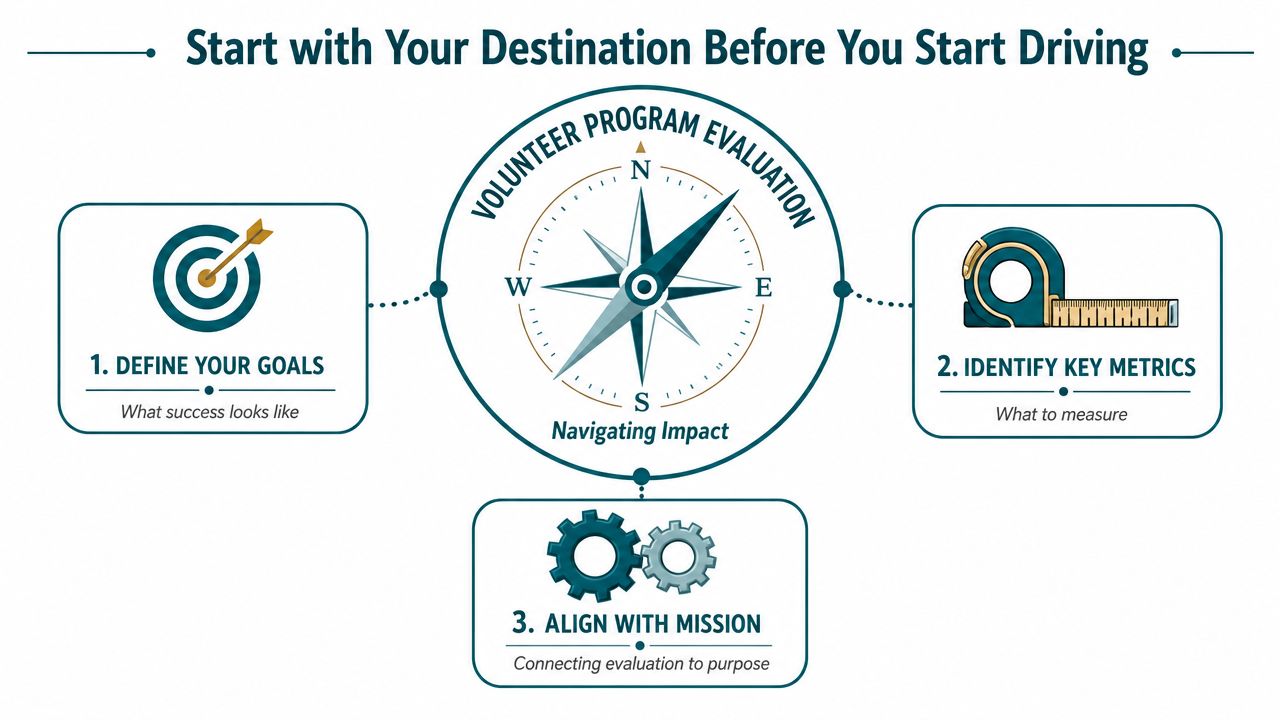
    Start with Your Destination Before You Start Driving

    If you got in your car, closed your eyes, and hit the gas, nobody would call that a road trip. They'd call it a bad decision. Yet that's how many groups run evaluation. They collect random data before they define success.

    Your mission is the destination. Your evaluation is the map in the glove box.

    A diagram illustrating a volunteer program evaluation framework with goal setting, key metrics, and mission alignment.

    Build a simple map

    People hear "logic model" and tense up. Relax. It's just a chain of cause and effect.

    You do an activity.
    That activity creates an output.
    That output should lead to a change.

    A volunteer group that picks up trash on weekend mornings might map it like this:

    Part of the map Plain-English version
    Inputs volunteers, gloves, bags, grabbers, time, leaders
    Activities cleanups, check-ins, group chats, photo posts
    Outputs hours served, blocks cleaned, bags filled, events run
    Outcomes stronger habits, new friendships, more neighborhood pride, repeat volunteers

    That map keeps you honest. It also stops you from measuring whatever is easiest.

    Start with baseline and mission outcomes

    Before you measure anything, set a baseline. VolunteerHub's practical guide to measuring volunteer impact makes that point clearly. You need to know where you are today or your future numbers mean nothing. The same guide says to clarify your top 3 mission outcomes and assign 2 to 3 metrics for each outcome, including at least one output measure and one outcome measure.

    That sounds formal, but it is freeing.

    If your mission outcome is cleaner public space, your output measure might be hours served and your outcome measure might be visible site improvement documented through photos and field notes.

    If your mission outcome is stronger community ties, your output measure might be event attendance and your outcome measure might be volunteer comments about friendships, trust, and whether they'd recommend the experience.

    A map doesn't make the work less human. It keeps the human part from getting lost.

    Use the five-step cycle

    A rigorous volunteer program evaluation follows a five-step methodology: Plan, Collect, Analyze, Report, and Improve, as explained in Qomon's volunteer program evaluation framework. I like this cycle because it cuts through nonprofit fog.

    The situation on the ground is as follows:

    1. Plan: pick the questions that matter.
    2. Collect: gather only the data you can use.
    3. Analyze: look for patterns, surprises, and weak spots.
    4. Report: tell the story in plain language.
    5. Improve: change the next event, training, or communication.

    That's the whole machine. No shrine to paperwork. No giant consultant deck.

    One rough example

    Say your group values bravery. Fine. Define it.

    You might describe bravery as people showing up in uncomfortable conditions, returning after a hard first event, or trying unfamiliar neighborhoods and tasks. Then you can observe it. You can note weather, turnout consistency, and volunteer reflections. Suddenly a value that sounded abstract becomes something you can watch in real life.

    That is what a good map does. It turns ideals into observable behavior.

    Measure Both the Head Count and the Heart Count

    At one of our early cleanups, I made the rookie mistake of calling the day a win because the pile of filled trash bags looked huge. Then I checked what happened after. A lot of first-timers never returned. We had moved a lot of rubbish, but we had not built much staying power.

    That is why I track two kinds of proof.

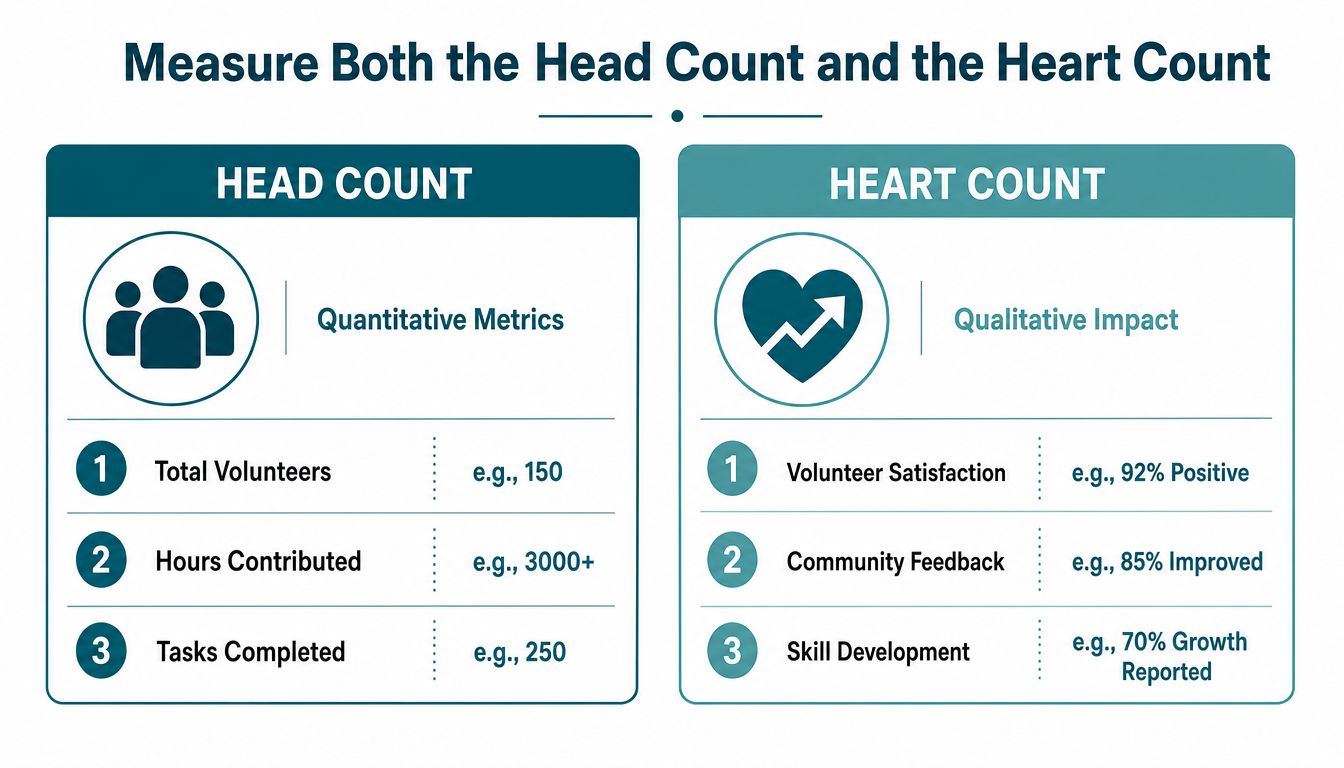
    Head Count shows what the group did in the world.
    Heart Count shows what the experience did to the people doing it.

    You need both if you want a volunteer program that lasts.

    An infographic comparing quantitative Head Count metrics and qualitative Heart Count impacts for measuring volunteer program success.

    Head Count metrics

    These are the plain, visible markers of effort. They matter because grassroots groups can drift into good intentions unless somebody keeps score.

    Useful measures include:

    • Participation rates: who registered, who showed up, and who came back
    • Total hours: how much volunteer time the work required
    • Task completion: whether the route, outreach shift, sorting job, or cleanup target got finished
    • Opportunity count: how often people had a real chance to serve
    • Retention: whether the same volunteers return often enough to build skill and trust

    I keep Head Count simple on purpose. If your team needs ten fields and a training manual just to record attendance, the system is too heavy for street-level work.

    Heart Count metrics

    Heart Count is where volunteer evaluation stops sounding corporate and starts sounding honest.

    People join for one reason and stay for another. They may come because a friend invited them, because the mission matters, or because they felt guilty scrolling past a littered park. They return because they felt useful, safe, welcomed, and connected to something real. If you never measure that part, you miss the reason your group grows or fades.

    Ask direct questions. Keep them short.

    • Did today feel worth your time?
    • Would you come again?
    • Would you bring a friend?
    • Did you feel safe and supported?
    • What frustrated you?
    • What made you feel proud?

    Heart Count can include:

    Heart Count signal What it tells you
    Satisfaction score whether the experience felt good enough to repeat
    Recommendation likelihood whether trust is strong
    Return behavior whether people want another round
    Open comments what the numbers miss
    Social spillover whether volunteers stay, talk, and build ties

    I trust return behavior more than smiles in a group photo. Plenty of events look cheerful for ninety minutes and still fail the ultimate test. The ultimate test is whether people come back on a wet Saturday when the novelty is gone.

    For more grounded systems, I like volunteer management best practices for grassroots groups because they keep the focus on habits, safety, and repeat participation instead of vanity metrics.

    Here's a short video take on the subject before I get more tactical:

    Don't confuse output with meaning

    A hundred bags of trash can mean the day went well. It can also mean the site was in terrible shape, the route was poorly chosen, or your group spent too much time fixing preventable mess.

    I have seen smaller cleanups produce better results. Fewer bags. Better volunteer energy. Safer movement through the area. Stronger conversations with passersby. Higher return rates the next week. That is a better day for a mission-driven group, even if the raw pile looks less dramatic on Instagram.

    Litter Caterpillars is a good example of this trade-off. If twelve people clear a modest stretch of street, talk with residents, take before-and-after photos, and eight of them sign up again, that session has more long-term value than a one-off turnout surge that burns people out.

    Measure the work. Measure the experience. Then compare them side by side.

    If the job gets done and people want to return, the program is healthy. If one side is strong and the other is weak, you found the problem early enough to fix it.

    Your Toolkit for Gathering Street-Level Data

    You don't need enterprise software. You need a system volunteers won't hate.

    The best data tools are the ones people will use while they're tired, dirty, sweaty, cold, or rushing to catch the train home. In practice, that usually means your phone, a free form, a shared sheet, and a habit.

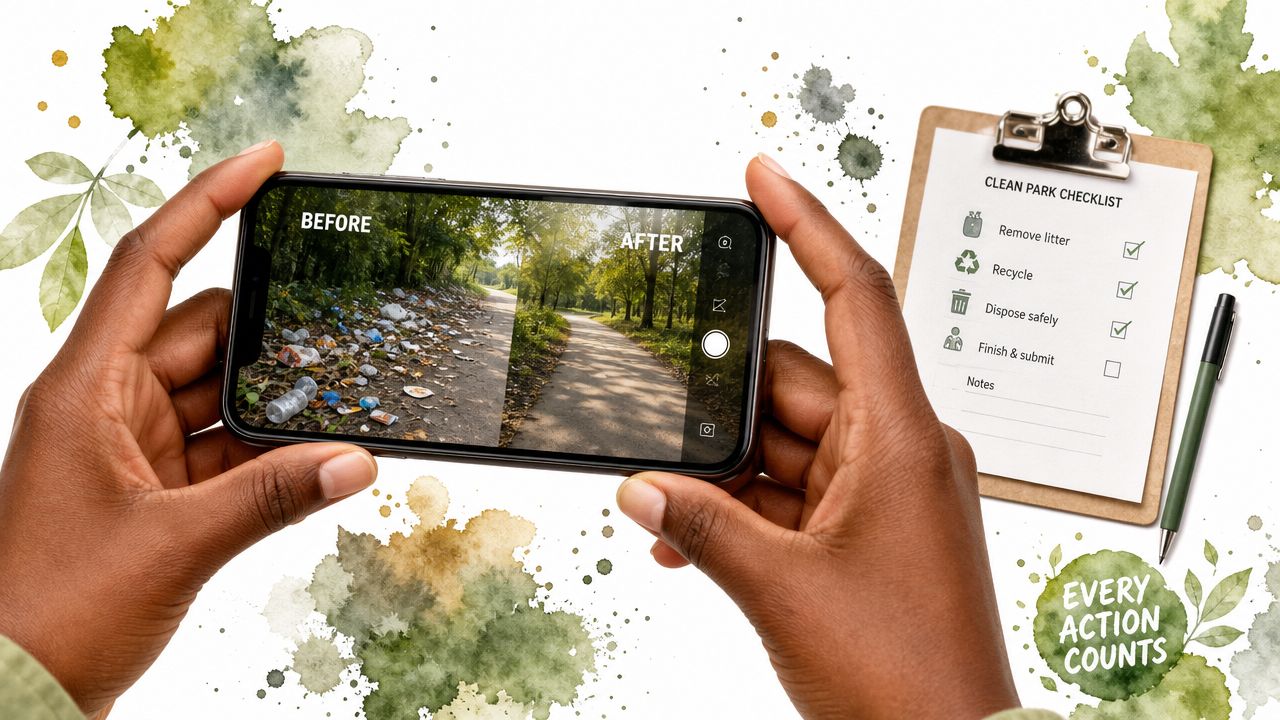
    A person holds a phone showing a before and after comparison of a cleaned park path beside a checklist.

    Keep the tools boring and fast

    Use simple gear:

    • Google Forms: for post-event check-ins and short surveys.
    • Google Sheets: for attendance, hours, return visits, and site notes.
    • Meetup check-ins or a shared note: for quick turnout tracking.
    • Phone camera: for before-and-after proof.
    • QR codes: so nobody has to type a long survey link on the sidewalk.
    • Instagram analytics: to see which impact posts get people talking and sharing.

    Often, a lot of groups overbuild. They imagine a giant database when they really need one clean form.

    A practical method is the session snapshot. After each event, run a simple 3 to 5 question check-in. Qomon's volunteer impact measurement guide says this approach gives you immediate impact data and avoids burdening volunteers with long surveys, which helps you track things like total hours and task completion in near real time.

    The street version of a survey

    At the end of an event, ask only what you need. I like questions that fit on one phone screen:

    1. Rate your experience from 1 to 5.
    2. Would you recommend this to a friend?
    3. What did you work on today?
    4. About how long did you volunteer?
    5. One word for how today felt.

    That's enough to spot trends without turning service into homework.

    If your group works in different parts of a city, a route map helps too. A simple neighborhood tracker or geotagged map can show coverage, gaps, and repeated problem spots. A visual tool like the Northeastern Illinois cleanup map makes patterns easier to spot than a raw address list.

    Collect more than one kind of evidence

    One reason evaluation fails is that people trust only one channel. A survey catches some truth. It misses a lot too.

    Use a mixed bag:

    • Photos: good for visible change.
    • Field notes: good for safety issues and weird on-the-ground details.
    • Volunteer comments: good for culture and motivation.
    • Attendance logs: good for consistency.
    • Observation: good for things people don't write down, like who helps newcomers.

    If you're running regular shifts, the data should feel like part of the rhythm. Gloves on, cleanup, group photo, quick QR scan, done. If it takes longer than a few minutes, you will lose people.

    The Litter Caterpillars Case Study From a Mess to a Mission

    The first version of a volunteer group is usually messy. That's normal. At the start, the data is often just memory. Who came. What got cleaned. Which corner felt rough. Who stayed cheerful in bad weather.

    Over time, the trick is to turn those scraps into a pattern without killing the spirit that made people show up in the first place.

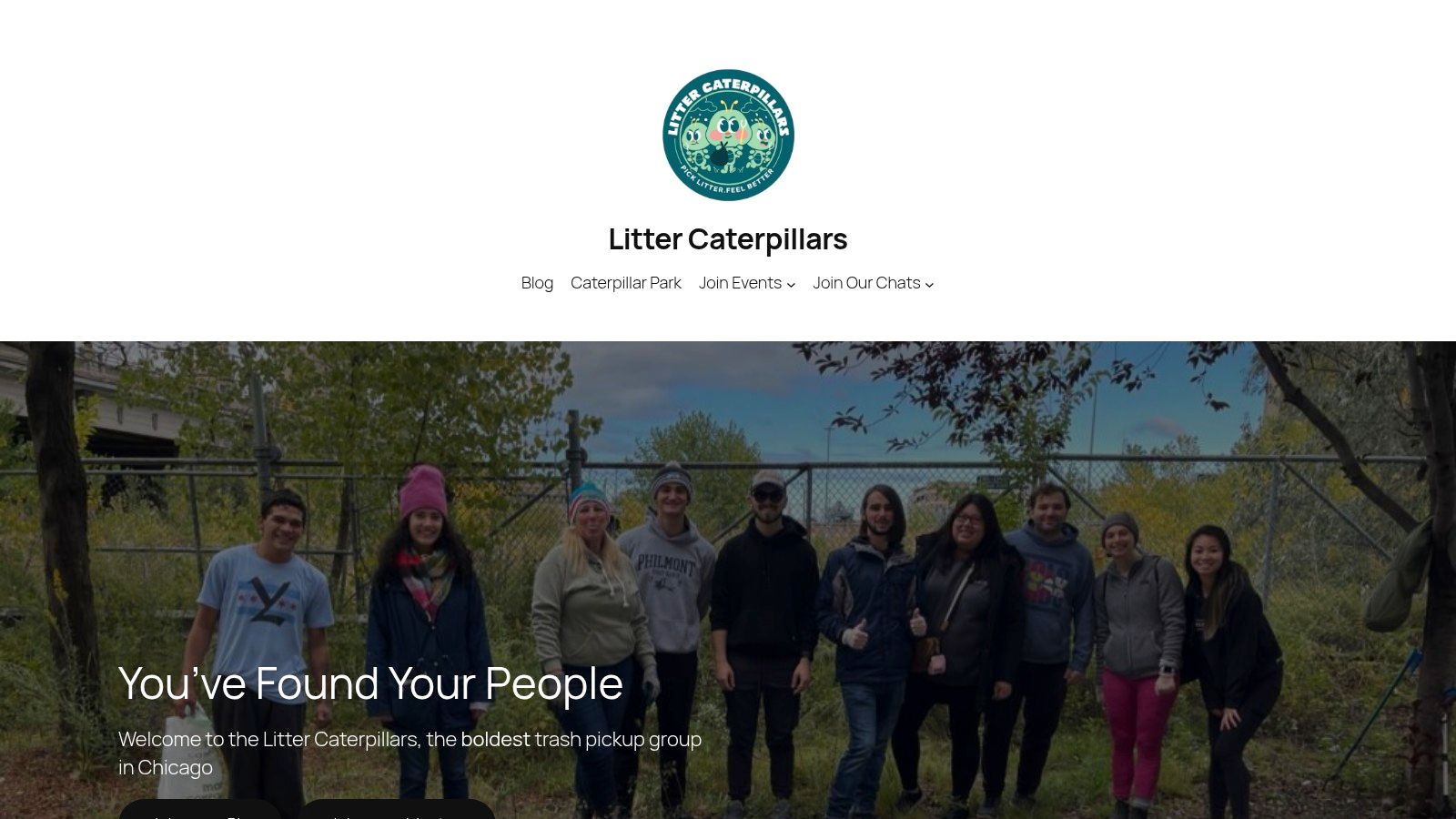
    Screenshot from https://www.littercaterpillars.com

    What the raw version looked like

    At the beginning, a cleanup group might know only a few things for sure. The weather was bad. The turnout was small. The site looked better at the end than it did at the beginning. Volunteers talked afterward. Somebody said, "That was weirdly fun."

    That isn't polished data, but it is data.

    The mistake would be to throw that away because it doesn't look formal. The better move is to organize it. Save photos by date and location. Keep a running sheet of turnout and hours. Write down one or two sentences after each event while the details are still fresh.

    How the story tightens

    Once a group gets more consistent, the pattern gets clearer. Weekend morning events attract a certain type of person. Hard weather filters for dedication. Before-and-after photos bring in fresh interest. Repeat attendance tells you whether the experience has enough pull to become habit.

    A strong volunteer program evaluation can use both numbers and narrative at once. For example:

    What happened What it may mean
    Same volunteers return across multiple events the culture is sticky
    New people join after impact photos are posted visual proof motivates action
    Certain routes draw stronger turnout location and comfort matter
    Volunteers ask for a permanent project the group is ready for deeper ownership

    That last point matters. A temporary action like a cleanup can awaken appetite for permanent work. When volunteers start wanting a place to keep building, you're no longer dealing with a one-off event series. You're dealing with a community.

    Numbers tell you the shape of the work. Stories tell you why the shape matters.

    What this kind of case study teaches

    The takeaway isn't that every group should track the exact same things, but that your evaluation should grow up with your mission.

    A scrappy city cleanup group might begin with turnout, hours, and photo evidence. Later it might add retention, recommendation likelihood, volunteer comments, and route coverage. Later still it might study which kinds of events produce stronger friendships or steadier habits.

    If your values include bravery, kindness, unity, and a volunteer-first culture, your evaluation should include signs of those values in action. Did people feel safe. Did new volunteers get welcomed. Did leaders respect the group's energy. Did people come back because the work made them stronger, calmer, or more connected.

    That is how a mess becomes a mission. You don't clean up the story by making it more corporate. You clean it up by making it more honest.

    Close the Loop Make Your Data Do Something

    I have watched groups collect feedback with good intentions, then do nothing with it. A volunteer says the meetup spot felt unsafe. Another says check-in was chaotic. Three people stop showing up. The form gets saved, everyone stays busy, and the same problem shows up at the next event.

    That is how trust leaks out of a volunteer group.

    Evaluation has to change the next decision. If a route feels off, move it. If new people keep arriving late because the instructions are muddy, rewrite the text message and post a map pin. If regulars are carrying the whole event, train one more person to lead check-in. Street-level evaluation lives on the calendar, in the group chat, and at the start of Saturday morning.

    Where groups get stuck

    The pattern is usually simple.

    • They over-rely on surveys. A form catches some truth, but not the look on a new volunteer's face when nobody greets them.
    • They never ask people why they stopped coming. Departing volunteers often say the quiet part out loud.
    • Nobody owns the fix. Feedback gets discussed, then drifts.
    • Volunteers never hear what changed. People stop giving useful input when it disappears into a void.

    I have learned more from a two-minute conversation after an event than from a polished spreadsheet sent a month later. Forms still help. They just cannot carry the whole load.

    Use a loop your volunteers can actually see

    Keep it plain.

    1. Collect it. Ask one or two questions after the event. Ask one honest question when someone leaves.
    2. Group it. Sort the responses into safety, logistics, culture, and mission fit.
    3. Pick one fix. Choose something small enough to change before the next event.
    4. Say it out loud. Tell volunteers what you changed and why.
    5. Check whether it worked. Ask again after the next few events.

    That last step gets skipped all the time. A leader changes one detail and assumes the issue is solved. Sometimes it is. Sometimes the underlying problem was something nearby, like poor signage instead of poor timing, or a cold welcome instead of a long route.

    A useful rhythm is to revisit the review process every few months so it still fits the group you have, not the one you had six months ago, as noted in VolPro's guide to outcome metrics for volunteer recruitment and retention.

    Give the group proof that feedback matters

    Volunteers do not need a glossy report. They need evidence that speaking up changes things.

    Say, "You told us the corner by the underpass felt rough, so we switched the start point to the library lot."

    Say, "You told us the first fifteen minutes felt awkward, so now one person is assigned to greet every newcomer."

    Say, "Several of you wanted shorter routes in the heat, so we split the team in two."

    Those sentences build credibility fast. They also protect the culture. People feel taken seriously, which makes them more honest next time.

    Do a real yearly review, even if your group is small

    A scrappy volunteer group still needs a moment each year to stop, look back, and make decisions on purpose.

    One practical model is to include more than one point of view in the review, such as leaders, volunteers, community members, and people affected by the work, as described in this overview of volunteer program performance evaluation. Another useful practice is to review participation, hours, feedback, changes, and ongoing problems in one place so leadership can decide what to keep, stop, or repair, as explained in Lodestar at ASU's guidance on systematic evaluation.

    For Litter Caterpillars, that kind of review would not look corporate. It would look like a table at the end of the season, phones out, route photos up, volunteer comments open, and a blunt conversation about what worked. Which cleanup sites built energy. Which ones drained it. Where new people became regulars. Where leaders protected the spirit of the group, and where we let sloppiness chew it up.

    The point is improvement you can feel.

    If your evaluation never changes the route, the welcome, the pace, the leadership, or the way volunteers experience the mission, it is just record-keeping. If it helps the group become safer, warmer, more effective, and more honest, then the numbers and stories are doing their job.

    If you want to join a group that puts this kind of street-level learning into practice, take a look at Litter Caterpillars. We pick up trash across Chicago, build friendships in the process, and treat volunteer energy like something worth protecting.

  • Overcoming Personal Obstacles: Build Habits & Transform

    Overcoming Personal Obstacles: Build Habits & Transform

    I found the jam jar when I was looking for mustard. It sat in the back of my fridge like a tiny haunted object, sticky on the lid, old enough to belong to a different version of me.

    The Mess You Cannot Move

    That jar should've been easy to throw away. It weighed almost nothing. My hand could lift it without effort. But my mind couldn't.

    I knew where I got it. A trip to Michigan. A hopeful weekend. A version of me who bought nice jam and thought life was about to come together. So when I looked at that jar, I didn't see spoiled food. I saw a memory, a promise, and a quiet little accusation.

    Then there was the bag of nuts from the time I tried to become the kind of person who meal-prepped and drank more water. I failed at that too. So the trash wasn't trash. It was evidence.

    A nostalgic still life featuring a dusty jam jar, vintage letters, old photographs, and an antique pocket watch.

    When an object turns into a verdict

    I used to look around my room and feel embarrassed by how small the problem looked from the outside. A plate in the sink. Clothes on a chair. Mail on the floor. Nothing dramatic. Nothing movie-worthy.

    But inside my chest, it felt like I was trying to drag a boulder with fishing line.

    One piece of trash weighed less than a pound, but to me it felt like a 500-pound weight. That was the strange part. I could work, text people back, make jokes, and pretend I was fine. Then I'd freeze in front of a cardboard box or an expired condiment like I was staring down a wild animal.

    You can know something is small and still feel crushed by it.

    Maybe your obstacle isn't a messy room. Maybe it's an email you can't send. A conversation you keep postponing. A gym bag by the door that hasn't moved. A draft, a debt, a breakup, a pile of laundry, a half-finished application. Small things can pin you to the ground when they hook into shame.

    The breaking point

    My life got worse as my space got worse. I don't mean in some poetic, cinematic way. I mean in a plain, ugly way. I stayed in a long, chaotic relationship with someone selfish and always partying, and my own disorder gave that chaos a place to live.

    I let too much slide. I made excuses. I kept stepping around messes, literal and emotional, because touching them meant admitting they were real.

    If you're in that spot now, I want to say something simple. You're not lazy. You're not broken. You're carrying meaning, memory, fear, and self-judgment inside things that other people call easy.

    Before I changed anything, I had to admit that the obstacle was real. Not dramatic. Real.

    Pinpointing the Real Weight of Your Obstacles

    I couldn't start cleaning until I stopped calling my problem "being messy." That label was too cheap. It flattened everything.

    The room wasn't the issue. The stories in the room were.

    Read your mess like a diary

    When I finally got honest, I started asking a rough question about every object I couldn't deal with: What is this thing protecting me from?

    That old jam jar protected a memory. The health food wrappers protected an identity I wanted and couldn't keep. Old gifts protected dead relationships. Random paper piles protected me from deciding what still mattered and what didn't.

    If you want to get serious about overcoming personal obstacles, try this exercise with whatever "mess" you keep avoiding. I don't just mean physical clutter. I mean the thing in your life that keeps staring at you.

    Ask yourself:

    • What story attaches to this thing: Is it failure, guilt, nostalgia, fear, or unfinished hope?
    • What decision am I avoiding: Throwing something out often means admitting a season of life is over.
    • What identity do I lose if I let this go: Sometimes we keep junk because we still want proof that we once tried.
    • What feeling hits me first: Shame feels different from grief. Fear feels different from confusion.

    Write the answers down. Don't try to sound smart. Use ugly, honest language if that's what comes out.

    My clutter had roots

    When I dug into my own mess, I found two roots.

    The first was my chaotic relationship. I kept living in emotional noise, and clutter fit that life too well. Disorder outside matched disorder inside. Cleaning up felt like betrayal because it would've forced me to admit that my life had become something I didn't want.

    The second root was a fear of consistency. A single grand effort felt exciting. Quiet repetition felt terrifying. I could dream about becoming organized. I didn't trust myself to become a person who washed one dish, answered one message, showed up one Saturday at a time.

    Practical rule: If a task feels absurdly heavy, the weight is probably emotional, not practical.

    A quick sorting method

    You don't need a perfect journal routine for this. You need a rough sorting tool. I like three buckets.

    Bucket What it sounds like in your head What it usually means
    Past "I used to be different" grief, regret, nostalgia
    Present "I can't deal with this right now" overload, shame, fatigue
    Future "What if I fail again" fear, perfectionism, avoidance

    Pick one obstacle and sort it.

    If it's that untouched resume, maybe it sits in future because you fear rejection. If it's old clothes, maybe it sits in past because you miss who you were when you wore them. If it's the sink full of dishes, maybe it sits in present because your nervous system is already maxed out.

    Questions that cut deeper

    I had to stop asking, "Why am I like this?" That question is a trap. It turns you into a problem.

    These questions helped more:

    1. What does this obstacle let me postpone?
    2. What pain do I avoid by leaving it untouched?
    3. What small truth would I have to accept if I acted today?

    That last one hits hardest. Throwing away old junk sometimes means saying, "That chapter is dead." Sending the email means saying, "I want this enough to risk looking foolish." Making the appointment means saying, "I can't outrun this anymore."

    That is the actual weight. Once you can name it, the obstacle stops feeling like fog. It becomes something you can grab.

    The Tom Sawyer Method of Motivation

    I didn't beat my own mess by staring at it harder. I beat it sideways.

    I started picking up trash that belonged to strangers, and somehow that made it easier to face the junk in my own life. It sounds ridiculous until you've done it.

    Why other people's mess feels lighter

    When I went outside and picked up litter, the work felt clean in a way my own room never did. A bottle on the curb didn't carry my history. A fast food bag in the grass didn't know my failures. There was no emotional backstory. I saw trash, I grabbed it, and the block looked better.

    That simple loop did something important. It gave me evidence that I could act.

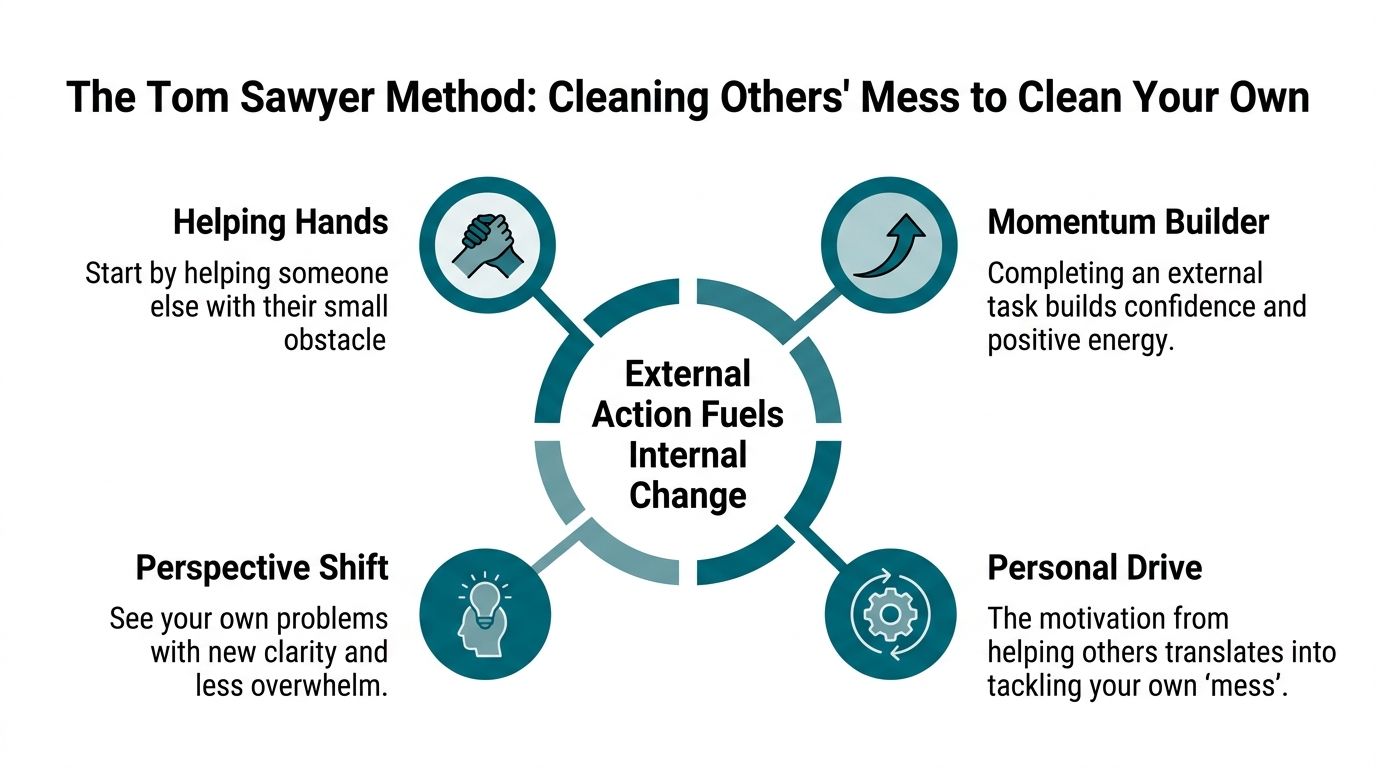
    The old Tom Sawyer story nails this. He got stuck painting a fence, then reframed the whole thing until other people wanted in. I don't care whether you love the story. I care about the trick inside it. The trick is this: when you change the frame, you change the energy.

    Helping other people can do that. Service turns self-improvement from a private courtroom into a visible task.

    A diagram explaining the Tom Sawyer method for overcoming personal obstacles through helping others with tasks.

    External action creates internal motion

    When you're stuck in your own head, introspection can become quicksand. You keep thinking, sorting, processing, analyzing. Hours pass. Nothing moves.

    External service breaks that spell.

    You don't need a giant mission. You need a concrete task that gets your body involved and points your attention outward. Pick up litter. Help a friend sort a closet. Walk an older neighbor's groceries upstairs. Sweep a shared hallway. Wipe down the break room at work without making a speech about it.

    Here's why this works:

    • The task is visible: You can see before and after with your own eyes.
    • The stakes are lower: You're not wrestling your whole identity. You're doing one useful thing.
    • Your body joins the process: Motion cuts through rumination.
    • You build trust fast: You keep a promise, even a small one.

    I learned a lot from reading about intrinsic motivation and what keeps action going from the inside. The part that mattered most to me was simple. Lasting drive usually grows better from meaning than from self-scolding.

    Do something useful before you feel ready. Readiness often shows up late.

    Find your fence to paint

    Your "fence" should be tangible, slightly uncomfortable, and easy to repeat. It should also help someone or improve a shared space.

    Try one of these:

    • For mental fog: Take a trash bag and clean one stretch of sidewalk near your home.
    • For loneliness: Join a recurring volunteer shift where people work side by side.
    • For procrastination: Help someone else finish a task with a clear endpoint.
    • For low self-trust: Pick one weekly service habit and protect it.

    I know one option firsthand. Litter Caterpillars runs volunteer trash pickups in Chicago on weekend mornings, which gives people a recurring, physical way to practice service, consistency, and courage in public. But the method matters more than the group name. If you're nowhere near Chicago, your version can be different.

    Why this strange route works

    Your brain loves proof. It doesn't care much about your speeches.

    If you tell yourself, "I'm changing," but your days stay the same, the words rot. If you spend one morning helping clean a block, carrying bags, talking to people, and making a place look better, you have proof. Small proof, yes. But proof has teeth.

    That is why I call this the Tom Sawyer method. Reframe the hard thing. Turn growth into service. Make the job visible. Let action pull your mind behind it.

    Creating Your Caterpillar Transformation Plan

    Big goals can make you freeze. "Get my life together" is too large to hold. Your brain hears that and looks for a place to hide.

    I had to shrink everything until it looked almost silly. That's when I could finally move.

    Start with one block

    A city doesn't get cleaned all at once. You do one block. Then another. Your life works the same way.

    A checklist infographic titled Your Caterpillar Transformation Plan illustrating five steps for overcoming personal obstacles effectively.

    When you think about overcoming personal obstacles, don't write down the grand identity shift. Write down the smallest version of it that still counts.

    Bad plan: become consistent.
    Better plan: show up for one hour this Saturday with gloves and a trash bag.
    Bad plan: fix my apartment.
    Better plan: clear the kitchen counter and throw away expired food.
    Bad plan: rebuild my social life.
    Better plan: text one reliable person and ask them to join me for a useful errand.

    Build a plan you can actually obey

    I use a simple framework. Keep it ugly and practical.

    1. Name the block
      Choose one obstacle that bothers you enough to matter and feels small enough to touch. One drawer. One phone call. One walk around the block with a bag.

    2. List the tools
      Put down what you need before the moment arrives. Trash bags. Gloves. Calendar reminder. Water bottle. Friend's number. Bus route. Shoes by the door.

    3. Set a tiny time box
      Give yourself a short container. If you feel ambitious, your ambition will betray you. Short is sticky.

    4. Choose a service angle
      Ask, "Who else benefits if I do this?" Shared benefit adds fuel. Cleaning your front step helps your neighbors. Calling your aunt helps her and gets you out of yourself. Returning library books helps the next person too.

    A grounded check: Make the task so small that your excuse sounds a little dramatic.

    A sample plan

    Here is what this can look like in real life.

    Part Example
    Obstacle I avoid my kitchen because it reminds me how scattered I feel
    Small block Throw away expired food and wash what is in the sink
    Tools Gloves, sponge, soap, trash bag, playlist
    Time box One short session on Saturday morning
    Service angle Clean one small patch outside my building after I finish
    Win condition I showed up and completed the block I chose

    The win condition matters. It should focus on showing up, not on becoming a new person overnight.

    Keep the bar low enough to repeat

    A lot of people wreck themselves by treating one good day like a personality transplant. They clean for hours, write a color-coded plan, buy containers, and then disappear for weeks.

    I've done that. It feels productive. It isn't.

    Repeatable action has a different texture. It's plain. It doesn't make a lot of noise. You almost feel unimpressed by it. That's usually a good sign.

    Use these guardrails:

    • Pick one recurring slot: Weekend morning works well because the day hasn't chewed you up yet.
    • Remove setup friction: Put supplies where your hand can find them fast.
    • Pair action with place: If you always start at the same corner, desk, or block, your body learns the route.
    • Track proof, not perfection: Write down "I showed up" every time you do it.

    When you miss a day

    You will miss days. I miss days. Everyone does.

    The trap is making the miss mean something huge. "See, I knew I wasn't disciplined." No. It means you missed a day.

    When you slip, don't redesign your whole life. Resume the block. That is it. Start so small that you can restart while annoyed, tired, or embarrassed.

    That's how a plan becomes real. It doesn't need to impress anyone. It needs to survive contact with your actual life.

    Finding Your People in the Hailstorm

    The first cleanup was absurd.

    There were only three of us. The sky turned ugly, then Chicago did what Chicago does. Hail. Cold wind. Wet hands. We huddled under a tree, shivering, while Uber after Uber canceled on us.

    Three volunteers in rain jackets collecting trash and plastic waste from a beach during snowy weather.

    I should've gone home angry. Instead, I felt weirdly alive.

    Shared hardship has a strange warmth

    When you do something difficult with other people, the day gets a pulse. You remember the details. The wet sleeves. The stupid jokes. The look on someone's face when the weather gets worse and they stay anyway.

    That kind of bond is different from casual hanging out. Talking over drinks is easy. Standing in bad weather with a trash grabber and a half-full bag tells you more about a person.

    I realized something under that tree. I didn't only need better habits. I needed better people around those habits. I needed givers. People who'd show up early, carry weight, laugh when plans got messy, and help without turning everything into a performance.

    Some friendships start with comfort. The durable ones often start with effort.

    How to find the people who stay

    You don't find solid people by making a perfect list of personality traits. You find them while doing useful things in conditions that aren't polished.

    That can mean service work, mutual aid, community gardening, park cleanups, food pantries, church kitchens, neighborhood builds, or any recurring task where people trade convenience for care.

    Look for these signs:

    • They arrive when it's inconvenient: Rain, cold, early mornings, awkward locations.
    • They don't need applause: They work without asking the room to clap.
    • They make hard things lighter: Not easier, lighter. Big difference.
    • They keep their word in small ways: That usually predicts the rest.

    I also think a lot of social anxiety softens when you stop treating social life like performance and start treating it like teamwork. If that's your knot, this piece on how service can help with social anxiety gets at something real. It's easier to talk when your hands have a job.

    Let the story get a little rough

    People chase smooth experiences and then wonder why their lives feel flat. A little weather helps. A little inconvenience gives the day a shape.

    This clip catches some of that spirit:

    I don't mean you should seek danger or ignore safety. I mean stop rejecting every situation that has friction. Friction is where people become memorable to each other.

    Build your circle on purpose

    After that rough first cleanup, I made a quiet promise to myself. I would engineer my social circle more carefully. Less chaos. Less selfishness. More people who like doing good work together.

    You can do that too.

    Try this simple filter:

    1. Go where useful work happens
    2. Return often enough for people to recognize you
    3. Notice who sticks around after the easy part
    4. Invite one person to do one more useful thing

    That last step matters. Community doesn't fall from the sky. Somebody has to text first. Somebody has to say, "Want to help me with this Saturday morning?"

    When people stand with you in the hail, they change your idea of what's possible. Hard days stop feeling like private punishment. They start feeling like story.

    Making Progress a Permanent Part of You

    At some point, progress stops being a project and starts becoming part of your character. That shift is quiet. No trumpet. No montage.

    You just notice that you are the kind of person who shows up.

    Bravery has a rougher texture than people admit

    I used to think bravery would feel clean and noble. It doesn't. Usually it feels awkward, underprepared, slightly embarrassed, and a little cold.

    That is fine.

    I learned to stop treating fear, failure, and suffering like signs to turn back. Sometimes they are just the price of entry. If you're serious about overcoming personal obstacles, you need a relationship with discomfort that isn't so dramatic. It can hurt and still be useful.

    Identity grows from repeated proof

    Pride matters here. I mean earned pride, the kind that comes from doing hard, kind things often enough that you start to believe your own record.

    Sports teams have flags, songs, colors, rituals. They understand something simple. People act differently when they feel part of something and when they feel proud of what they do. You don't need to become corny about it. But you do need to let yourself say, "Yes, this is who I am now."

    You are not just trying to be more reliable.
    You are reliable because you keep returning.

    You are not just trying to be brave.
    You practice brave things on ordinary mornings.

    If procrastination keeps pulling you backward, I like this practical take on how to overcome procrastination through action and repetition. The heart of it is familiar. You build momentum by doing, not by waiting for a cleaner mood.
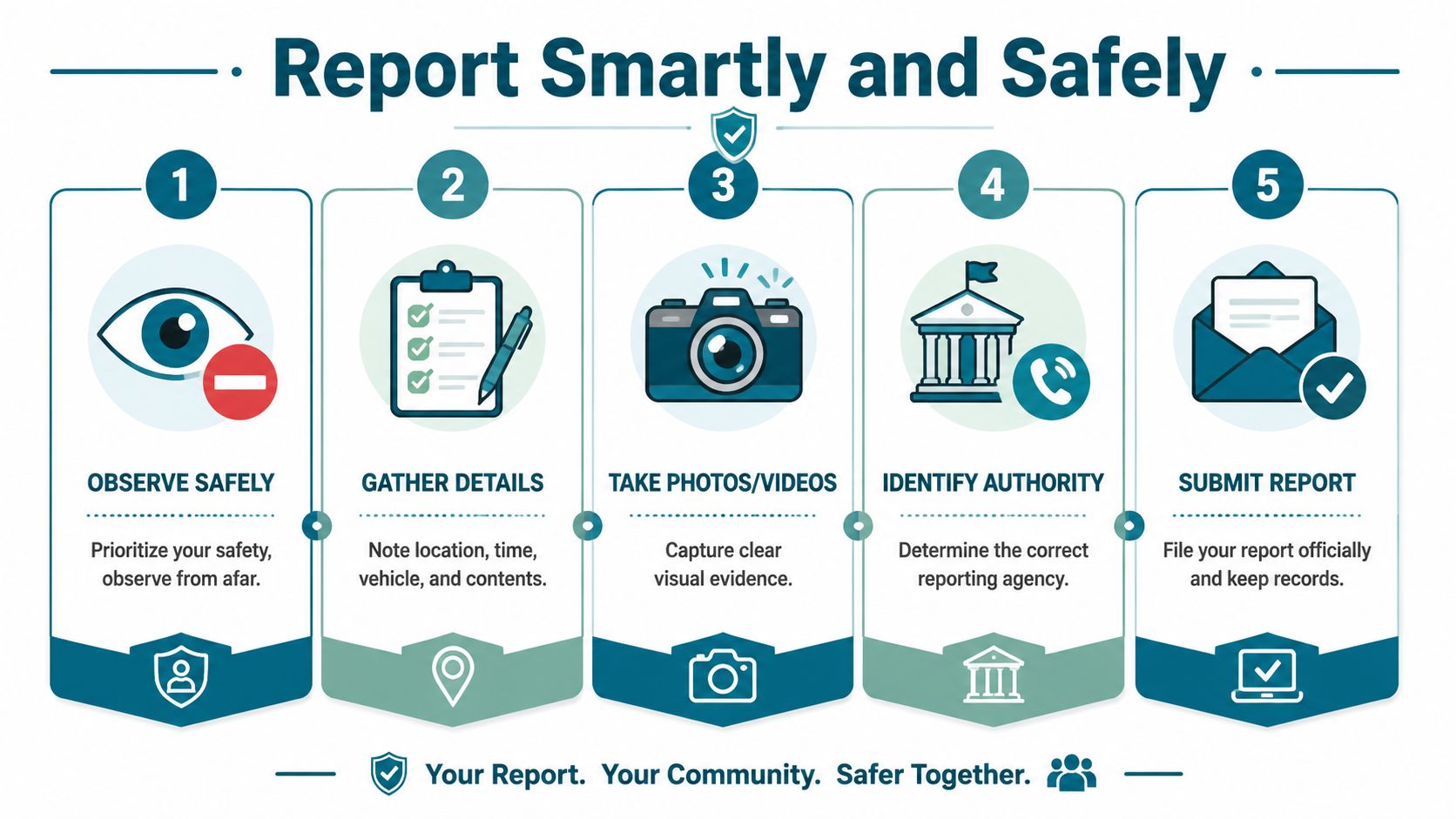
    Keep this sentence nearby: I don't need a new life today. I need one honest action that matches the person I'm becoming.

    Keep your own receipts

    Make your progress visible to yourself.

    Use a notebook, a notes app, a wall calendar, or a scrap of paper by the door. Record the actions that matter. Showed up. Picked up a bag of trash. Cleaned the sink. Sent the text. Took the walk. Helped the neighbor. Returned after missing last week.


    These are receipts for your identity.

    Bad days will come. You'll feel flat. You'll slide. None of that cancels the person you are building. A rough week is weather. It isn't a verdict.

    What lasts is the pattern. You keep showing up, rain or shine, and eventually your life starts to trust you. That trust is hard to describe if you've lived without it. It feels like standing up straighter inside your own skin.

    And once you feel that, even briefly, you won't want to go back.


    If you want a practical way to get out of your head and into motion, Litter Caterpillars has weekly Chicago cleanup events built around service, friendship, and doing hard things together outdoors. Bring gloves if you have them. Bring yourself if you don't.

  • 8 Litter Caterpillars Volunteer Testimonials That Inspire

    8 Litter Caterpillars Volunteer Testimonials That Inspire

    More Than Just Picking Up Trash

    You've seen us out there in the snow and the sun, flags flapping, grabbers clicking, coffee going cold in our hands. You might wonder what keeps us coming back when the wind is rude and the sidewalks smell like old beer and wet cardboard.

    I started this because my own life was a mess, and cleaning someone else's mess felt easier than facing my own. Then I found friendship and bravery in freezing hail, and I learned that a rough morning outside can do something strange and good to a person. Here are 8 ways to tell volunteer testimonials that feel real, the kind that come from sore hands, awkward first hellos, and the little shifts that happen when you keep showing up.

    1. The Personal Transformation Story

    The strongest volunteer testimonials usually start before the first trash bag.

    Mine does. My apartment used to feel like a museum of bad decisions. Old food sat around because every item had a memory attached to it. A jar of blueberry jam from a trip years ago. A half-forgotten bag of nuts from the week I promised myself I'd get healthy. None of it weighed much, but in my head it felt impossible to move.

    Then my life cracked open. I got out of a chaotic relationship, looked around at the mess, and realized I needed a different kind of momentum. I couldn't force myself to become perfect, but I could go outside and pick up one bottle, then another, then a whole bag.

    Start with the mess you can name

    That's the shape of a real transformation story. You don't say, “Volunteering changed me.” You say what was broken, what you did next, and what feels different now.

    A good version sounds more like this:

    • Name the exact struggle: “I kept sleeping through weekends and wasting them.”
    • Name the first action: “I dragged myself to a cleanup anyway.”
    • Name the concrete change: “Now I trust myself a little more when I say I'll do something.”

    That kind of honesty lands because it has dirt on it.

    A volunteer stands on a sidewalk by a small plant with a messy living room background overlay.

    I still struggle with mess. I still have days when my brain tries to turn a sock on the floor into a moral failure. But week after week, service taught me something that thinking never did. Action creates traction. If you want language for that inner engine, I like this piece on intrinsic motivation and why people keep showing up.

    Practical rule: Start your testimonial with one ugly, specific memory. Readers trust a stained sink more than a polished slogan.

    2. The Friendship and Community Angle

    One Saturday, you're standing next to a stranger at an hour when many are still in bed. Your nose is running from the cold, you're both pretending this feels normal, and then one of you says something dumb about how a crushed energy drink can has more social life than either of you.

    That's how friendships start here. Not with perfect chemistry. With shared discomfort and a joke that saves the morning.

    I've watched people arrive stiff and careful, doing that city thing where you try to seem unfazed. Then a bag rips. Someone lends gloves. Somebody else starts humming the theme song. By the end, two people who didn't know each other are talking about breakups, job hunts, or where to get soup nearby.

    Show the awkward part

    If you want your volunteer testimonial to feel alive, keep the awkward beat in the story. Don't cut it out.

    Say the part where you worried everyone already knew each other. Say the part where you almost stayed in your car. Say the part where the person who became your friend first looked intimidating because they were carrying a grabber like a spear and drinking coffee like they meant business.

    Three diverse volunteers in colorful sweatshirts smiling while sharing a drink and holding cleanup tools.

    A real friendship story might be simple. You met Maria on a freezing morning because both of you complained about waking up early. Then you kept ending up on the same block. Then you started texting during the week. Then Chicago stopped feeling so anonymous.

    That's why I'd tell anyone new to read our thoughts on how to meet like-minded people in a way that doesn't feel forced. Volunteering gives you a side-by-side way to connect. You don't have to perform. Your hands already have a job.

    People bond faster when they have something concrete to do together. A trash bag is a weirdly good icebreaker.

    3. The Neighborhood Discovery Narrative

    Chicago changes when you walk it slowly with a grabber in your hand.

    A block you used to speed through in a car starts talking back. You notice the mural with chipped paint. The barber sweeping his own sidewalk before opening. The old lady who watches from the window and gives you a nod on the third visit because now you aren't random anymore.

    That's the heart of a neighborhood discovery testimonial. You tell the story of a place becoming real to you.

    Tell me the block, not the idea

    Don't say, “I got to know the city better.” Say where. Say Englewood. Say the lot at 6316 and 6318 S Sangamon. Say how that patch of ground used to be vacant, and how it became Caterpillar Park after I bought the 6,000-square-foot lot for exactly $10,000 in a citywide land auction organized by Hilco in April 2025, then turned it into a garden space with mulch, raised tomato beds, and native Illinois flora including prairie grass and yelloweflow, as reported by the Chicago Tribune's story on Caterpillar Park in Englewood.

    A traveler with a backpack and map walking past colorful city buildings with a compass location pin

    That kind of detail makes a story breathe. A vacant lot isn't an abstraction. It's a place where your boots sink a little after rain. It's a place where you can point and say, “I know what this looked like before.”

    When you write your own version, include one local person if you can. The shop owner who waved. The neighbor who asked for a bag. The kid who wanted to help for five minutes and ended up taking it very seriously. Cities become lovable that way. One face at a time.

    4. The Overcome-Your-Fear Story

    Fear has texture. It makes your stomach tight. It makes your hands weird. It makes you stare at your phone and bargain with yourself.

    A lot of people think bravery means you stop feeling that. I don't buy it. Bravery is when you feel the whole storm in your chest and still lace your boots.

    My favorite fear stories are the ones people almost don't tell because they think the fear sounds small. “I was scared I'd look stupid.” “I was scared of the cold.” “I was scared to go to a neighborhood I didn't know.” Those are real. Those count.

    Put your body back in the story

    If your first cleanup happened in bad weather, say what your body did. Were your ears aching? Did your face sting? Did you keep checking whether anyone else seemed miserable, just to measure if your misery was acceptable?

    We meet every single weekend morning at our lots at 6316 and 6318 S Sangamon, and we do it regardless of blizzards, negative wind chills, or scorching heat, because that's how Litter Caterpillars invites people to help clean all 50 wards of Chicago, according to the Litter Caterpillars Meetup page.

    That matters inside a testimonial because weather and place strip away fantasy fast. You can't fake courage when your fingers are numb.

    • Cold fear: Tell the story of the first morning you almost turned around.
    • Social fear: Tell the story of standing there not knowing where to put your hands.
    • Neighborhood fear: Tell the story of learning that unfamiliar doesn't always mean unsafe, and that being with a group changes your nervous system.

    If social anxiety is your thing, I'd point you toward this page on how to overcome social anxiety through action. It matches what I've seen in the field. Repetition softens fear better than pep talks do.

    I've seen people shake on their first day and laugh on their fourth. That's how courage usually looks. Uneven. Earned.

    5. The Visible Impact Moment

    Some volunteer testimonials need a turning point you can point at with a gloved finger.

    A corner changes. An alley opens up. A lot stops looking abandoned and starts looking claimed. You feel that in your chest because the work is no longer theoretical. It's sitting right there in front of you, cleaner than it was an hour ago.

    A split image showing a messy trash pile on the left and a clean, inviting corner with a volunteer.

    I like these stories because they answer the quiet question people carry into service work. Does this do anything?

    Yes. But your testimonial gets stronger when you show the scene instead of declaring the lesson.

    Use the before, the after, and the witness

    Say what the space felt like before. Maybe it had that defeated look some corners get when everyone assumes nobody cares. Then say what changed after the cleanup. Maybe the sidewalk looked wider. Maybe the storefront looked less tired. Maybe you came back later and noticed it stayed cleaner because somebody nearby had started paying attention too.

    One smart way to build this kind of story is to collect words right after the work. In volunteer impact reporting, beneficiary testimonials are ranked as the second most effective indicator for showing volunteer impact, while “dollar value of time” is fourth even though it's the most commonly collected data point. The same analysis says the strongest reporting blends qualitative stories with concrete outputs into a focused story, and it recommends end-of-shift check-ins with 3 to 5 focused questions so people capture what just happened while it's fresh, as explained in Greater Giving's piece on volunteer impact reporting and testimonial collection.

    That's a fancy way of saying this. Ask people what they saw while their boots are still dirty.

    A quick video can help people feel that shift too.

    When you write your own visible impact story, don't only tell me what you cleaned. Tell me when you realized the place looked loved again.

    6. The Unlikely Volunteer Profile

    Some of the best volunteer testimonials come from the person who almost talked themselves out of coming forever.

    Maybe that's the office worker who thought they were too busy. Maybe it's the person who hates dirt under their nails. Maybe it's the newcomer who doesn't know anybody and worries they'll look like they wandered into the wrong friend group.

    I love those stories because they cut through excuses with honesty instead of shame.

    Let the hesitation stay on the page

    Say, “I thought this wasn't for me.” Then say why.

    Maybe you didn't own gloves. Maybe you assumed everybody else would be more outdoorsy, more socially smooth, more morally organized. Then you arrived and found out the group had all kinds. Some people looked like they came from the gym. Some looked like they rolled out of bed. Some were loud immediately. Some took a month to relax.

    That's normal. Good groups are mixed.

    A strong unlikely-volunteer story often turns on one small detail. Somebody handed you a spare grabber. Somebody remembered your name the second time. Somebody made room for you without making a production out of it.

    What to keep: The awkward outfit, the borrowed gloves, the feeling of being slightly out of place.

    What to cut: The fake “I instantly belonged” line if that's not how it happened.

    I'd tell my former self this. You don't need to already be “the volunteering type.” You become that type by repeating the act. Same as running, gardening, cooking, or making friends. Identity often comes after behavior, not before.

    7. The Ripple Effect Story

    Sometimes you pick up trash. Sometimes you light a fuse.

    A ripple effect testimonial starts with one act and follows what happened next. A friend joins you once and becomes a regular. A neighbor who watched from a stoop starts doing their own stretch of sidewalk. A business owner notices your group and cleans around the storefront more often because now there's a little social gravity pulling in a better direction.

    The point isn't to exaggerate. The point is to notice influence while it's happening.

    Stick to what you actually saw

    This format gets mushy when people start claiming too much. Keep it grounded.

    If a kid asked for a bag and copied what you were doing for ten minutes, say that. If your friend came because you kept talking about the weird fun of cold mornings, then came back alone the next week, say that. If a neighbor thanked you and started sweeping their curb while you worked, that's gold because you witnessed it yourself.

    There's another layer here too. People keep coming back when they feel appreciated. A clinical umbrella review on volunteering found that feeling appreciated is a moderator for positive health outcomes, and all 7 out of 7 unique studies in that review supported a statistically significant positive effect on general well-being when moderators like recipient response, meaning feeling appreciated, were present, with a p-value of .016, according to the umbrella review on volunteering and health outcomes.

    That sounds academic, but the street version is simple. When somebody thanks you, or when your work nudges somebody else to act, your body understands that your effort landed somewhere real.

    So put that in the testimonial. The exact sentence a neighbor said. The grin on your friend's face after they filled their first bag. The tiny copycat behavior that told you the energy had spread.

    8. The Seasonal Consistency Reflection

    Chicago weather is a character, not a backdrop.

    It heckles you. It tests your sincerity. It asks, “Do you mean it, or did you only mean it in mild temperatures?”

    That's why seasonal volunteer testimonials have teeth. They aren't polished. They smell like wet gloves and sunscreen.

    Let the season teach the lesson

    Start with the harshest day you remember. Maybe winter slapped your face so hard your eyes watered before you even opened the car door. Maybe summer cooked the sidewalk and made your shirt stick to your back before the first full bag.

    Then tell the truth. Maybe you almost didn't come. Maybe you stared out the window and tried to make a reasonable case for staying home. Then something tipped you over the line. Pride. Habit. Curiosity. Loyalty to the group. The knowledge that other people were already on their way.

    There's a part of this that still doesn't get talked about enough. A lot of writing about volunteer testimonials talks about feeling better after service, but far less of it really gets into how hardship itself can become part of the story people cherish. Behavioral Health News points to a gap here. Volunteers report confidence and growth after new challenges, but the way discomfort itself gets reframed into resilience and pride is still underexplored in the discussion of how volunteering changes people's lives.

    That rings true to me. Some of our best mornings were objectively miserable. Hail. Slush. heat that made the grabber handle slick. Yet that hardship often became the flavor of the memory. Like the rough edge on a good story that keeps you coming back to tell it again.

    If you write a seasonal story well, people won't just know the weather. They'll feel it in their jaw, their hands, their breath.

    8 Volunteer Testimonial Types Comparison

    Testimonial Format Implementation Complexity 🔄 Resource Requirements ⚡ Expected Outcomes 📊 Ideal Use Cases 💡 Key Advantages ⭐
    The Personal Transformation Story Moderate, requires honest, crafted narrative and vulnerability Low–Moderate: time to reflect and a supporting image High 📊⭐: builds trust and motivates individuals to commit Recruit individuals seeking personal growth and consistent involvement Authenticity and relatability; models long-term commitment
    The Friendship and Community Angle Low, simple social anecdotes and moments suffice Low: group photos, names, short quotes Medium–High 📊⭐: increases sense of belonging and repeat attendance Attract newcomers, social volunteers, and community seekers Conveys fun and belonging; strong social proof
    The Neighborhood Discovery Narrative Moderate, needs place-specific detail and contextual sensitivity Moderate: neighborhood photos, place names, possible permissions Medium–High 📊: appeals to explorers and shows citywide reach Outreach across wards; recruiting volunteers who love discovery Highlights coverage and deepens connection to place
    The Overcome-Your-Fear Story Moderate, requires careful framing around fear and safety Low: personal account, supportive group context Medium 📊⭐: models bravery and lowers psychological barriers Encourage anxious or hesitant potential volunteers Normalizes fear; motivates through attainable, small wins
    The Visible Impact Moment High, requires documentation, before/after visuals and metrics High: photos, counts, follow-up evidence, testimonials High 📊⭐: convinces skeptics with concrete, measurable results Donor appeals, impact reports, persuading skeptical audiences Provides tangible proof of effect; fosters volunteer pride
    The Unlikely Volunteer Profile Low–Moderate, simple profile but requires respectful tone Low: profile photo and concise background details Medium 📊: reduces perceived barriers and broadens appeal Target people who don't see themselves as “volunteer types” Breaks stereotypes; emphasizes inclusivity and accessibility
    The Ripple Effect Story Moderate, requires tracing influence and clear attribution Moderate: follow-ups, quotes from those inspired, timeline detail Medium–High 📊⭐: shows cultural spread and secondary impacts Advocacy, demonstrating broader community or cultural change Demonstrates multiplicative impact beyond direct action
    The Seasonal Consistency Reflection Moderate, needs longitudinal detail across seasons Moderate: seasonal photos, attendance logs, weather anecdotes Medium 📊: signals resilience and long-term commitment Show organizational identity; recruit dedicated, resilient volunteers Emphasizes reliability and shared hardship bonding

    Are You Ready to Write Your Story?

    Every story here starts the same way. Somebody showed up.

    They didn't wait until they felt sorted out. They didn't wait until they had the perfect boots, the perfect confidence, the perfect belief in themselves. They came tired, awkward, curious, lonely, hopeful, skeptical, or all of that at once. Then the story grew around the action.

    That's what I want you to remember when you write volunteer testimonials. Don't reach for the polished version first. Reach for the true version. Start with the moment you almost didn't come. Start with the block you can still picture. Start with the person whose name you still remember because they made the morning easier. Start with the weather. Start with the fear. Start with the ugly little fact that your own life felt heavy and somebody else's litter felt easier to lift.

    There's another reason honesty matters. A lot of nonprofit storytelling slides toward fundraising language, and people can smell that drift fast. For groups that want a volunteer-first, no-donation culture, there's still a real gap in guidance on how to make testimonials inspiring without making them sound transactional, a gap discussed in the Administration for Community Living's brief on volunteer stories and volunteerism. I think the fix is plain. Write like a person who was there. Write to honor effort, friendship, discomfort, and joy. Leave the sales pitch out of it.

    That's how we do it. I protect your volunteer energy by never asking for donations. Our volunteer-first culture puts safety first and happiness second, and you don't have to give money to participate, as we say on the Litter Caterpillars website about our volunteer-first culture.

    So if you're wondering whether you have a story in you, you do. Maybe yours is about consistency. Maybe it's about finding your people. Maybe it's about learning that bravery isn't clean and glorious. Maybe it's just a Saturday morning where you finally felt useful in a way that made your chest loosen.

    We meet every weekend. Come find out what your story is.


    Join Litter Caterpillars if you want your weekends to mean something concrete. Come pick up trash with us, make friends, test your bravery, and help clean Chicago block by block. You don't need to donate. You just need to show up.

  • Volunteer Coordinator Training: Blueprint for Cleanup

    Volunteer Coordinator Training: Blueprint for Cleanup

    Three of us got caught in a Chicago hailstorm on our first cleanup. We huddled under a tree, shaking, while our rides kept canceling, and I realized a volunteer coordinator isn't there to hold a clipboard. You're there to hold the group together when the day goes sideways.

    Why Your Coordinators Need More Than a Clipboard

    That first cleanup taught me more than any neat classroom slide ever could. Bags were wet. Hands were numb. The city felt bigger than us. Yet that ugly little storm gave us a shared story, and shared stories are what turn a casual volunteer into a teammate.

    A lot of volunteer coordinator training still assumes calm rooms, predictable schedules, and controlled conditions. That works if your volunteers are guiding guests through a museum or staffing a check-in table. It falls apart when your crew is on a roadside shoulder, the weather flips, and somebody finds a needle in the grass.

    The job is leadership under pressure

    In rough outdoor work, the coordinator has to do several things at once. You read the street. You read the people. You decide when to push, when to pause, and when to pull everybody out.

    That's why generic training often feels thin. In hospice settings, coordinators have received live lecture-based training averaging 19 hours or less, according to a peer-reviewed hospice volunteer coordinator survey. If demanding care settings get training that short, you can see the problem for outdoor crews facing traffic, weather, sharp objects, and urban unpredictability.

    Practical rule: If your coordinator training fits neatly into a few lectures, you haven't trained for reality. You've trained for a calm day that probably won't happen.

    A street coordinator needs instincts, not just information. They need to know how to stop a volunteer from grabbing broken glass the wrong way. They need to know how to reset morale when turnout is low. They need to know how to say, “We're leaving now,” before pride turns into recklessness.

    Hardship can build the team if the leader knows what to do

    That hailstorm didn't make us strong by magic. The weather was miserable. What mattered was how we handled it. We laughed. We stayed kind. We looked after each other. We turned a rough day into a story worth repeating.

    That's the difference between administration and leadership. Administration tracks names. Leadership gives people a reason to come back.

    I've found that the best coordinators think like servant leaders in the field. They don't stand above the mess. They step into it first. That example gives volunteers courage.

    Here's what doesn't work:

    • Pure lecture: People nod in training, then freeze in the field.
    • Over-scripted plans: The first surprise breaks the script.
    • Safety as paperwork: Volunteers can tell when a leader treats risk like a form instead of a real human issue.

    Here's what does work:

    • Scenario drills: Let people practice calling off a task, redirecting a volunteer, or changing the route.
    • Field shadowing: New coordinators learn faster when they watch a calm leader handle a messy morning.
    • Clear values: Brave and kind beats loud and tough every time.

    If you train coordinators for chaos, they won't panic when it arrives. They'll steady the group, and the group will remember how that felt.

    Building a Volunteer-First Culture

    Before you teach route planning or supply counts, teach this: volunteer energy is precious. If you waste it, drain it, or exploit it, your program gets hollow fast.

    Some organizations still treat volunteers like future donors with free labor attached. I think that poisons trust. If a person shows up to serve and you keep nudging them toward their wallet, they feel the switch.

    A human hand holds a vibrant, colorful sphere surrounded by an artistic explosion of watercolor paint splatters.

    A source on volunteer management training says 42% of new volunteers quit because they felt pressured to donate, and that same piece argues for a volunteer-first model that rejects donation pressure. You can read that claim in Rosterfy's roundup on volunteer management training programs and resources. That number is ugly, but it matches what many people already know in their gut. Nobody likes feeling used.

    Train coordinators to protect energy

    A coordinator's first cultural job is protection. They protect safety, yes, but they also protect mood, trust, and dignity.

    That means your training should teach them how to notice:

    • The volunteer who goes quiet: They may be cold, overwhelmed, or embarrassed to ask for help.
    • The over-giver: They say yes to every task and burn out in silence.
    • The newcomer on the edge: They need one warm conversation to feel included.

    Volunteers give you their Saturday morning, their body, their attention, and their goodwill. Treat that gift with care.

    I like weekend mornings for a reason. People who show up then usually came to give, not to drift around killing time. That changes the tone. It creates a culture where service is normal and friendship grows around the work.

    Friendship is operational, not extra

    Many coordinators get trained on forms, scheduling, and compliance. Fine. You need that. But if you skip friendship, your team stays fragile.

    Friendship is what gets people through cold wind, missed buses, and hard sites. Friendship is what makes someone come back after the glamorous part wears off. Your coordinator training should include simple habits that make people feel seen.

    Try teaching these moves:

    Habit What the coordinator does Why it matters
    Name recall Learn and use names quickly People relax when they feel remembered
    Buddy pairing Match new people with regulars New volunteers stop feeling adrift
    Warm closing End with conversation, not just dismissal People leave with connection, not exhaustion

    A volunteer-first culture also means your coordinators don't squeeze every ounce of output from a person. They leave some energy in the tank. They invite people into a community that can last.

    What to tell coordinators on day one

    I'd put it this plainly in training:

    • Your people are not ATMs: Don't angle for money when they came to help.
    • Guard morale: A tired volunteer can recover. A used volunteer often doesn't come back.
    • Make room for joy: Service can be serious and still feel fun.
    • Watch for belonging: If one person keeps standing alone, that's your job.

    If your culture gets this right, the rest gets easier. Volunteers forgive a lot when they know you care about them for real.

    The Core Training Modules Blueprint

    Good volunteer coordinator training needs structure. Otherwise you get a pile of advice and no repeatable system. I build the curriculum around a simple six-phase method: set goals, create a warm welcome, use hands-on practice, ensure accessibility, track progress, and ask for feedback. That framework comes from Training magazine's piece on crafting an effective volunteer training program, and it fits outdoor cleanup work well because it pushes training out of theory and into action.

    A diagram titled Volunteer Coordinator Training Blueprint showing four key instructional modules for managing volunteers effectively.

    Module one is philosophy

    Start with the part many groups rush past. Your coordinator needs a moral compass before they need a checklist.

    Teach them how to answer these questions in plain language:

    • Why are we here?
    • What do we do when output conflicts with safety?
    • How do we treat a volunteer who is struggling?
    • What kind of culture are we building when nobody is watching?

    This module should include role-play. One person acts as an eager volunteer who wants to do something unsafe. The trainee has to step in kindly and firmly. If they can't do that in practice, they won't do it in a parking lot with a crowd watching.

    Module two is operational logistics

    At this point, many coordinators either become calm or become frazzled. They need a repeatable system for event flow.

    I train for logistics in sequence:

    1. Scout the site
      Walk access points, traffic risks, likely trash concentration, and safe regroup spots.

    2. Build the morning plan
      Decide where people meet, where supplies go, who watches the edges, and what the exit plan is if conditions change.

    3. Run the huddle
      Keep it short. Cover hazards, roles, boundaries, and how to ask for help.

    4. Close cleanly
      Count people before gear. Debrief before everyone scatters.

    The point isn't perfection. The point is lowering mental clutter so the coordinator can pay attention to humans.

    For practical field systems, I like to compare each trainee's plan against proven volunteer management best practices for organized teams. It helps them see where they're loose, where they're overcomplicating, and where they're forgetting the volunteer experience.

    Module three is crisis management and improvisation

    A cleanup rarely follows the script. Weather changes. A route is blocked. A volunteer gets upset. The wrong training treats these moments like exceptions. Real training treats them like part of the job.

    Field note: Don't ask, “What's the official response to every possible problem?” Ask, “Can this coordinator stay calm, protect the group, and make a decent call fast?”

    Here are scenarios worth drilling:

    • Sharp object discovery: Who approaches, who stays back, who documents, who calls it in if needed.
    • Traffic creep: A site looked safe at scouting, but live conditions feel different.
    • Emotional conflict: Two volunteers are snapping at each other and infecting the group mood.
    • Sudden storm: End early, shelter in place briefly, or relocate.

    Module four is leadership and empowerment

    Some coordinators secretly think leadership means controlling everything. That creates brittle teams. I want leaders who can spread confidence.

    Train them to delegate small ownership fast. Let one volunteer handle sign-in. Let another lead a micro-team. Let a regular welcome newcomers. This has two effects. It lightens the coordinator's load, and it gives volunteers a ladder to grow on.

    A strong coordinator says things like:

    • “You've got a good eye for detail. Can you watch this corner?”
    • “Take our new person with you and show them how we sort this safely.”
    • “I need your judgment on whether this patch is worth the extra time.”

    That language builds leaders. If your volunteer coordinator training never teaches delegation, you're training bottlenecks.

    Training for Chaos with Real Scenarios

    Most training programs miss the mark for groups like ours. They are built for predictable indoor settings and skip the skills needed for blizzards, heatwaves, roadside work, and rough urban zones. A Michigan volunteer training resource page shows how much volunteer management education still centers on general nonprofit operations rather than physical adversity in the field.

    A volunteer coordinator overseeing various aid efforts including sorting donations, construction, and distributing meals to people.

    I learned this the hard way on a cleanup near a highway during a bike-event shutdown. The site looked simple from a distance. Up close, it had fast-moving traffic nearby, debris in ugly places, and the kind of noise that makes communication sloppy. That day wasn't about who could pick up the most trash. It was about who could stay composed and keep the group tight.

    Scenario one is the weather turn

    You start with a normal morning. Then the sky changes. Wind rises. Rain starts hitting sideways.

    A weak coordinator does this:

    • keeps pushing because people already came out
    • mumbles a half-decision
    • waits too long because ending early feels embarrassing

    A trained coordinator does this:

    • regroups everybody fast
    • speaks loudly and clearly
    • chooses shelter, exit, or cancellation without drama
    • counts heads before moving

    That decision needs rehearsal. People don't rise to the occasion in chaos. They fall to the level of their training.

    Scenario two is volunteer conflict

    This one sneaks up on you. One volunteer says another person is working too slowly. The second person fires back. Now half the group can feel the tension.

    I don't train coordinators to act like referees with whistles. I train them to lower the temperature. Pull both people aside. Separate the task from the ego. Give each person something useful to do.

    Try language like this:

    Situation What the coordinator says
    One person feels criticized “I need you with me for a minute. Let's reset this.”
    Two people are escalating “We're not doing this in front of the group. Come talk with me.”
    Group mood is slipping “Quick water break. Then we're splitting into smaller teams.”

    A coordinator should know when an issue is fixable on site and when someone needs to step away. That judgment protects everyone else.

    Before you put someone in charge of people, make sure they understand volunteer liability insurance and risk planning for group service work. Good instincts matter. Clear guardrails matter too.

    Scenario three is morale collapse

    Sometimes the site is just worse than expected. The bags fill slowly. The smell is brutal. People start making jokes that have a tired edge to them.

    Here, your coordinator becomes a storyteller. You don't lie. You don't pretend the work is easy. You help the group frame the hardship as shared effort with meaning.

    “This is a rough one. Stay steady. We'll take it one patch at a time.”

    That kind of line works because it is honest. Honest leadership settles people.

    Here's a quick visual on training volunteers and leaders to coordinate under pressure:

    Role-play these scenarios in training. Then run them outdoors. Let the trainees feel a little confusion while the stakes are still low. That's how they learn to carry confidence into a real event.

    Practical Tools to Equip Your Leaders

    Warm intentions won't carry a coordinator through a messy morning. Tools will. Good tools reduce mental load, standardize judgment, and help a leader stay present with people instead of drowning in little decisions.

    There's also a retention angle here. Volunteers who receive high-quality training are 83% less likely to leave, according to VolunteerHub's guide to nonprofit volunteer management. If you want coordinators to deliver that kind of training experience, give them equipment for the mind, not just gloves for the hands.

    An infographic titled Practical Tools to Equip Your Leaders listing four essential event management resources for volunteers.

    Four tools I'd hand every new coordinator

    • Pre-event preparation checklist
      Include meeting point, weather review, hazard notes, supply count, team roles, and exit plan. This tool prevents the dumb mistakes that drain a leader before the event starts.

    • On-site incident reporting form
      Keep it simple. Time, place, what happened, who responded, and what changed after. You want clarity, not legal theater.

    • Volunteer feedback and engagement survey
      Ask what felt clear, what felt confusing, and whether the person felt welcomed. Don't bury your coordinators in data. Give them a few questions that lead to action.

    • Emergency contact and protocol sheet
      This should live in every event kit and on every lead coordinator's phone. In a tense moment, nobody wants to dig through old messages.

    What these tools should look like

    I don't like bloated forms. They usually die in a folder. A field tool should be short enough to use with cold hands and a busy brain.

    One hard rule: If a coordinator can't use the form on site in under a minute or two, the form is too fancy.

    Here's a lean setup that works:

    Tool Keep it short by including Leave out
    Checklist top hazards, gear count, roles, weather note long policy text
    Incident form facts, action taken, follow-up needed emotional essays
    Survey welcome, clarity, safety, return interest pages of demographics

    Why tools help people feel safer

    A waiver, for example, isn't just legal paperwork. It's a conversation starter. It tells volunteers, “This work is real. Here are the risks. Here is how we handle them.” That honesty builds trust.

    A shift plan does the same thing. It says nobody is drifting alone. Everybody has a zone, a point person, and a way to ask for help.

    Train your coordinators to carry these tools lightly. They shouldn't hide behind them. They should use them to free up attention for what matters most: reading the room, helping new people settle in, and making good calls while the day moves fast.

    Measuring Success the Caterpillar Way

    A lot of groups judge the day by the pile of bags at the end. I get it. Trash is visible. Weight feels concrete. But if you only measure output, you can miss the health of the team doing the work.

    I'd rather know whether people came back, whether a new volunteer felt included, and whether the group left more steady than they arrived. Those signs tell you if your volunteer coordinator training is working.

    Start with speed into belonging

    One of the easiest ways to lose somebody is to let them linger too long between interest and action. A volunteer management guide warns that a time-to-onboard longer than two months from application to active service drives churn, as explained in VolunteerHub's guide for coordinators reclaiming time and balance. That matches street reality. If people wait too long, life moves on.

    So the first score I care about is simple: how fast does a new person feel like part of the team?

    That doesn't mean rushing safety. It means removing drag. Answer quickly. Give clear instructions. Pair them with a regular. Make the first day easy to understand.

    Use a mixed scorecard

    Don't build your whole dashboard around trash volume. Use a mix of hard signals and human signals.

    • Return rate: Are people showing up again after the first event?
    • Regulars: Do you have a stable core who know the rhythm?
    • Friendship signs: Are people talking after the work instead of vanishing the second it ends?
    • Volunteer-led action: Do people start taking initiative without being pushed?

    Some of this is measurable. Some of it is observational. Both matter.

    If your team leaves with less trash on the block but more strain in their faces, something is off.

    Watch the room after the cleanup

    The best clues usually come after the bags are tied. Do people linger? Do they exchange numbers? Does a first-timer laugh with someone they met an hour ago? Those moments tell you whether your coordinators are building a group people want to belong to.

    I also pay attention to the tone of the debrief. If volunteers feel safe giving honest feedback, your coordinators are doing something right. If everyone is polite but guarded, trust may be thinner than it looks.

    A good training program changes the way leaders see success. They stop asking only, “How much did we collect?” and start asking, “Did we make this a place people want to return to?” That question builds stronger crews.

    Training coordinators for outdoor adversity is really training them to create courage, calm, and connection under strain. When they do that well, the cleanup lasts a morning. The transformation lasts longer.


    If you want to build a tougher, kinder volunteer culture, spend some time with Litter Caterpillars. You'll find a living example of brave, volunteer-first cleanup work in Chicago, plus the kind of energy that turns service into friendship.

  • 10 Best Free Volunteer Opportunities to Join in 2026

    10 Best Free Volunteer Opportunities to Join in 2026

    My apartment used to look like a museum of stalled intentions. A jam jar from an old trip, a half-empty bag of nuts from a health kick I dropped, receipts I couldn't throw away. After a chaotic relationship ended, I got tired of living inside my own mental junk drawer, so I tried something odd: I started picking up trash outside.

    It felt easier to lift a stranger's bottle off the sidewalk than to face the stories in my own kitchen. But that small act gave me three things I'd been missing for years: cleanliness, consistency, and bravery. If you've ever wanted free volunteer opportunities that don't feel stiff or transactional, I want to show you the ones I'd tell a friend to try.

    1. Litter Caterpillars

    Litter Caterpillars

    The first time I joined a Litter Caterpillars cleanup, I was carrying more than a grabber and a trash bag. I was carrying the stale sadness of a life that felt cluttered from the inside out. For two hours, I stopped replaying old conversations and started noticing broken glass in the grass, fast-food wrappers snagged in a fence, and a neighbor who smiled and said thanks from her porch.

    That morning changed the scale of my problems. A whole block looked lighter by noon, and so did I.

    Litter Caterpillars is where I send you first if you want free volunteer opportunities that feel human, physical, and real. You show up, get the supplies you need, and spend a morning doing work you can see with your own eyes. There is something grounding about leaving a street cleaner than you found it. No résumé glow-up. No complicated onboarding. Just a clear task and a shared purpose.

    Why this one feels different

    What grabbed me was the group's attitude. They have cleaned in every ward of Chicago, as noted on the group's Meetup page. That told me they were serious about the whole city, not just the easy or photogenic corners.

    Their work has also stretched beyond curbside pickups. A Chicago Tribune report on Caterpillar Park in Englewood describes how the group helped turn an empty lot into a community park with gardens and native plants. I love that arc. Pick up one bottle. Return next week. Keep showing up. Eventually a neglected space starts to look cared for, and people do too.

    That is the hidden gift of a group like this. You come for trash pickup, but you leave with rhythm.

    What you'll like and what might bug you

    • Best fit: You want outdoor service, casual conversation, and visible results by the end of the shift.
    • Why people stay: Regular weekend meetups make it easier to build a habit and recognize familiar faces.
    • Possible downside: Early mornings, weather, and messy cleanup sites can be a tough match for some people.
    • Easy next step: If you want help choosing your first event, this guide on how to find volunteer work that fits your life makes the decision easier.

    I also appreciate the social contract here. Your time counts. You are useful the minute you arrive.

    If you're in Chicago and you want a starting point that feels bold, scrappy, and unexpectedly healing, Litter Caterpillars is a strong first yes.

    2. Idealist

    When I don't know exactly what kind of service I want, I use a big directory. Idealist is that kind of tool. It helps when your mood is vague but sincere, like, "I want to help this month, but I don't yet know if that means tutoring, cleanup, or remote work."

    Idealist now pulls from a bigger pool because it merged with VolunteerMatch in early 2025. That makes it a strong place to search if you want both skills-based roles and boots-on-the-ground options.

    When to use it

    I like Idealist when I want filters. You can search by location, remote or in-person work, cause area, and time commitment. You can also save searches and watch for new openings instead of starting from scratch every week.

    If you're still figuring out your lane, I'd pair it with this guide on how to find volunteer work. It helps turn "I should volunteer sometime" into "I'm signing up today."

    • What it does well: It has a huge range of listings.
    • What to watch for: Some postings get stale, and some groups want you to create an account before applying.
    • Best for: People who want options more than a single community.

    You can browse it at Idealist.

    3. Points of Light Engage

    Points of Light Engage (formerly All for Good)

    Points of Light Engage feels like the big train station of volunteer search. Lots of routes, lots of causes, lots of partner listings moving through one place. When I want to cast a wide net without opening ten tabs, I use Points of Light Engage.

    That broad view matters because formal volunteering got harder for many groups to sustain. The Council of Nonprofits summary on new volunteer data says the U.S. formal volunteering rate fell by over 23 percent, from 30 percent in 2019 to 23.2 percent in 2021, and nearly half of nonprofit respondents called volunteer recruitment a big problem.

    Why it's useful

    Points of Light Engage pulls listings from partner organizations and platforms, so you may find opportunities there that don't show up on a single local site. I also like it for comparing virtual and in-person roles side by side.

    Volunteer energy is fragile. A search tool should lower friction, not add more of it.

    That said, aggregator sites can get messy. You may hit duplicate listings, and some sign-ups send you to partner portals.

    • Good pick if: You want breadth and don't mind a little clicking.
    • Less ideal if: You hate redirects or repeated listings.
    • Best use: Search broadly first, then narrow by cause and distance.

    You can search at Points of Light Engage.

    4. United Way

    United Way (local volunteer portals)

    United Way is the friend I'd send to someone who says, "I want something reliable near me." Its local portals usually feel less chaotic than giant directories. You search, find a shift, and the role often sounds concrete: pantry sorting, event help, tutoring, admin support.

    I like that structure. Some weekends, I want the wild-card energy of a street cleanup. Other weekends, I want something scheduled and clear, like a shift with a start time, a room number, and a person expecting me.

    Where it shines

    United Way has local hubs, and those hubs often include short-shift options for individuals, families, and work groups. If you're trying to volunteer with a roommate, partner, or office team, that's handy.

    The trade-off is that local inventory changes by city and season. Some roles also need a background check or short orientation before you start.

    • Best fit: You want nearby roles with some structure.
    • Good for groups: Family volunteering and company volunteer days.
    • Watch for: Popular shifts can fill fast.

    Start at United Way's local finder.

    5. Keep America Beautiful

    If picking up litter gave me my footing back, then Keep America Beautiful speaks my language. This network focuses on cleanup and beautification, and that makes it one of the easiest entries into free volunteer opportunities if you like visible results.

    I always tell people this: some service feels like planting seeds you'll never see. Cleanup is different. You see the before and after with your own eyes. That's satisfying in a very direct way.

    Why cleanup people love it

    Keep America Beautiful connects volunteers to local affiliate events across the country. During seasonal pushes like the Great American Cleanup, it can be especially easy to find a date, sign up, and join a group.

    The catch is local variation. In some places, you'll find a full calendar. In others, the schedule thins out outside the busier season.

    If you struggle with motivation, choose work with an obvious finish line. A full trash bag is a finish line.

    I also like cleanup work because it changes how you consume. The Litter Free Chicago-Calumet River initiative recommends avoiding single-use plastics like water bottles, straws, and bags because they require enormous energy to produce and add to climate change. Once you pick those items up off the ground enough times, you stop seeing them as disposable.

    Find events through Keep America Beautiful's volunteer portal.

    6. National Park Service Volunteers-In-Parks

    National Park Service – Volunteers‑In‑Parks (VIP)

    The National Park Service Volunteers-In-Parks program is for the part of you that wants your service to feel like a field journal. Trails, habitat work, historic sites, visitor help, citizen science. It has the feeling of doing something useful while also stepping into a bigger physical world.

    I turn to this kind of volunteering when city life starts making me feel boxed in. A park shift changes the scale of the day. You stop staring at your phone and start paying attention to dirt, weather, and time.

    What to expect

    The range is wide. Some roles are beginner-friendly. Others need advance applications, training, or a set schedule. Travel can also be part of the equation, and lodging is usually on you.

    That makes this less spontaneous than a neighborhood cleanup, but more immersive if you're ready for it.

    • Great for: Outdoor people, history lovers, and anyone who wants structured conservation work.
    • Harder part: Planning ahead.
    • Best mindset: Treat it like a trip with a purpose.

    You can search openings through the National Park Service volunteer page.

    7. Habitat for Humanity

    Habitat for Humanity

    Habitat for Humanity is for people who want to point at a wall, a window, or a repaired room and say, "I helped do that." I love that kind of service because it leaves behind a tangible memory. You're not guessing whether your effort mattered. You can plainly see the frame.

    You also don't need to arrive as a construction pro. Habitat trains volunteers on site and gives supervision and safety briefings through local affiliates.

    Why people keep coming back

    There's something sticky about shared labor. The Independent Sector page on the value of volunteer time says the presence of a regular volunteer raises the probability of a volunteer returning by 15 percent, moving from an average 10% return probability to 11%. I read that and nodded because it matches real life. Familiar faces pull you back.

    If you're helping a group recruit and keep people engaged, this page on volunteer recruitment strategies is worth your time too.

    • Best fit: You want a team environment and visible progress.
    • Know before you go: Some tasks are physical, and some shifts have age or safety limits.
    • Why it works: The site crew usually makes the day feel organized and social.

    Sign up through Habitat for Humanity.

    8. Feeding America

    Feeding America (food bank network)

    Feeding America is what I suggest when someone wants a practical first step. Food bank shifts are often easier to book than more specialized roles, and the work is easy to understand. Sort, pack, move, organize, distribute.

    That kind of rhythm is good for anxious brains. Your hands know what to do, so your mind gets a break.

    Why it's easy to start

    Feeding America lets you use your ZIP code to find nearby food banks and their volunteer calendars. A lot of local sites have short shifts, evening options, and weekend slots, which helps if you work standard hours.

    The work can be repetitive. That isn't always a downside. Repetition can calm you down, the way sweeping a floor can calm you down.

    • Great first volunteer stop: Simple tasks and low friction.
    • Good for groups: Friends, families, work teams.
    • Small catch: Some sites want a brief orientation and closed-toe shoes.

    Search near you at Feeding America volunteer opportunities.

    9. Team Rubicon

    Team Rubicon

    Team Rubicon is for the person who wants service with urgency. Disaster response has a different emotional texture from weekly neighborhood volunteering. It asks for readiness, training, and patience, then suddenly asks you to move.

    I admire that model because it respects preparation. You don't just drift into a serious field operation. You onboard, learn the basics, and wait for the right moment.

    Who should join

    If you like clear roles, field training, and strong camaraderie, Team Rubicon has that pull. Volunteers can get alerts for deployments and local events after onboarding and safety training.

    This path is less predictable than a weekly cleanup or pantry shift. Disasters don't run on your calendar. Some roles are also physically demanding and may require background checks and more training.

    Some people need a weekly routine. Other people need a mission that calls them when it's time.

    Visit Team Rubicon volunteer information.

    10. DoSomething.org

    DoSomething.org is the easiest recommendation on this list for younger volunteers, students, and people who want to start from home. If traditional volunteering feels like too many forms, too much logistics, or too much pressure, this is a softer runway.

    I like it because momentum matters more than drama at the beginning. A quick action you perform beats a grand plan you keep postponing.

    Best for building the habit

    DoSomething.org has campaigns, toolkits, and checklists around issues like the environment, mental health, civic engagement, and equity. Many actions are remote or DIY, so you can start from school, your room, or a local hangout spot.

    That flexibility can turn intention into routine. In the United States, nearly 51% of people age 16 and older engaged in civic help between September 2020 and 2021 when informal volunteering was included, according to the U.S. Census Bureau's civic life report. I think that's part of the appeal here. Help doesn't always begin with a formal badge or a clipboard.

    • Best fit: Teens, students, and young adults.
    • Why it works: Fast start, no cost, easy to share with friends.
    • Possible mismatch: If you only want traditional in-person shifts, the site may feel too campaign-driven.

    You can start at DoSomething.org.

    Top 10 Free Volunteer Resources Comparison

    The first time I tried to choose a place to volunteer, I did what a lot of us do. I opened too many tabs, compared too many options, and nearly talked myself out of starting.

    What helped was a simpler question. What kind of change did I need most right then?

    If you want what helped me at the beginning, start with Litter Caterpillars. It is local, visible, physical, and hard to romanticize. You show up, pick up trash, talk to strangers, and leave with a cleaner block and a quieter mind. That kind of service changed me because it was immediate. I could see the bag filling up while I was clearing out some mess in myself too.

    If you want a wider search, use the rest of this list by fit instead of by rank:

    • Choose Litter Caterpillars if you want direct, outdoor, community-level action and a group with personality.
    • Choose Idealist if you want the biggest range of searchable opportunities across causes.
    • Choose Points of Light Engage if you want one starting point that pulls together many partner options.
    • Choose United Way if you want trusted local coordination and shorter, organized shifts.
    • Choose Keep America Beautiful if litter cleanup and beautification are what pull you in.
    • Choose National Park Service Volunteers-In-Parks if you want conservation work in outdoor settings.
    • Choose Habitat for Humanity if you want to build or repair something tangible with your hands.
    • Choose Feeding America if you want repeatable shifts with immediate help for local families.
    • Choose Team Rubicon if you want structured disaster response and the commitment that comes with it.
    • Choose DoSomething.org if you want a low-pressure start, especially if you're young or beginning from home.

    That is the true comparison I wish someone had given me earlier. Less spreadsheet, more honest match.

    You do not need the perfect option. You need the one you will show up for.

    Your Turn to Start the Story

    My story started with one piece of trash and one decision. I didn't wake up transformed. I just got tired of waiting to feel ready, and I learned that action can come before clarity.

    That lesson is why I care about free volunteer opportunities so much. They remove one excuse. You don't need to buy your way into purpose. Around the world, informal volunteering is already the bigger share of service. The State of the World's Volunteerism Report 2022 says about 14.3% of the working-age population engages in informal volunteering, compared with 6.5% in formal volunteering, and that volunteer work adds up to about 61 million full-time equivalent workers. A lot of people are already helping in ordinary, direct ways.

    I also think people stay with service for human reasons, not abstract ones. The same U.S. Census Bureau page noted earlier says 35% of volunteers cite socializing as a primary motivation. That tracks with my own experience. I started because I needed to clean up my life, but I kept going because other people showed up too.

    Sometimes the first step is tiny. You sign up for a Saturday cleanup. You sort canned goods for two hours. You pack a toolkit from your laptop and do one action before bed. Those steps look small from the outside, but they can change the story you're telling yourself about who you are.

    I wouldn't overthink the perfect choice. Pick the one that matches your energy right now. If you're restless, choose a cleanup. If you want structure, choose United Way or Feeding America. If you want to build something with your hands, choose Habitat. If you want adventure, choose the parks or Team Rubicon. If you want a low-pressure start, choose DoSomething.org.

    Tom Sawyer made fence painting feel like a prize because he changed the frame around the work. Volunteering can do that too. What looked like a chore to me became an adventure, then a rhythm, then a lifeline.

    Start with one shift. Put it on your calendar. Let the story begin.


    If you want the kind of free volunteer opportunity that gets you outside, introduces you to good people, and lets you see the difference you made before lunch, join Litter Caterpillars. Show up on a weekend morning, pick up a bag, and give yourself a better story to live inside.

  • Illegal Dumping Prevention Your Community Playbook

    Illegal Dumping Prevention Your Community Playbook

    You know that feeling. You turn the corner by your alley, or pull up beside the lot near the bus stop, and there it is again. A couch with the stuffing ripped out. A busted toilet. A mountain of drywall that showed up overnight like somebody emptied a whole renovation into your block and vanished before sunrise.

    That kind of mess gets under your skin.

    I know because that anger is part of why I started cleaning. My own place was a mess for a long time. I had a weird emotional attachment to trash. Every old container, every dead battery, every forgotten bag in the corner felt heavy to me. Then my life cracked open after a chaotic relationship ended, and I made myself a promise. I was going to build a different kind of life with different kinds of people. Cleaner. Braver. More honest.

    Cleaning other people's trash turned out to be easier than cleaning my own.

    The first time we went out, there were only three of us. Chicago hit us with that classic nonsense weather. Hail, slush, freezing wind, rides canceling one after another while we huddled under a tree laughing at our own bad decisions. But something clicked for me in that storm. Service changed the story. Suffering gave it flavor. We weren't helpless anymore.

    That's the spirit behind illegal dumping prevention. You don't need to wait for a perfect grant, a formal committee, or some polished city plan. You can start with one disgusting pile and one stubborn decision.

    Your Call to Action Starts with a Mess

    A dumped couch is never just a couch.

    It's a message. Somebody looked at your block and thought, “Nobody will stop me here.” That stings. It feels personal even when it isn't. You see the same thing enough times and your brain starts telling you that this is just how your street is now.

    I stopped believing that the day I picked up my first bag.

    The pile that changed me

    For me, it wasn't one dramatic crime scene. It was the slow drip of trash and disorder, outside and inside my own life. I had spent years struggling to clean my room, clear my fridge, throw away things that were obviously dead weight. Then I started cleaning outside with other people, and I felt lighter almost right away.

    That's still one of the strangest truths I know. Cleaning up a stranger's mess can wake you up to your own power.

    One morning we found a stretch of street littered with the usual suspects. Food containers, broken plastic, fast-food cups, random clothes, a shopping cart missing a wheel. We didn't fix the whole neighborhood that day. We just filled bags until our hands hurt and the block looked cared for again. Neighbors started talking to us. One brought water. Another pointed toward a side lot and said, “If you can help over there too, that's where they really dump.”

    That's how it starts. One pile points to another. One cleanup turns into a map in your head.

    You don't need permission to care about a place.

    This isn't a tiny problem. In the United States, people illegally dump about 1.5 million tons of waste each year, and cost avoidance is a common reason people do it. A surprising number of businesses also say they don't know the fines for dumping construction waste, according to these illegal dumping facts from BigRentz.

    Start angry, stay useful

    Anger is fine. I've felt it a hundred times.

    What matters is what you do next. If you let that feeling harden into cynicism, the dumpers win. If you turn it into movement, even small movement, your block starts changing. You start changing too.

    Illegal dumping prevention begins long before cameras, calls, and fines. It begins when you stop walking past the mess like it belongs there.

    Find Your Ground Zero

    Don't try to save the whole city on day one. Pick one place that keeps bothering you. Your alley mouth. That dead-end lot. The side of the viaduct where people toss mattresses like they're feeding a beast.

    That spot is your ground zero.

    A woman with a backpack takes notes in front of a ruined building surrounded by illegal trash.

    When I started doing this seriously, I realized many onlookers view a dumping site as a gross blur. You need to look at it like a detective looks at a room. The pile tells a story if you slow down enough to read it.

    If you want to work block by block, it helps to see how your target site fits into the wider area. I like checking a broader neighborhood view with the Northeastern Illinois map and then zooming back into the exact trouble spot.

    Read the trash

    The first clue is the material itself.

    Household bags, old toys, kitchen chairs, and clothing usually point one way. Drywall, shingles, concrete chunks, and paint buckets point another. Tires tell their own story. So do mattresses. You don't need to play detective with perfect certainty. You just need a working theory.

    Use a simple checklist:

    1. What is it
      Write down the types of waste you see. Don't say “junk.” Say “broken dresser, carpet padding, black bags, tire, drywall scraps.”

    2. When did it appear
      If the pile is fresh on Monday morning, weekend activity is a possibility. If it grows in small bits every night, that tells a different story.

    3. How easy is the site
      Look for curb cuts, alley openings, darkness, fences with gaps, and places where a truck can back in fast and leave fast.

    Sketch the scene

    I'm a big believer in ugly field notes. You don't need fancy software. Use your phone, a notebook, or a screenshot with scribbles all over it.

    Mark these things:

    • Access points where a vehicle can pull in
    • Sight lines where nearby homes or stores can see the area
    • Shadows where bad lighting gives cover
    • Nearby anchors like schools, churches, loading docks, and vacant buildings

    A little hand-drawn map can save you weeks of guessing.

    Practical rule: Don't study ten bad spots badly. Study one bad spot well.

    Look for patterns, not drama

    One of the biggest mistakes I see is people reacting only to the latest ugly thing. They chase the newest mattress and ignore the pattern underneath it.

    The pattern is the primary enemy.

    Once you know why a place gets used, your next move gets easier. Maybe the answer is access control. Maybe it's lighting. Maybe it's regular cleanup. Maybe it's a nearby property owner who has stopped paying attention. But you won't know that from a quick glare out the car window. You'll know it because you stood there long enough to understand the place.

    Make Your Spot Un-Dump-Able

    The fastest way to invite dumping is to let a place look abandoned.

    Dumpers love a spot that feels unloved. Dirt patch, busted fence, no lights, no foot traffic, nobody claiming it. That kind of place is like an unsecured bike outside a train station. You don't have to make your site perfect. You just have to make it feel watched, used, and claimed.

    An infographic titled Make Your Spot Un-Dump-Able with five tips to prevent illegal dumping in areas.

    I think about Tom Sawyer here. He got punished with a fence and turned it into a source of pride. That's how I approach ugly corners. The point isn't to act cheerful about neglect. The point is to flip the script. You make care contagious.

    Make the place feel alive

    I've watched a dead-looking lot change personality with a few simple moves. We cleared the scattered trash, cut back the overgrowth, and gave the edges shape. Once a place has edges, people read it differently. It stops feeling like nowhere.

    Pilot studies show that regular mowing and cleanup make vacant lots less attractive for dumping because they signal active stewardship. Benches, walkways, and high-visibility lighting also remove the secluded feeling dumpers look for, according to this guide on preventing illegal dumping through site design.

    That matches what I've seen with my own eyes. A lot doesn't need to become some fancy mini-park overnight. Even a modest cleanup plus visible care can change behavior.

    Here's the video version of that idea in action.

    Use obstacles that make sense

    You're trying to make illegal dumping inconvenient.

    That can mean beauty. It can also mean friction.

    A few moves work well together:

    • Block the easy drive-in with heavy planters, big rocks, or bollards where cars and trucks usually back up.
    • Light the blind corner with a solar spotlight or other visible lighting.
    • Keep the ground readable by removing scattered debris fast so one bag doesn't invite five more.
    • Give the wall a face with a mural, painted fence, or even bold cleanup signage created by neighbors.

    If you want ideas from groups working on neighborhood care, I'd browse these litter prevention programs and steal what fits your block.

    A quick field table

    Site problem What I'd try first
    Trucks can back right in Planters, rocks, or barriers
    People dump at night Lighting and repeat check-ins
    Lot looks abandoned Mowing, edge cleanup, simple beautification
    Trash returns after each cleanup Faster follow-up and a visible community presence

    A cared-for place is harder to treat like a landfill.

    The point of illegal dumping prevention at the site level is simple. You want the dumper to feel exposed, inconvenienced, and uncertain. You want your neighbors to feel invited. Same block. Different message.

    Build Your Crew Not Just a Volunteer List

    The morning I knew we had something real, three people showed up before sunrise to a nasty little corner lot that kept filling with mattresses and busted cabinets. Nobody asked if enough volunteers had RSVP'd. One neighbor brought coffee in a dented thermos. Another had extra gloves in a grocery bag. We spent two hours hauling wet junk, talking about kids, rent, and who on the block might come next time.

    That is how a crew starts.

    A diverse group of friends smiling and working together on community gardening and home improvement projects.

    A signup sheet can help you count heads. It cannot build trust. Illegal dumping prevention lasts when people feel responsible for each other, not just responsible for a task. On the blocks where we kept the mess from coming back, the difference was never a giant database of names. It was a handful of regulars who knew who needed a ride, who hated lifting tires, and who could make everybody laugh when the work got grim.

    Friendship keeps people coming back.

    Cleanup groups burn out when the whole day feels like free labor with no human warmth. People stay when somebody remembers their name, notices they forgot water, or says, "Take the lighter bags, I got this one." That kind of care turns a Saturday chore into shared ground.

    If you are building from scratch, keep the structure light and the rhythm steady:

    • Start with the people already saying yes. Two committed neighbors beat twenty vague maybes.
    • Use one simple group chat. Fast communication matters more than fancy tools.
    • Pick a repeat time. First Saturday or every other Sunday works better than random calls for help.
    • Give the crew a small identity. A team name, a group photo, or post-cleanup coffee gives people something to belong to.

    If you want practical ways to bring in the right people, these volunteer recruitment strategies can help you start without turning your block into an office job.

    Some of the strongest bonds in our crew were built in bad weather. Cold hands. Muddy boots. A tire that should have taken one person but took three. Those mornings changed people. Neighbors who barely nodded before started checking on each other during the week. Quiet folks began leading corners of the cleanup. A person who came once to "help out" started talking like the block belonged to them, in the best possible way.

    That shift matters. Grassroots dumping prevention works because ordinary people stop seeing themselves as bystanders. They become stewards.

    I would still rather have six steady people than sixty names on a list. Here is what has helped us keep those six coming back:

    If you want Do this
    Better turnout Keep the day and time consistent
    Better retention End with coffee, snacks, or a short hangout
    Better trust Pair new people with regulars
    Better morale Celebrate the strange wins and the hard days

    Litter Caterpillars is one example of a Chicago cleanup group built around recurring meetups and open group chats, which gives neighbors a simple way to join and return.

    People come for the cleanup. They stay because the crew starts to feel like theirs.

    That is the part outsiders miss. We are not just removing trash. We are rebuilding the habit of showing up for one another, and that habit keeps a block cleaner longer than a one-time burst of volunteers ever will.

    Report Smartly and Safely

    When you catch fresh dumping or find a new pile, your first job is not to play hero.

    Your first job is to stay safe.

    Too many people feel pressure to confront someone in the act. I get the urge. I really do. But the smarter move is distance, detail, and documentation. You are much more useful to your neighborhood when you gather clear information and go home safely.

    An infographic detailing five numbered steps to report incidents smartly and safely in your community.

    Evidence beats outrage

    A vague complaint is easy to ignore. A precise report is harder to shrug off.

    If you can do it safely, take photos from a distance. Get the whole pile first. Then capture anything that helps identify the dump, like nearby addresses, alley entrances, company names on debris, or vehicle details if that can be done without risk.

    Use this sequence:

    1. Observe from afar
      If someone is present, don't confront them.

    2. Record the location
      Use the exact address or the nearest cross streets and which side of the alley or lot the waste sits on.

    3. Describe the contents
      Say what's there in plain words. Construction debris, furniture, black bags, tires, appliance parts.

    4. Submit through the right channel
      In Chicago, that often means 311.

    5. Keep your own record
      Save the photos, date, and report confirmation if you get one.

    Know the stakes

    Good reporting matters because the penalties can stack up.

    In Chicago, illegal dumping carries a mandatory fine of at least $300 and up to $600 for each offense, and each day the violation continues can count separately under Chicago Municipal Code 7-28-710.

    That doesn't mean every report leads to consequences. It means your documentation has real value when the city has enough detail to act.

    If you report, report like someone who wants the case to move.

    Protect yourself first

    You don't owe anyone a face-to-face confrontation.

    If you're worried about retaliation, stay even more disciplined. Shoot from farther back. Don't linger. Don't argue. Don't post identifiable details publicly while you're still near the site. Keep the chain simple and official.

    Illegal dumping prevention works better when residents act like calm witnesses, not street enforcers. Your power is in the record.

    Find Your Allies in City Hall

    A report is a transaction. A relationship is a tool.

    Once I learned that, things got easier.

    For a long time, I treated city government like a giant brick wall. You complain, wait, and maybe somebody somewhere sends a truck. But when your crew has field notes, cleanup photos, dates, and a clear ask, the whole interaction changes. You stop sounding like a person venting into the void. You sound like a neighbor who is already doing the work and needs one specific hurdle overcome.

    Show up as a partner

    Your local officials can help with things you can't do alone. They can point you toward the right department, help with special pickups, connect you with property owners, and sometimes support improvements on neglected land.

    I've had much better luck when I send a short message that includes:

    • Who we are
      A neighborhood cleanup crew or a few residents who have been working one site.

    • What we've seen
      The pattern, not just one ugly incident.

    • What we've done
      Cleanup dates, basic documentation, before-and-after photos.

    • What we need
      A sign, a pickup, contact with a landlord, guidance on the lot, or a meeting.

    That last part matters. Ask for one next step, not ten.

    Property owners matter more than people think

    Some blocks get trapped because everybody blames “the city” when the primary choke point is a private owner who stopped caring.

    That's why official connections matter. A survey of successful programs found that 73.1% of respondents rated “Business & Landlord Engagement” as a highly effective intervention, according to the Mattress Recycling Council's illegal dumping best practices report.

    I've seen this play out in a very ordinary way. A lot stays filthy for months. Neighbors keep cleaning the edges. Reports go in. Nothing sticks. Then one conversation finally connects the crew, the office, and the owner or manager who can authorize access, cleanup coordination, or a barrier fix. Suddenly the logjam breaks.

    Bring receipts and invite them outside

    Email is useful. Walking the site together is better.

    If you can get an alderperson's office, ward staffer, or another local official to visit your ground zero, do it. Let them stand where you stand. Let them see the blind corner, the tire ruts, the alley access, the weak fence line.

    People move faster when they can smell the problem.

    That's not about drama. It's about clarity. Your photos help. Your notes help. But a real site visit makes the ask concrete. You are no longer one more complaint in a crowded inbox. You are the organized neighbor who already picked up bags, mapped the problem, and came ready to work with them.

    That's the lane. Stay in it.

    The Real Win Is Keeping It Clean

    On our block, the first cleanup felt like a victory parade. We filled truck beds, stacked busted furniture at the curb, and took the photo everybody takes when a place finally looks like someone loves it again. Four days later, a torn mattress and three contractor bags showed up in the same corner.

    That was the lesson.

    A single cleanup can change the mood of a block. Keeping a place clean changes its future. The work gets quieter after the first big push, and that quieter work is what decides whether a dumping spot dies or keeps coming back.

    I've watched good people burn themselves out by treating one Saturday like the finish line. Then the next mess lands, and it feels personal. It isn't. It usually means the spot still has easy access, weak visibility, or no regular set of eyes on it. A comeback pile does not cancel what you did. It tells you where the next layer of the job is.

    Stewardship beats one-time heroics

    The cleanest corners I know are not maintained by superheroes. They're held by neighbors with a rhythm.

    On one alley we worked, an older guy walking his dog every morning became the first line of defense without ever calling himself an organizer. He noticed new debris fast. A younger neighbor snapped photos and filed reports. Another person could handle a quick bag pickup when it was safe. Nobody did everything. Together, they kept the spot from sliding back into that familiar signal every dumper reads instantly: nobody's watching.

    A simple rotation works:

    • One watcher who notices changes early
    • One reporter who sends clear photos and location details
    • One fixer who handles small, safe touch-up cleanup
    • One connector who keeps nearby neighbors in the loop

    That little bit of structure matters more than hype. A place stays cleaner when care becomes routine.

    Ask why people dump here

    We learned this the hard way too. Some sites attract dumping because they feel hidden. Others attract it because getting rid of bulky trash legally is expensive, confusing, or both.

    Those causes need different answers.

    Research on illegal dumping has found that cost and disposal access can drive the problem, and Los Angeles sanitation officials reported sharp drops in dumping in some areas after free bulky-item collection efforts were expanded, as noted in the City of Los Angeles Bureau of Sanitation report on illegal dumping prevention and bulky item strategies. That matches what we see on the ground. If legal disposal is hard to reach, some people choose the alley and hope nobody stops them.

    So ask the plain question. Is this spot getting hit by opportunists, by contractors dodging fees, by neighbors with no easy pickup option, or by all three? The answer changes your next move.

    Keep the human goal in view

    A clean lot gives people room to breathe.

    You notice it in small ways first. Kids stop skirting around broken glass. The woman from two houses down lingers on the sidewalk instead of rushing past. Somebody drags out a chair. Somebody plants flowers by a fence that used to collect trash. The space starts acting like part of the neighborhood again.

    That is why we keep showing up.

    We may begin with grabbers, gloves, and a pile that makes everybody angry. If we stay with it, we end up with something bigger than a cleanup. We build trust. We build habits. We help each other believe that a block does not have to stay the way we found it.

    Illegal dumping prevention works best when regular people decide a place is worth defending, then keep proving it in public.

    If you want to do this with other people who already know the rhythm of weekend cleanups, hard weather, and stubborn blocks, join Litter Caterpillars. Bring gloves, bring a friend, and start with one mess. That's enough.

  • Sanad Social Services: Your Guide to Support in Chicago

    Sanad Social Services: Your Guide to Support in Chicago

    A parent opens the fridge, sees half a bottle of ketchup and a light that makes the emptiness look bigger, and starts doing the math again. Dinner, bus fare, the gas bill, school tomorrow. Something has to give.

    More Than Just a Food Pantry

    I've learned that hunger rarely walks into a room alone. It brings stress with it. It brings that tight feeling in your chest when a child asks what's for dinner and you need ten more minutes to figure out an answer that sounds calm.

    That's why Sanad Social Services matters to me in a very human way. When you hear the words food pantry, you might picture a shelf of cans and a quick handoff at the door. You might picture a transaction. Sanad feels more like a neighbor pulling up a chair and saying, “Let's get through this week first. Then we'll think about the next one.”

    A warm watercolor illustration of a mother and daughter embracing in a cozy kitchen setting.

    What help looks like up close

    A box of food can sound small on paper. In real life, it can change the whole tone of a home. It can mean a parent cooks instead of skips. It can mean a kid eats breakfast before school. It can mean the argument about money doesn't happen that night because there's one less emergency on the table.

    Sanad Social Services works with low-income, diverse households in Chicago. I don't think of that as an abstract category. I think of families carrying grocery bags with numb hands in winter. I think of grandparents stretching meals. I think of people who work hard and still hit a wall.

    Food help is never just about food. It gives a family room to breathe.

    Why people keep coming back

    A place like this becomes part of your routine the way a steady bus line or a trusted clinic does. You learn where it is. You learn the faces. You stop feeling like you have to explain every hard thing from the beginning each time you ask for help.

    That's what I want you to know from the start. This isn't a dry directory entry. This is a story about support that feels practical and personal at the same time. If you need help, I want you to feel less alone. If you want to help, I want you to see the people behind the pantry, not just the program names.

    Here, support feels less like charity dropped from above and more like someone bracing the ladder while you climb.

    The Story and Mission of Sanad

    Back in 1991, Fatima Abueid started Sanad in Chicago. I keep coming back to that date because every long-running community effort begins with one person deciding that waiting politely for someone else to fix things isn't good enough. That first decision matters.

    Sanad began at 6248 S Spaulding Ave in Chicago, and I imagine the early work the way many neighborhood efforts begin. One person sees the gap. One person knows families are carrying too much. One person starts where they are, with what they have, and refuses to look away.

    The meaning inside the name

    The word Sanad means support or anchor in Arabic. I love that because an anchor doesn't make the storm disappear. It keeps you from drifting away while the storm is still going.

    That's the clearest way I can explain the mission. Sanad Social Services isn't trying to dress up hardship with polished language. It is trying to hold people steady when life starts sliding. If your budget is cracking, if your kitchen is bare, if one overdue bill is about to knock over everything else, support has to be sturdy. It has to hold.

    Practical rule: The best community work starts with a simple question. “What do people need today?”

    A mission built from lived reality

    I don't read Sanad's story as an institution first. I read it as an act of attention. Fatima Abueid saw hunger in her city and answered it with structure, repetition, and care. That matters because families in crisis don't need grand speeches. They need people who keep showing up.

    And showing up year after year changes the tone of a place. You can feel it. Work like this gets built in ordinary moments. A volunteer loading food. A parent asking a quiet question. A staff member remembering a family's name. Those moments stack up like bricks.

    Here's how I see it:

    Part of the mission What it feels like in real life
    Support Someone helps carry weight you can't carry alone that week
    Anchor Your life stops spinning quite so fast
    Dignity You don't feel reduced to your hardest month
    Consistency Help isn't random. You know where to turn

    That kind of mission doesn't need flashy language. It needs trust. And trust grows when people keep their doors open, keep their word, and keep treating you like a person instead of a problem.

    Finding Support Through Sanad Programs

    A mother finishes a late shift, gets home, and opens the fridge to do the kind of math nobody should have to do. What feeds the kids tonight. What gets saved for tomorrow. What can wait. In neighborhoods across Chicago, that pressure shows up in different forms, so support has to meet people in different ways too.

    Sanad does that through onsite help, mobile pantry access, utility relief, and educational seminars. The model matters because families do not all face the same barrier. One person can stop by a fixed location after work. Another is caring for children, covering two bus rides, or trying to keep the lights on before the shutoff notice becomes real.

    An organizational chart showing five types of Sanad social support programs offered to the community.

    What support can look like in real life

    I keep coming back to one simple truth. Hunger rarely arrives alone.

    Sometimes the need is groceries. Sometimes it is groceries plus an overdue utility bill. Sometimes it is a family that needs food this week and better information so next month feels less fragile. Sanad's programs make more sense when you look at them through that lens.

    A pantry visit can give someone staples for the kitchen. A mobile distribution can reach people who cannot easily cross town. Utility help can protect a household from slipping from financial stress into full disruption. Seminars can give people practical guidance they can carry into the next month, not just the next meal.

    That mix feels grounded. It respects how real life works.

    The programs, person by person

    If you can get to a set location and want direct contact with staff or volunteers, onsite pantry support may feel steadier. You know where to go. You can ask questions face to face. For some people, that kind of routine lowers the stress.

    If travel is the problem, mobile pantry support can make the difference between getting help and going without. A service model that moves closer to people matters when transportation, work hours, health, or caregiving responsibilities keep tightening the day.

    Utility relief speaks to a different kind of fear. You can have food in the house and still feel the month falling apart if the gas or electric bill is overdue. Help in that area can protect more than a budget. It can protect a household's sense of stability.

    Educational seminars serve another purpose. They create room for longer-term support, whether someone wants guidance, clearer information, or a stronger footing after a hard stretch.

    If you're comparing nearby options, this guide to Casa Catalina Food Pantry in Chicago shows how different neighborhood programs serve families in different ways.

    Why people stay connected

    I have seen people ask for help only after they have run through every private option first. They skip meals. They stretch rice. They tell themselves they can hold out one more week. What often brings them back to a place like Sanad is not only the food. It is the feeling that the help fits the shape of their actual problem.

    A family dealing with hunger, transportation trouble, and utility stress does not need a one-note response. They need support that can hold more than one burden at a time. That is what makes these programs feel human. They leave room for dignity, practical relief, and the kind of follow-through that helps a hard month stop becoming a harder year.

    How to Get Help From Sanad

    Asking for help can feel heavier than carrying the problem another week. I know that. A lot of people know that. You rehearse what to say, wonder if you'll qualify, and worry someone will make you feel small.

    Sanad's location is 6248 S Spaulding Ave, Chicago, and sometimes having one clear place to start is half the battle. You don't need a perfect script. You just need a first step.

    A friendly Sanad representative explains service steps to a woman using an informative visual guide.

    Start with the simplest move

    If I were helping a friend do this, I'd say keep it basic.

    1. Reach out directly. Use the contact pathway listed on Sanad's website and ask the plain question: you need food support and want to know how to receive it.
    2. Ask what they need from you. Requirements can change, so it's better to hear it straight from the organization than guess.
    3. Tell them what pressure feels biggest right now. Food, utilities, transportation, schedule conflicts. Be direct about your primary need.
    4. Ask whether onsite or mobile support fits your situation better.

    That last point matters. If getting across town is hard, say so. If your work hours are unpredictable, say so. Clear information helps people match you to the right option faster.

    Keep your questions short and honest

    You don't need polished words. Try something like this:

    • “I need help with food for my household.”
    • “I'm not sure if I should come in person or ask about mobile distribution.”
    • “I'm also struggling with utility bills. Can you tell me what support might fit?”

    That's enough. You don't have to defend your hardship like you're in court.

    The fastest way to get useful help is to say what's happening in plain language.

    If you're also looking at other meal support options in the city, this Chicago soup kitchen guide may help you compare what kind of immediate food access fits your day.

    A few things to remember before you go

    I won't invent hours or eligibility details that I can't verify. So here's the honest version. Check Sanad's official contact information before you visit. Ask about current pantry times, any paperwork they may request, and whether they have neighborhood or household guidelines.

    Use this quick checklist:

    Before you contact Sanad Why it helps
    Write down your address They may need it to match you with the right service area
    List household basics It helps explain your food need clearly
    Note scheduling limits This can shape whether mobile or onsite support fits better
    Ask about documents It saves you an extra trip

    The hard part is often the first call, first message, or first visit. After that, the path usually gets clearer.

    Join the Mission to Support Our Neighbors

    Some people read about a pantry and think, “I wish somebody would do more.” I always want to answer that sentence with one word. You.

    Community support runs on people who decide to show up. Not people with perfect schedules. Not people with endless money. Just people who are willing to give a few hours, a little energy, a bit of care, and treat that offering like it counts.

    A diverse group of volunteers sorting donated goods and food items for a community social service project.

    What your help can look like

    Maybe you sort food. Maybe you donate money. Maybe you connect a family to the pantry because you know they're struggling privately and too proud to ask. Maybe you partner through a workplace, faith group, school, or block club.

    I like to think of community help the way I think of carrying groceries up a walk-up apartment staircase. One bag is awkward alone. Four people make the whole load feel possible.

    Here are a few real ways to step in:

    • Give time: Volunteer for pantry operations, distribution days, or community support tasks.
    • Give funds: Financial gifts help cover food, logistics, and day-to-day operations.
    • Spread the word: Tell families where to go when they need steady help.
    • Build partnerships: If you run a group or business, ask how you can support ongoing work.

    If you want a wider view of places doing hands-on good in the city, this roundup of charities in Chicago is a useful place to browse.

    Why volunteering feels different from donating alone

    Money matters. Of course it does. But human presence matters too. When you sort food, carry boxes, greet visitors, or help organize distribution, you become part of the atmosphere people walk into. You help turn a stressful errand into a decent encounter.

    That's no small thing. Dignity lives in details. It lives in a warm greeting, clear directions, patience, and a room that doesn't make people feel like a burden.

    A short look at community action can make that easier to picture.

    If you've been waiting for a sign

    This is it. If you care about families eating well, keeping the lights on, and getting through rough stretches with dignity intact, then your help has a place. You don't need to arrive with a grand plan. You can begin with one hour, one donation, one conversation.

    A strong neighborhood is built by people who decide someone else's hard week matters to them.

    Your Questions Answered

    The questions people ask at the door are rarely just about hours or paperwork. They sound more like this: Will I be judged. Will anyone understand what my family is carrying right now. If I call, will a real person talk to me like I matter.

    Those are the questions worth answering.

    What if my situation feels too complicated to explain

    Start small. You do not need a perfect summary of your life before you reach out.

    A parent trying to keep up with rent, groceries, school forms, and a shutoff notice may only have the energy to say, “We're having a hard month.” That is enough to begin. From there, the conversation can get clearer, one detail at a time.

    What if I have asked for help before and had a bad experience somewhere else

    That history can stay with you. One cold front desk, one rude comment, one long wait with no answer can make the next phone call feel heavier than it should.

    If that is you, I hope you hear this plainly. A bad experience somewhere else does not mean you should stop asking for support. You still deserve to be treated with care, patience, and respect.

    Can I reach out for someone else

    Yes, if you are trying to help a neighbor, parent, friend, or family member take the first step. Sometimes the strongest person in the room is the one making the call on someone else's behalf because that person is overwhelmed, ashamed, sick, or exhausted.

    That kind of help matters.

    What if I do not know the right words to say

    Use your own words. Everyday words are enough.

    “I'm behind.”
    “We're stretched.”
    “I need help figuring out what to do next.”

    Nobody should need polished language to ask for support.

    What if I need help, but I am afraid of being seen as a burden

    I have met so many people who carry this fear unspoken. You may be one of them.

    But communities do not survive because everyone handles every crisis alone. Communities survive because people step in for each other during the weeks when life breaks its usual rhythm. Asking for help is part of how neighborhoods stay human.

    How can I support Sanad if I am not in a position to volunteer regularly

    Steady support does not always look like a weekly shift. You can mention Sanad in conversation when someone needs a place to turn. You can share updates with a friend who wants to help. You can keep the organization in mind during holidays, hard winters, and back-to-school season, when family budgets often feel tightest.

    Small acts travel farther than you think.

    If you believe cleaner, kinder neighborhoods start with people who show up, spend some time with Litter Caterpillars. You'll find a Chicago group built around service, friendship, and the simple act of making a block feel more cared for.

  • How to Start a Volunteer Group: Your 2026 Playbook

    How to Start a Volunteer Group: Your 2026 Playbook

    Three of us stood under a tree in a spring hail storm, shaking, waiting for Ubers that kept canceling. We had trash bags in our hands, numb fingers, and one weird thought that changed everything: cleaning other people's messes felt easier than cleaning our own.

    The Spark That Starts the Cleanup

    I didn't start with a grand plan. I started with a mess.

    My apartment was a mess, but that wasn't the hard part. The hard part was that every useless object had a little emotional hook in it. An old jar of blueberry jam from a trip years ago. A stale bag of nuts from one of those short-lived healthy phases. None of it weighed much, but in my head it was all heavy.

    Then my life blew up a bit. A chaotic relationship ended. I looked around and realized I didn't trust myself much. I wasn't consistent. I avoided hard things. I let clutter win.

    So I tried something sideways. I went outside and picked up litter.

    A woman sitting on the floor surrounded by messy paperwork with a bright lightbulb icon above.

    Why other people's messes feel lighter

    This is the part most guides miss. Service isn't only about output. It changes you while you do it.

    When you clean your own mess, shame gets involved. Memory gets involved. Regret gets involved. When you clean a sidewalk, a vacant lot, or an alley, the task is cleaner in your mind. There's a bottle on the ground. You pick it up. The story ends there.

    That simplicity matters.

    I learned a strange truth fast: cleaning other people's messes is way easier than cleaning up our own. And because it's easier, you do it. Then you finish. Then you feel useful. Then your brain starts collecting proof that you can show up and make things better.

    Cleaning public messes gave me a way to practice self-respect without staring directly at my own failures.

    That's a solid starting point for how to start a volunteer group. Your first spark doesn't need to sound noble. It just needs to be honest. Maybe you're lonely. Maybe you're angry at what you keep seeing in your neighborhood. Maybe you need structure. Maybe you need sunlight and better friends.

    Any of those reasons can work.

    Find the part that hits you in the chest

    Your group's early energy comes from one thing: a real motive. People can feel the difference between borrowed language and a lived reason.

    Ask yourself:

    • What problem makes you stop walking? Trash on your block, seniors who need rides, a park nobody uses because it feels neglected.
    • What kind of action gives instant proof? Tangible work helps. You can see a clean street, a painted fence, a stocked pantry.
    • What personal wound does this work bypass? Sometimes service opens a back door into healing.

    A volunteer group gets stronger when the founder knows why they're doing it. Not the polished answer. The true one.

    Mine was simple. I wanted to become cleaner, braver, and more consistent. I wanted to build a social circle around giving instead of taking. Picking up litter gave me a practice field.

    And weirdly, the hardship helped. The cold. The rain. The hail. Shared discomfort gave the day flavor. It turned a chore into a story.

    That story is often where your group begins.

    Find Your Mission Before You Find Your People

    A lot of people start backwards. They make an Instagram page, brainstorm names, invite friends, and only then ask what the group is for.

    That's how you end up with vague energy and weak turnout.

    If you want to learn how to start a volunteer group that lasts, get specific before you recruit. The first real move is a needs assessment. Before you write a mission statement, you must conduct a thorough needs assessment to identify what your community lacks. Given that 6.5% of the global working-age population engages in formal volunteering, your group has to prove why your use of people's time is worth choosing.

    Start with the block, not the brand

    Don't ask, “What kind of organization should I build?”

    Ask, “What is broken near me, and what can I fix with a small crew?”

    Walk your area. Take notes. Talk to the people who already live with the problem. If you care about litter, don't just say, “The city is dirty.” That's too broad. Find the repeated pain points.

    A simple needs assessment can be ugly and still work:

    1. Walk three to five target areas and write down what you see.
    2. Look for repeated patterns like overflowing corners, illegal dumping spots, or neglected park edges.
    3. Ask locals one direct question. What do you wish somebody would fix around here?
    4. Check what already exists so you don't duplicate someone else's effort.
    5. Pick one visible win your group can own.

    That's enough to start.

    Choose a problem people can feel

    Some missions are worthy but fuzzy. Fuzzy missions are harder to recruit for.

    Visible problems have an advantage. If a volunteer shows up for two hours and can see the before and after, the work lands deeper. People feel the shift in their body. The street looks different. Their hands did that.

    Practical rule: Pick a mission that a stranger can understand in one sentence and spot from across the street.

    That's one reason cleanup groups are sticky. The result is concrete. The bag fills up. The lot opens up. The curb stops looking abandoned.

    Filter for the right people

    Focus is your friend. If you try to attract everyone, you attract almost no one.

    Weekend mornings, for example, create a quiet filter. People who show up then usually want to give. They chose service over sleeping in, brunch, or a late night. That doesn't make them better. It just means they fit the culture you're trying to build.

    Your mission needs three clean edges:

    • The problem you solve
    • The kind of person you want beside you
    • The kind of energy you won't build around

    Write your mission after that.

    Keep it plain. “We clean neglected blocks every Saturday morning.” “We visit shut-ins with groceries and conversation.” “We restore neighborhood gardens one bed at a time.” Short beats fancy. Direct beats broad.

    People don't join blur. They join clarity.

    Build an Identity People Want to Join

    Plenty of groups can get a volunteer to show up once. The hard part is getting them to feel like they belong.

    Identity does that job better than logistics ever will.

    My favorite example is still that first cleanup in the hail storm. Three people. Cold hands. No easy exit. It should have been miserable. Instead, it became funny, memorable, and weirdly bonding. We suffered a little together, and the day stopped being a task. It became an origin story.

    A group needs flavor

    Most volunteer groups stop at the practical layer. Gloves, sign-up form, safety talk, group photo. Fine. You need those.

    But if you stop there, your group feels like an errand.

    People stay when the group has flavor. I mean a real shared feel. A logo that means something. A phrase people repeat. A song. A flag. A ritual after the event. Even a running joke. These things sound small until you watch them work.

    An infographic titled Building Your Volunteer Identity, showing the core mission supported by values, stories, and community.

    Pride rituals matter because volunteering is not only labor. It is identity. According to Stand Together's volunteering piece, groups that use badges, theme songs, and flags retain 3.4 times more participants and report 68% higher happiness scores. The same source says 79% of volunteers report higher emotional fulfillment when they tackle visible, tangible problems like litter.

    That tracks with what I've seen. People don't only want to help. They want to feel part of a story worth repeating.

    Borrow from sports, not from office culture

    Sports teams understand something volunteer groups often ignore. People love symbols.

    A jersey, chant, flag, and mascot can turn strangers into a unit fast. You don't need to become corny, but you do need to give your people something to rally around. Office culture gives people name tags and stale muffins. Teams give people colors and songs.

    Use the team model.

    Here are a few identity tools that work:

    • A repeating symbol: A patch, sticker, button, or badge gives people a visible marker.
    • A ritual start: A short huddle, motto, or group photo at the same point each event builds rhythm.
    • A hardship story: Your hail storm, flat tire, muddy cleanup, or freezing morning becomes shared folklore.
    • A playful language: Little phrases and inside jokes make the group feel lived in.

    Pride is not vanity. Pride tells volunteers, “I'm the kind of person who does this.”

    Make volunteers the heroes

    A bad group identity makes the founder the main character. A good one makes the volunteers feel like they joined a crew with a mission.

    That changes how you speak. Don't build your story around your personal sacrifice. Build it around the kind of person your volunteers become when they keep showing up.

    You want someone to leave an event thinking:

    • I'm braver than I thought.
    • I can do hard things with other people.
    • This is my kind of crowd.
    • I want the next chapter.

    That's the deeper answer to how to start a volunteer group people remember. Give the work shape. Give the group a soul. Give the hard days a story people will laugh about later.

    Gather Your First Crew and Get to Work

    Your first crew doesn't need to be big. Mine wasn't. Three people is enough to start a story.

    What matters is that people can say yes fast. If your invite reads like homework, they'll scroll past. If it feels simple, safe, and concrete, you've got a shot.

    Screenshot from https://www.littercaterpillars.com

    Start with direct invitations

    Don't hide behind branding. Text people.

    A first invite should answer five things in plain English: what, where, when, why, and what to bring. Meetup, Instagram, and group chats are enough at the start. You don't need a polished funnel. You need clear words and a real event.

    Here's the shape I like:

    • What we're doing: “Neighborhood trash pickup”
    • Where we're meeting: “Corner of X and Y”
    • When: “Saturday at 9 a.m.”
    • Why it matters: “This block keeps getting ignored”
    • What to bring: “Closed-toe shoes, water, clothes you don't mind getting dirty”

    That's it.

    If you want more ideas on messaging and channels, this guide on volunteer recruitment strategies is a useful place to compare outreach approaches.

    Recruit by role, not by vague enthusiasm

    People respond better when they know the lane they're stepping into.

    That's especially true across age groups. When recruiting, know your audience. 27.2% of Gen X leads in formal volunteering, which makes them a strong fit for structured roles, while 58.7% of Baby Boomers lead in informal helping, which makes them a strong fit for flexible, ad-hoc actions.

    So don't post one mushy invitation and hope for the best. Match the ask to the person.

    A practical split looks like this:

    Group Better ask Example
    Gen X Structured roles Weekly route lead, supply organizer, check-in helper
    Baby Boomers Flexible actions Drop-in cleanup, snack support, one-off neighborhood push
    Students and young professionals Social plus visible work Morning cleanup followed by coffee
    Existing friends Starter roles with low friction Bring gloves, invite one person, help collect bags

    Plan day one like a small field operation

    The first event should feel easy to enter. I like a short script.

    1. Meet at a location people can find without confusion.
    2. Greet everyone by name.
    3. Hand out supplies fast.
    4. Give a short safety talk.
    5. Split into pairs or small teams.
    6. Set a clear end time.
    7. Take one group photo.
    8. End with a quick recap and casual hangout if people want it.

    You don't need to impress people. You need to remove uncertainty.

    If volunteers spend the first twenty minutes wondering what's happening, you've already lost energy you may not get back.

    A good first event also has a visible finish line. Don't try to clean an entire neighborhood on day one. Pick one stretch, one lot, one alley, one park edge. Let people experience completion.

    Here's a look at the kind of field energy that gets people moving:

    Keep the ask honest

    I've learned to avoid overpromising. Don't tell people they're joining a movement if you've never run a cleanup before. Tell them the truth.

    “We're starting small.”
    “We're trying this consistently.”
    “We're building a good crew.”
    “We want this to be useful and fun.”

    That honesty helps the right people trust you.

    And one more thing. End on time.

    A volunteer who gives you two clean hours and leaves smiling is more likely to come back than a volunteer trapped in a sloppy four-hour marathon. Respect the edge of people's energy. That's one of the oldest rules in the game.

    Create a Safe and Simple Structure

    A volunteer group falls apart in boring ways. Confusing sign-ups. Missing waivers. No safety rules. No one knows who is in charge. A new person arrives and just sort of stands there.

    That's avoidable.

    The structure you build is not bureaucracy. It is care. It tells people, “Your time matters. Your body matters. We thought about your first day before you got here.”

    Make joining easy

    The front door matters more than people think. A registration process that takes more than 3 minutes increases volunteer dropout by 45%, and 32% of early volunteer burnout comes from people feeling their role is meaningless according to CivicPlus on creating an effective volunteer program.

    That means your sign-up should feel almost frictionless.

    Use a simple mobile-friendly form. Ask only what you need. Name, contact info, emergency contact if relevant, and anything tied to safety. Don't bury people in fields and legal language before they've even met you.

    Then follow fast with a clear message:
    where to go, what to wear, what to expect, who to contact if they're lost.

    Give every person a role with edges

    A volunteer burns out faster when the role feels foggy. “Come help however” sounds relaxed, but it often creates confusion.

    People feel better when they know where they fit. Keep roles simple:

    • Greeter: Welcomes people and checks names
    • Safety lead: Reviews hazards and watches pace
    • Supply runner: Manages gloves, bags, grabbers, water
    • Route lead: Knows the area and keeps the team together

    That doesn't mean you need a huge hierarchy. It means each person can answer one question: what am I doing today?

    If your work carries physical risk, get smart about it. Review your legal setup, waivers, and coverage early. This overview of volunteer liability insurance is a practical starting point for thinking through protection.

    Your First Cleanup Event Checklist

    Category Item Notes
    Planning Meeting point Pick a place that is easy to find and easy to leave from
    Planning End time Tell people when the event ends before work starts
    Safety Gloves Bring extras in multiple sizes
    Safety Closed-toe shoe reminder Send this before the event, not at the event
    Safety Hazard policy Tell volunteers what they should never pick up
    Supplies Trash bags Bring more than you think you need
    Supplies Grabbers or pickers Helpful, but not required for a first event
    Supplies Water Keep extra on hand
    Communication Group chat or text thread Use one channel so updates don't scatter
    Onboarding Quick briefing Explain the route, the goal, and who to ask for help
    Onboarding New volunteer buddy Pair first-timers with someone calm and friendly
    Wrap-up Disposal plan Know where the collected trash goes before you start

    Field rule: If a first-timer doesn't know where to stand, what to do, or what matters, your system is too loose.

    Written policies calm people down

    Written policies sound formal, but they remove tension. Put basic rules in one place. Weather policy. Safety boundaries. Photo consent. Conduct expectations. What happens if someone finds a needle or other dangerous item. What to do if a volunteer feels sick or unsafe.

    Keep the tone human. Short sentences. Real examples.

    A simple structure lowers anxiety. And lower anxiety gives you more energy for the work itself.

    Keep the Fire Burning with Friendship and Purpose

    Starting is exciting. Staying steady is harder.

    A group lasts because people build habits and relationships around the mission. If your volunteers only feel useful, they may drift away. If they feel useful and connected, they start protecting the group with their own effort.

    Consistency beats intensity

    I like weekly rhythms. Same morning. Same general pattern. People begin to build their life around it.

    That consistency creates trust. It also lowers the mental cost of showing up. Nobody has to wonder when the next chance is. They already know.

    To keep that rhythm healthy, you must develop written policies for safety and consistency, and prepare training that gives volunteers space to ask questions and hear the rules clearly, as explained by VolunteerMatters on starting a volunteer program.

    That kind of structure doesn't make a group stiff. It makes the group dependable.

    Friendship is retention in human form

    I don't think money is the main fuel in volunteer work. Energy is. Attention is. Trust is. Friendship is.

    People come back when they know somebody will smile when they arrive. They come back when there's a shared joke, a post-cleanup coffee, a familiar walking partner, a sense that they'd be missed.

    If you want practical ways to keep people engaged over time, these volunteer retention strategies are worth reading alongside your own observations.

    Try a few simple habits:

    • Celebrate small wins: Name the block you finished, the lot you cleared, or the story from the day.
    • Protect volunteer energy: Don't guilt people. Don't pressure them for money. Don't treat goodwill like an unlimited resource.
    • Leave room for conversation: A few unhurried minutes before or after the event often matters more than one more bag of trash.

    A volunteer group becomes durable when people join for the mission and stay for the friendships.

    Keep reminding people who they are becoming

    The work changes people slowly. That's one of my favorite parts.

    Someone who felt shy starts greeting new volunteers. Someone who never woke up early starts protecting Saturday morning. Someone who felt stuck starts trusting themselves because they kept one promise over and over.

    That's the deeper reward. You clean a street, sure. But you also practice courage, consistency, and care in public with other people. Done long enough, that starts to spill into the rest of life.

    If you're thinking about how to start a volunteer group, start smaller than your ego wants and with more heart than your spreadsheet wants. Then keep showing up. The group will teach you what it needs next.


    If you want a real-world example of this kind of work in motion, visit Litter Caterpillars. You'll find a volunteer-driven cleanup group built on bravery, kindness, friendship, and the belief that service can change a block and the person holding the trash bag.